
Last updated November 15, 2026
 Wrought iron
 Wood & steel frame
 Farm & ranch
 Sliding driveway gates
 LiftMaster operators
Free on-site gate assessment - hinges, posts, and your LiftMaster or Nice gate operator checked before anything is quoted
The assessment is free and the quote is the invoice.
Get your free estimateDIY vs Professional Gate Repair: The Miramar Homeowner’s Decision Guide
Replacing a gate hinge yourself is DIY. Adjusting a gate operator’s limit switches without understanding entrapment protection is a liability question that Florida law treats very differently, and that gap is where most homeowners make the wrong call. The assumption is that gate repair is a single skill measured on one scale: easy on one end, hard on the other. That’s the misconception. There are really two kinds of gates on Miramar properties, manual and automated, and they are categorically different machines. One rewards a careful homeowner with a socket set. The other has legal thresholds, safety devices you can’t see, and electronics that punish guesswork. What follows is a practical split between the two, written so you can decide which side of the line your gate sits on.
Quick Answer
Manual gate repairs that involve only hardware, alignment, or lubrication are usually safe for a Miramar homeowner to handle. Anything involving a gate operator, its wiring, its safety edges, or its controls belongs to a trained technician, because automated gates fall under safety standards and local permitting that treat adjustments as regulated work. If your gate moves on its own and something is wrong with how it senses, stops, or opens, call a professional.
Styles & brands we work with
- Wrought iron
- Wood & steel frame
- Farm & ranch
- Sliding driveway gates
- LiftMaster operators
Table of Contents
- The Two Machines: Manual Gates vs. Automated Gates
- Gate Repairs That Are Genuinely Safe and Legal to Do Yourself
- Why Operator Work Crosses the Professional Line
- A Safe DIY Diagnostic That Won’t Void Your Warranty
- Tools for Basic Upkeep vs. Tools That Signal Professional Territory
- The Real Cost of a Failed DIY Repair
- Permits, Codes, and What Miramar Asks of Gate Owners
- Brand Knowledge Matters More Than You’d Think
The Two Machines: Manual Gates vs. Automated Gates
Start here, because almost every DIY decision gets easier once you know which machine you’re standing in front of. A manual gate is a mechanical system. It swings or slides on hinges, track, rollers, and latches. Everything about it can be seen, felt, and reasoned about. A heavy gate that drags, a hinge that groans, a latch that won’t catch: these are mechanical problems with mechanical answers.
An automated gate is a different category of thing. It’s a powered system with a motor, a control board, a set of inputs (keypads, remotes, intercoms, loop detectors), and, most importantly, safety devices designed to keep a moving barrier from injuring a person, a vehicle, or a pet. The safety devices are the part homeowners rarely see. On many residential operators there are photocell beams near the gate edges, monitored stop circuits, and force-sensing behavior built into the board. These aren’t accessories you can skip. They’re the reason the gate is allowed to move on its own at all.
The legal and practical consequence is plain: a manual gate is a barrier you operate, and an automated gate is a machine that operates itself. That single difference changes what you can safely touch, what voids a warranty, and what a professional should be the one to adjust. It also explains why so much gate advice floating around online is misleading: it was written for one machine and applied to both.
Automated systems dominate in Miramar communities where driveways are long, security matters, and a property manager wants a barrier that opens from a car. If your gate has a motor mounted to it, a control box nearby, or remotes in the cupholder, you’re in the automated category and the rules tighten from this point on.
Gate Repairs That Are Genuinely Safe and Legal to Do Yourself
Plenty of gate work is well within reach of a homeowner who reads carefully and works methodically. These jobs involve no electricity, no stored mechanical energy you can’t see, and no safety devices. When in doubt, stop and ask. But this list is the honest one:
- Replacing a hinge pin or hinge set on a light manual gate. A worn hinge is a simple swap. Support the gate so its weight isn’t hanging on the hinge while you work, then replace and check the swing.
- Lubricating hinges, latches, rollers, and slide track. A dry gate binds and puts strain on everything else. A light application of the lubricant the manufacturer recommends, a couple of times a year, prevents most of the squeaks and drags people call about.
- Tightening visible bolts and brackets. Hardware loosens from vibration and temperature swing. If you can put a wrench on it and reach it safely, snugging it up is fine.
- Adjusting a manual gate’s latch or strike plate. Small alignment corrections are DIY territory, provided the gate isn’t heavy enough to hurt you when it moves.
- Clearing debris from a slide track and cleaning it. Leaves, grit, and dirt are a common cause of a sticking slide gate. A broom and a hose do more than you’d expect.
- Painting, sealing, and cosmetic touch-ups. Maintaining the finish slows wear on structural parts and keeps the gate looking right, with no risk of a safety problem.
- Replacing a battery in a remote or keypad. This is fine on many residential systems, provided the battery replacement doesn’t require opening a control panel. If the manual says the keypad is mains-powered or sealed, leave it to a technician.
Notice what’s missing from that list: nothing that touches an operator, a control board, wiring, or a photoelectric sensor. Those items are excluded on purpose, and the next section explains why.
Why Operator Work Crosses the Professional Line
A gate operator’s job is to move hundreds of pounds of steel or aluminum, repeatedly, without hurting anyone. That demands safety systems, and safety systems are where the law stops treating gate repair as a homeowner decision.
Florida’s approach to automated gates centers on whether the gate was installed and maintained to the standards that govern automatic vehicular gates, and in practice that means entrapment protection is the issue. A gate with a malfunctioning safety edge or an overridden sensor is not just broken; it’s a moving hazard. Adjust an operator’s force setting too high and the gate stops sensing obstructions. Bypass or misalign a photocell and the machine can close on a person. These are not hypothetical risks, and no reputable technician will disable a safety device to quiet a complaint.
On top of safety, there’s the warranty question. Most manufacturer warranties cover a properly installed and properly maintained system. When a homeowner opens the control housing, changes a limit setting, or swaps wires, the operator’s covered history becomes much harder to defend. On commercial-grade hardware, including systems like DoorKing and FAAC, the control logic is often interlocked and monitored in ways that aren’t visible to someone untrained. A small change can put the whole board into a fault state, and then the repair is no longer the original problem.
In our experience in Miramar, the operator questions we get most are about limit switches, reversing behavior, and remotes that stop working. Every one of those lands on the professional side of the line, because fixing them means understanding how the operator senses and protects, not just how it moves.
A Safe DIY Diagnostic That Won’t Void Your Warranty
You can learn a lot about what’s wrong with your gate without touching anything that matters. A good diagnostic makes the professional visit faster and often cheaper, because you arrive at the call already framed. Do this in calm conditions, not while a car is waiting.
- Record the symptom precisely. Does the gate open fully but not close? Close but not open? Reverse halfway? Stop and beep? Write down the sequence, the time of day, and what you did just before it failed. Technicians ask this first.
- Check the obvious, visible items. Is the gate path clear? Is the gate physically binding? Are there branches, toys, or debris near the track or swing? Look at the gate itself for a bent arm or a loose bracket, without moving anything into alignment.
- Test the remote from outside the danger zone. Stand well clear and press once. Listen for the operator to respond, and watch whether the gate moves at all. A dead response and a reversed response point to very different problems.
- Check visible lead-in wiring only. Look at the cable between the operator housing and the gate, and note any chafing, cracks, or chew marks. Do not open the housing or disconnect anything. Report what you see.
- Look at the safety edges and photocells from a distance. Are they dirty, misaligned, or physically damaged? Note it. Never bypass or tape over a sensor to test.
- Photograph the outside of the operator and the model label if it’s visible. That label tells a specialist the exact system and likely the age. It also tells us whether we already know the platform. Ghost Controls, Mighty Mule, Elite, and similar residential systems each have their own quirks worth knowing before we arrive.
That’s the whole diagnostic: observe, record, don’t adjust. It’s the same assessment a technician starts with, minus the part where the housing comes off.
Tools for Basic Upkeep vs. Tools That Signal Professional Territory
The tool list is a surprisingly useful way to tell whether a job belongs to you. If the job needs only everyday hand tools, it’s probably fine. If it needs a meter, a torque spec, or a diagnostic procedure, it’s a gate repair job for someone whose tools and training are built for that work.
- Homeowner kit: a socket set, adjustable wrenches, screwdrivers, pliers, a stiff brush, a garden hose, a can of recommended lubricant, gloves, and eye protection. That covers hinges, hardware, track cleaning, and most adjustments on a manual gate.
- Professional kit: a multimeter for testing control circuits, a wire stripper and crimper for terminations, the access device or software needed to read operator fault codes, force-measurement tools, and the spare parts a working technician carries so a diagnosis turns into a repair on the same visit.
The dividing line is the multimeter. Once a job requires testing a control circuit or measuring an operator’s force and stop behavior, it’s no longer a hardware question. It’s a gate system question. In Miramar, where heat and moisture work on exposed control boxes and wiring year round, the hidden connections and terminations are exactly where problems hide. Testing them safely needs training, not just tools.
If your diagnostic ends at “it’s not the gate, it’s the operator,” that’s the signal to schedule a service call rather than buy a meter and start probing.
The Real Cost of a Failed DIY Repair
A failed repair rarely stays a failed repair. When a homeowner replaces a hinge pin with the wrong diameter, the gate drops slightly, the latch stops catching, and now the operator’s arm strains to move a gate it was never tuned for. One small mistake cascades into the next.
The costs stack up in three places:
- Parts wasted. Buying a part that doesn’t fix the problem is money spent on a guess. The correct part often costs less than the wrong one plus the second attempt.
- Warranty voided. Many manufacturers will not cover a system that shows signs of unauthorized adjustment or an opened housing. The saved call can cost a replacement board or motor later.
- Cascaded damage. Over-torqued bolts strip threads; a misadjusted operator stalls and burns out a motor that was fine; a bent push arm bends the mounting bracket next. Each new failure adds labor and parts to a job that started small.
We’ve seen plenty of these in Miramar, and they share a pattern: the first DIY attempt was reasonable, the second was driven by frustration, and the third is where a person calls us. The person who stops after the first failed attempt usually spends far less. That’s why we tell callers to stop and get the system diagnosed instead of buying the next likely part. In our experience the right answer is almost always a proper diagnosis first, not a shopping run.
The honest framing is this: the price of a professional visit is set by a written estimate, so you know it before any work starts. A failed DIY sequence has no estimate at all. It has a total that grows.
Permits, Codes, and What Miramar Asks of Gate Owners
Gate rules change from city to city and community to community, and Miramar is no exception. If you’re putting in a new automated gate, replacing an operator, changing wiring, or altering a safety system, ask the city’s building department about permits and inspection before work begins. That’s not a way to stall a project; it’s the step that keeps a new gate legal and insurable. Homes association rules add another layer, and many Miramar neighborhoods have design and placement requirements that apply to gates and their operators.
For repairs, the question is more often whether the work changes the system’s certified safety behavior. Straight hardware repairs on a manual gate generally don’t. Electronics work that affects how an automated gate detects and reverses does, and that’s exactly the type of repair the codes are built around.
Two practical habits for Miramar homeowners:
- Keep the paperwork that came with the gate. The manual, the model label, and the installer’s documentation matter when you need repairs, parts, or a warranty claim.
- Check before you alter. If a proposed fix means changing a safety setting, disabling a sensor, or rewiring a control input, confirm with the city or a licensed technician before you start. In our experience the check takes minutes and saves far more than it costs.
If you want the broader picture of what a repair visit covers, including the boundary between maintenance and regulated work, our guide to gate repair walks through it in plain terms.
Brand Knowledge Matters More Than You’d Think
Gate failures are brand-specific far more often than homeowners expect. A symptom that means one thing on a residential Ghost Controls operator can mean something completely different on a commercial DoorKing system, and a technician who doesn’t know the platform spends the visit guessing. That’s the real reason brand familiarity matters: it shortens the diagnostic and prevents the wrong fix.
We work across nine major gate brands – LiftMaster, FAAC, BFT, Linear, Viking, Ghost Controls, DoorKing, Elite, and Mighty Mule – so we can approach a problem on the machine in front of us rather than defaulting to one manufacturer’s solution. When you call us for electric gate repair, the technician arrives knowing the platform, the likely faults, and the parts that fail most. For homeowners in Miramar, that can mean a first visit that actually resolves the problem rather than a diagnosis followed by a second trip. If you want to understand the whole category of powered gate work, the specialist focus in Gate Repair Miramar is a helpful starting point.
Common Mistakes to Avoid
- Bypassing or taping over a safety sensor. A taped photocell or a disabled safety edge turns a working gate into a moving hazard, and it may violate the standards your system was installed under. It also makes the next repair more involved.
- Adjusting the operator’s force setting by feel. Turning up the force to stop a stalling gate masks the real problem and can defeat the system’s ability to reverse on contact. It’s a classic case of the fix making the machine worse.
- Lubricating a slide track with whatever’s in the garage. The wrong lubricant collects grit, and grit accelerates wear on rollers. Use what the manufacturer recommends, or use nothing until you confirm.
- Replacing parts without diagnosing. A new remote doesn’t help if the receiver board is at fault. Buying tools and parts on a hunch is the most common route to a cascaded repair.
- Assuming a manual gate and an automated gate are serviced the same way. They have different failure modes, and the safe boundary between them is the reason this guide exists.
- Starting a repair while a vehicle is behind the gate or a person is in its path. Always clear the zone before moving anything, and never leave an operator mid-motion while you investigate.
- Skipping the permit question on a new gate. Miramar homeowners who install or replace a gate without checking the building department can end up with an unpermitted installation, which complicates insurance and resale.
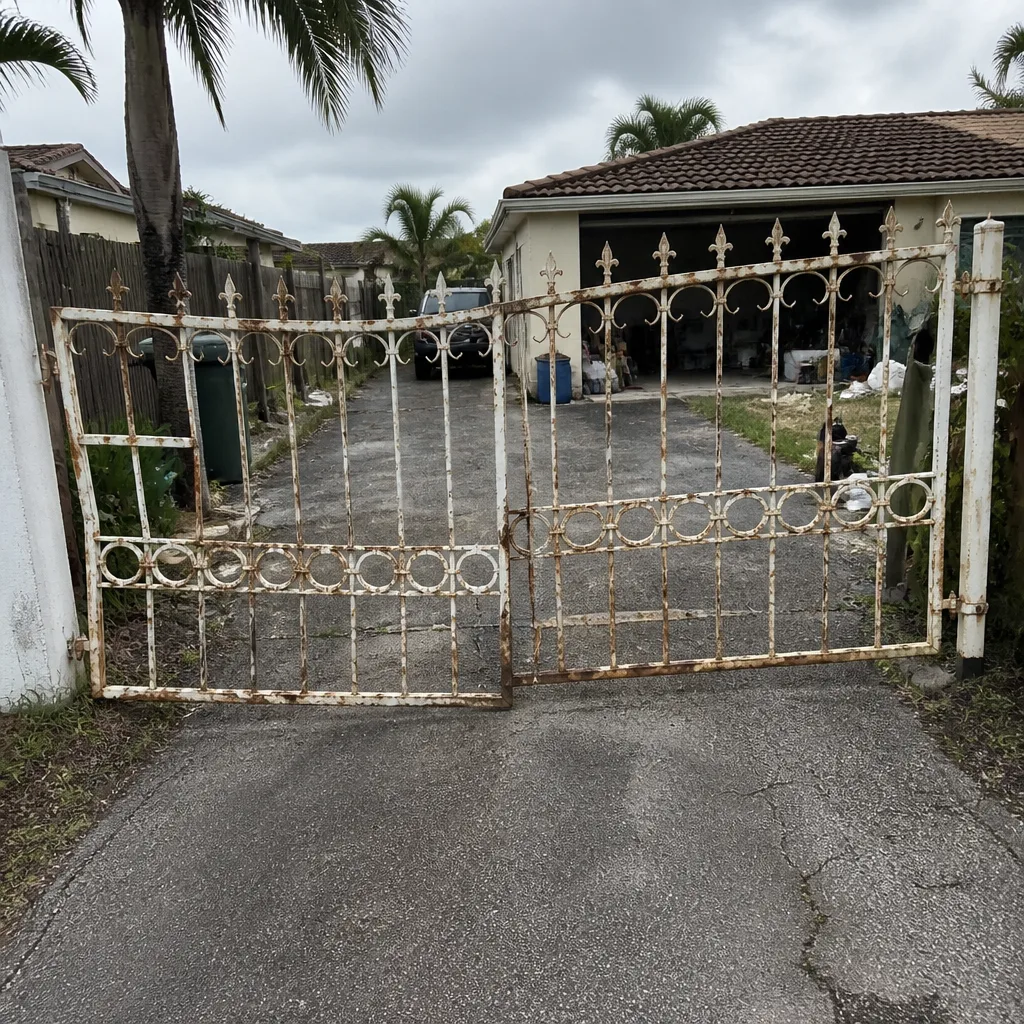
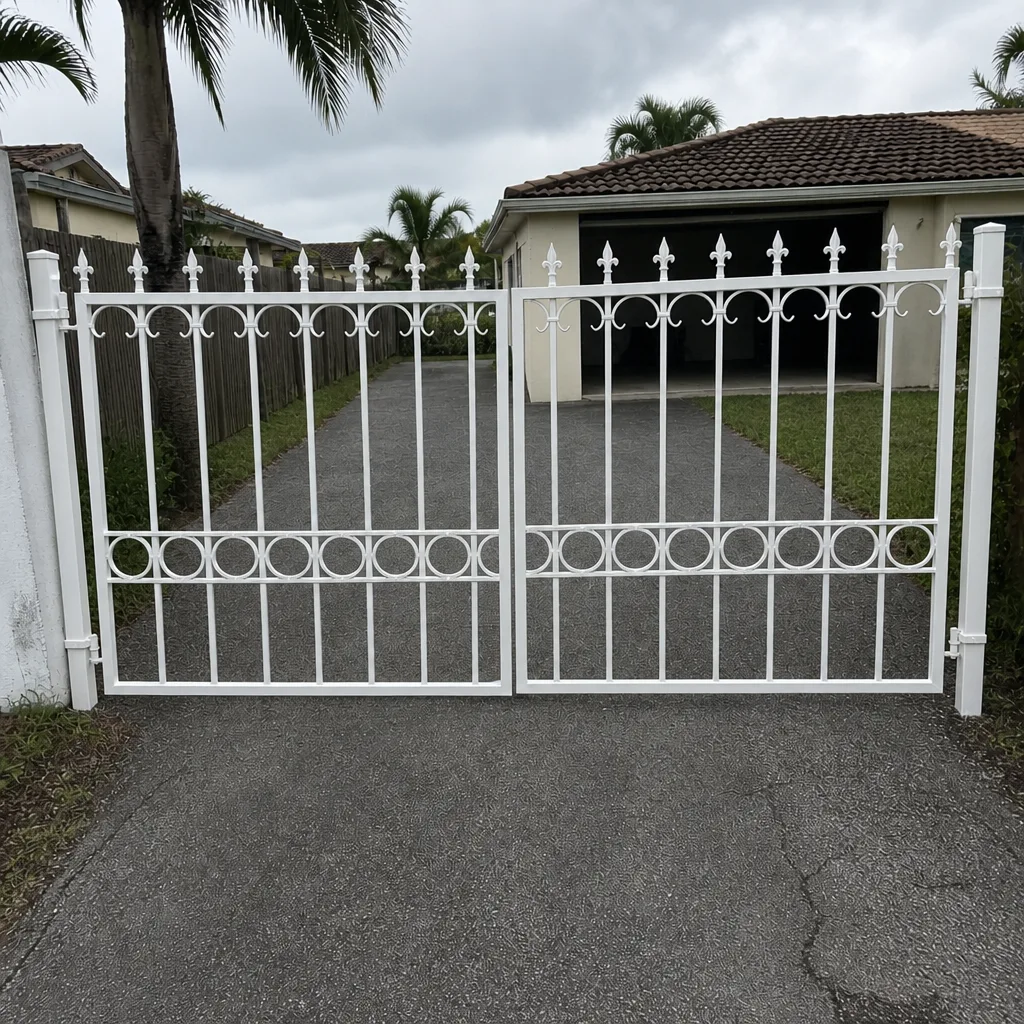
See the difference
 Before
 After
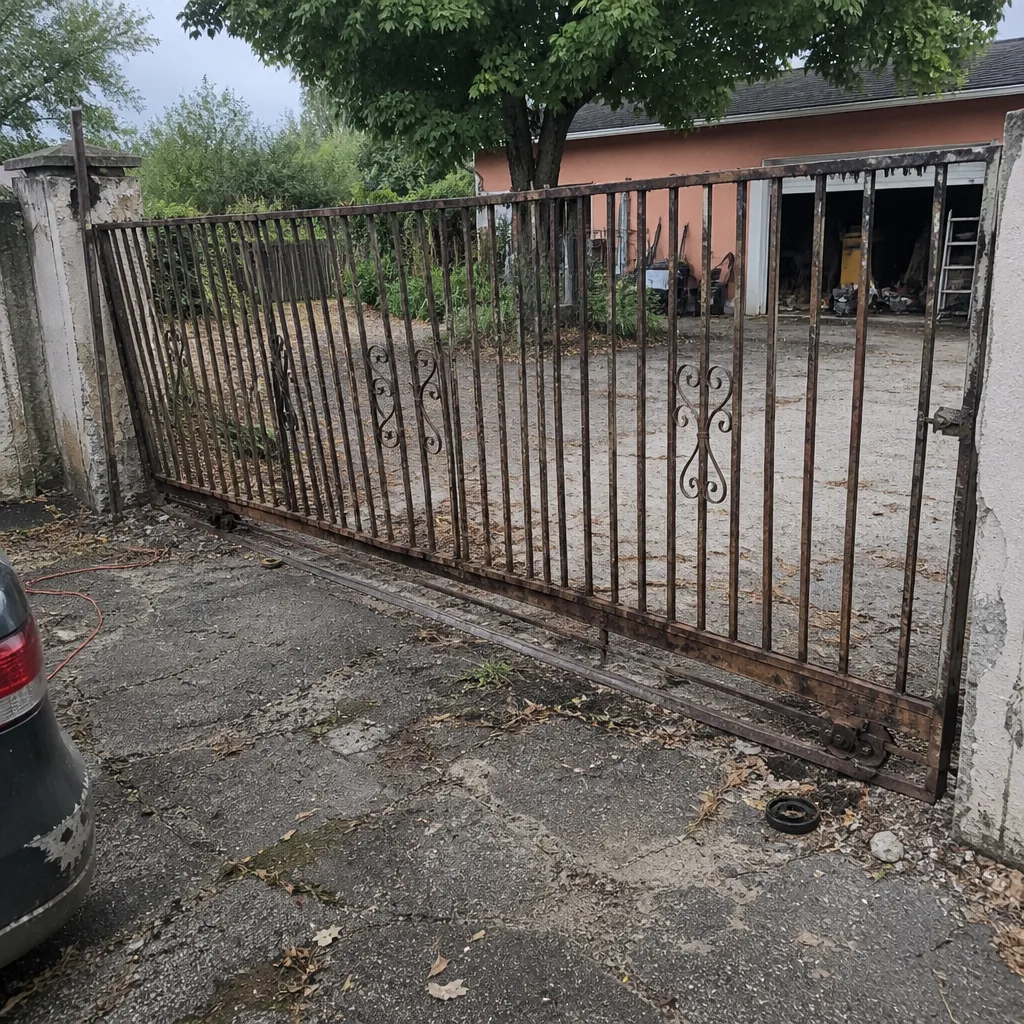 Before
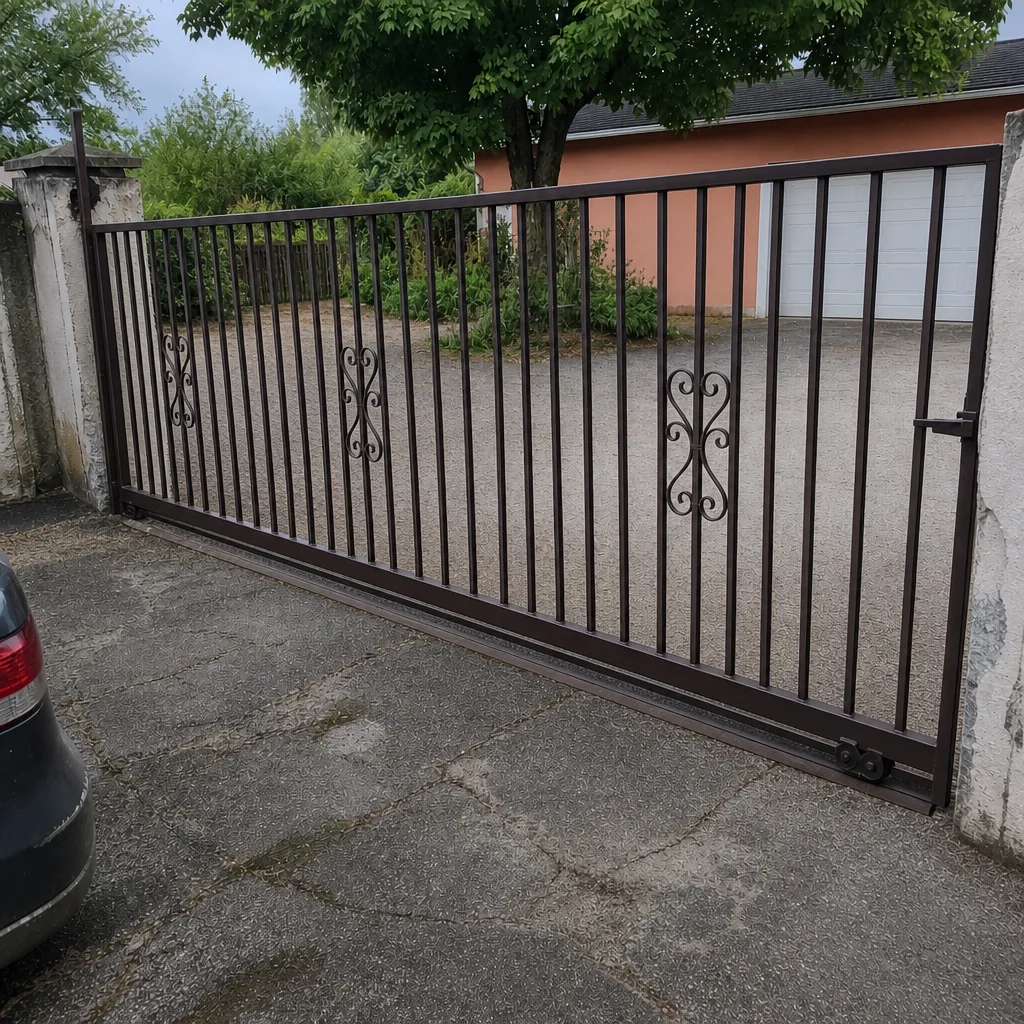 After
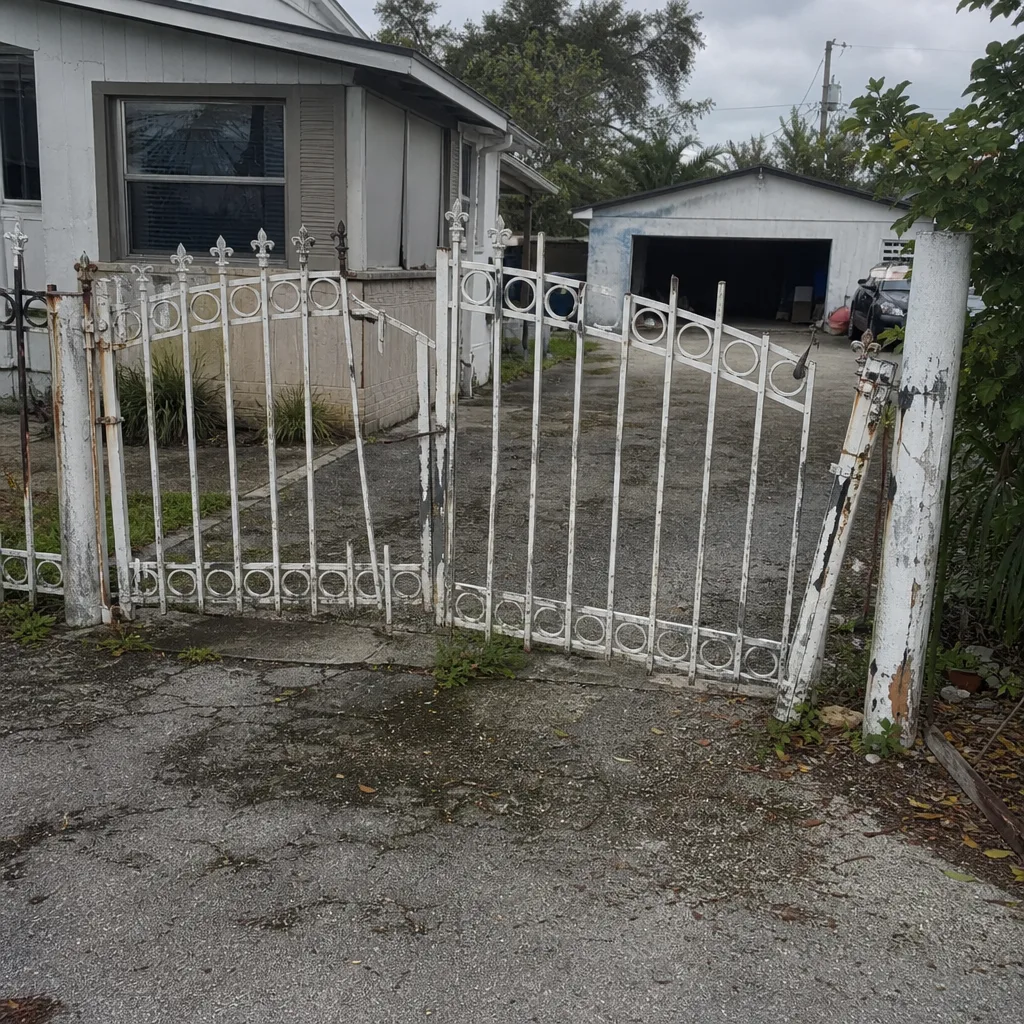 Before
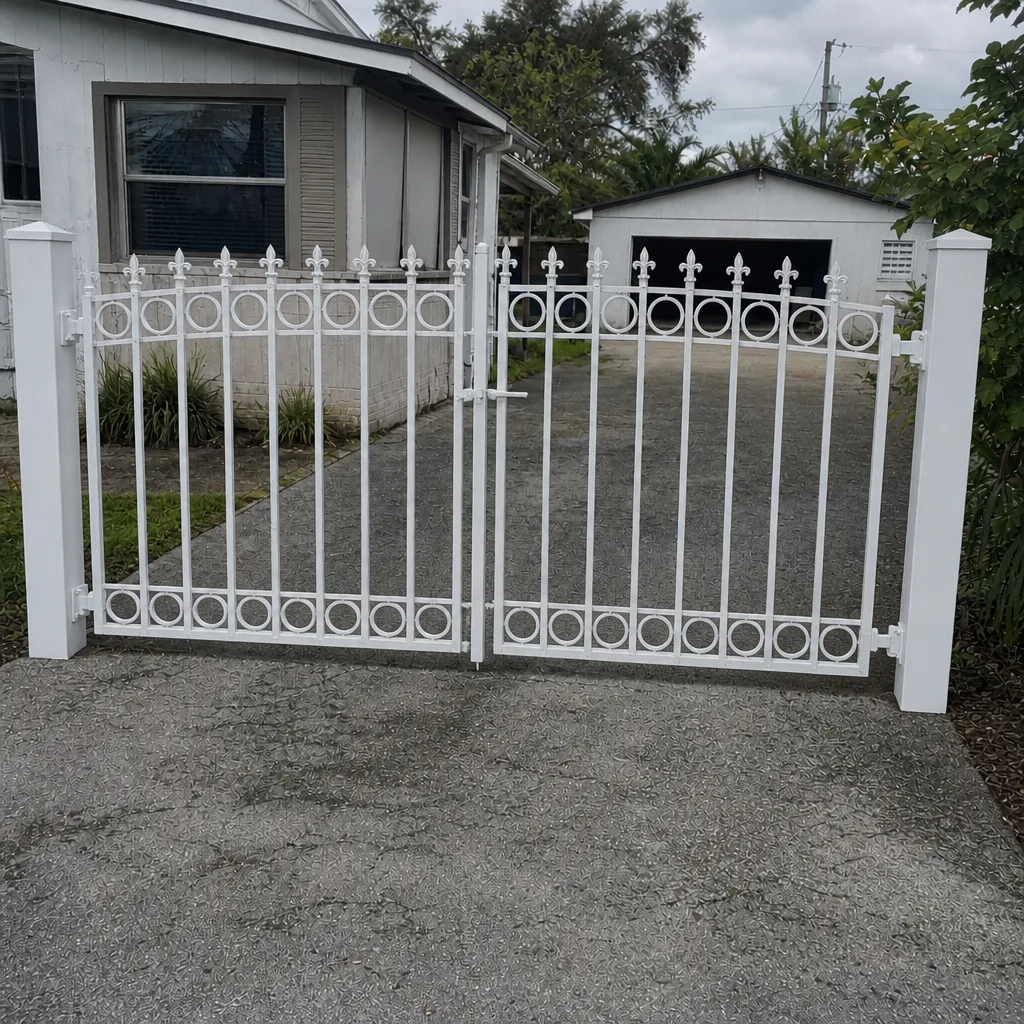 After
When to Call a Professional
Call a professional when the gate is automated and something is wrong with how it opens, stops, senses, or responds. Call when a manual gate has structural damage to the frame, when a hinge mounting point has torn out of the post, or when the gate has dropped far enough that the latch no longer meets the strike. Call when you’ve made one reasonable attempt and the problem remains, because a second guess is where costs climb. Call when you hear a motor straining, when a remote works only sometimes, or when the gate reverses for no visible reason. And call when the operator is on a model you don’t recognize and its documentation is missing. Gate Repair Miramar offers free estimates in Miramar, and the price is quoted and agreed before any work starts, so you know the number before the technician picks up a tool. Call (855) 644-1097. We answer 24/7, with fast dispatch from 7am to 7pm, Sunday through Friday.
Frequently Asked Questions
Yes. Replacing a hinge or hinge pin on a light manual gate is safe and legal for a homeowner, as long as you support the gate’s weight and clear the area first. Lubricating and tightening hardware is fine too. Anything that involves the operator, its wiring, or its safety devices is not DIY work.
Automated gate work that affects safety behavior should be handled by a trained technician. Operators use entrapment protection and monitored circuits to make a self-moving gate safe, and adjustments that defeat those systems are exactly where legal and safety problems start. Check with the city about permits if your work involves installation or electrical changes.
No. Increasing force on an operator can stop it from reversing on contact, which is the safety feature doing its job. A gate that reverses is usually telling you about a binding gate, a misaligned sensor, or a control issue, and the fix is a diagnosis, not a setting change. Call (855) 644-1097 for an exact quote. Estimates are free.
Observe and record, don’t adjust. Note exactly what the gate does, check for visible obstructions or a binding gate, press a remote from outside the danger zone, and look for chafed wiring without opening any housing. Photograph the operator’s visible model label. That’s enough to make the service call productive.
It often can, especially on commercial-grade systems with interlocked control logic. Many manufacturer warranties assume the system was installed and maintained properly, and unauthorized adjustments or an opened housing make that harder to defend. A safe diagnostic stops at the outside of the housing.
Ask the city’s building department before you start, and check any homeowners association rules that apply to your community. Installation and electrical work commonly require permits and inspection, and the answer can differ depending on what’s changing. It’s a quick question that prevents a much bigger problem.
The Bottom Line
The DIY versus professional question for gate repair is decided by which machine you’re standing in front of, not by how handy you are. Manual gates reward careful homeowners with hardware repairs, lubrication, and track cleaning, and that list is real. Automated gates are powered systems with safety devices and legal thresholds, and adjustments there belong to a trained technician. Diagnose from the outside, stop after the first failed attempt, and ask the city about permits before any new installation. In Miramar, the cheapest repair is usually the one that gets diagnosed correctly the first time.
Call Gate Repair Miramar at (855) 644-1097 for a free estimate on your gate. We answer 24/7, with fast dispatch from 7am to 7pm, Sunday through Friday, and every price is quoted and agreed before work begins.
Written by the team at Gate Repair Miramar.