
Last updated November 15, 2026
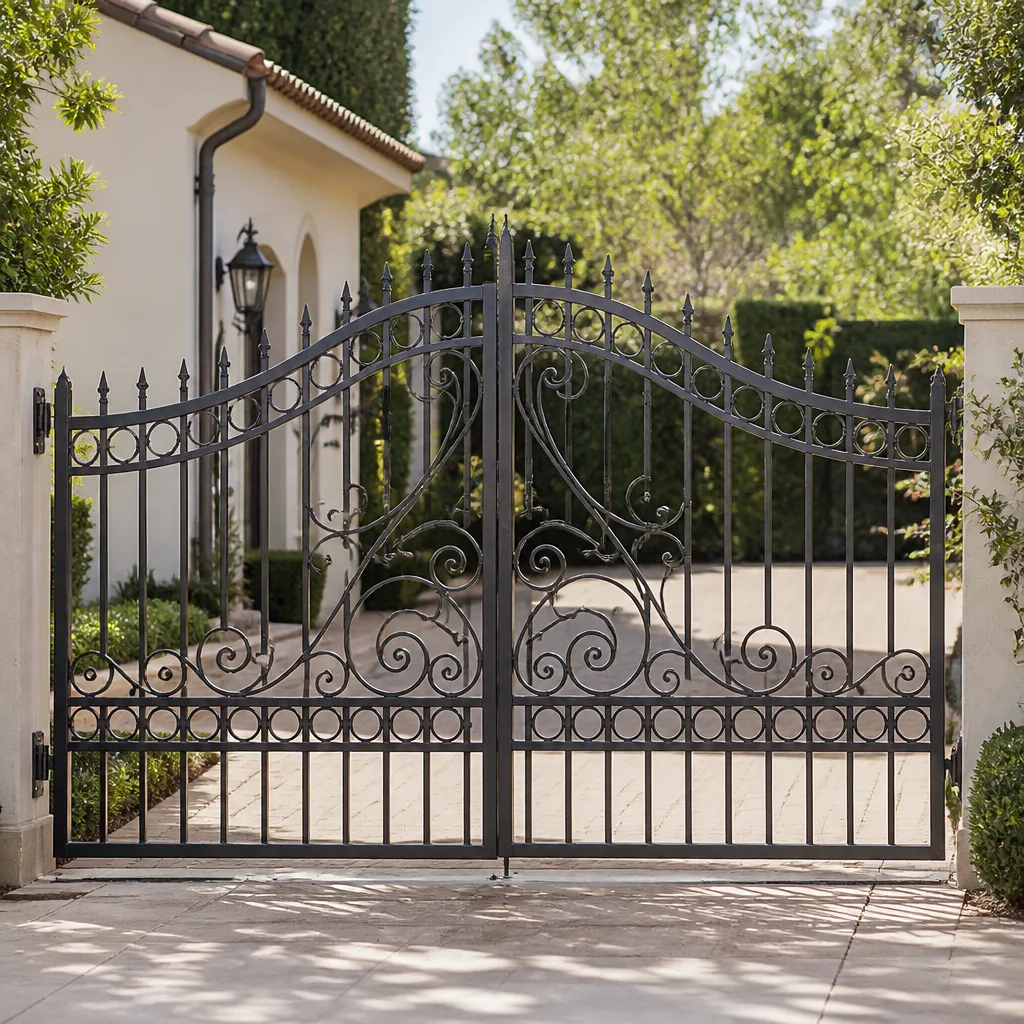 Wrought iron
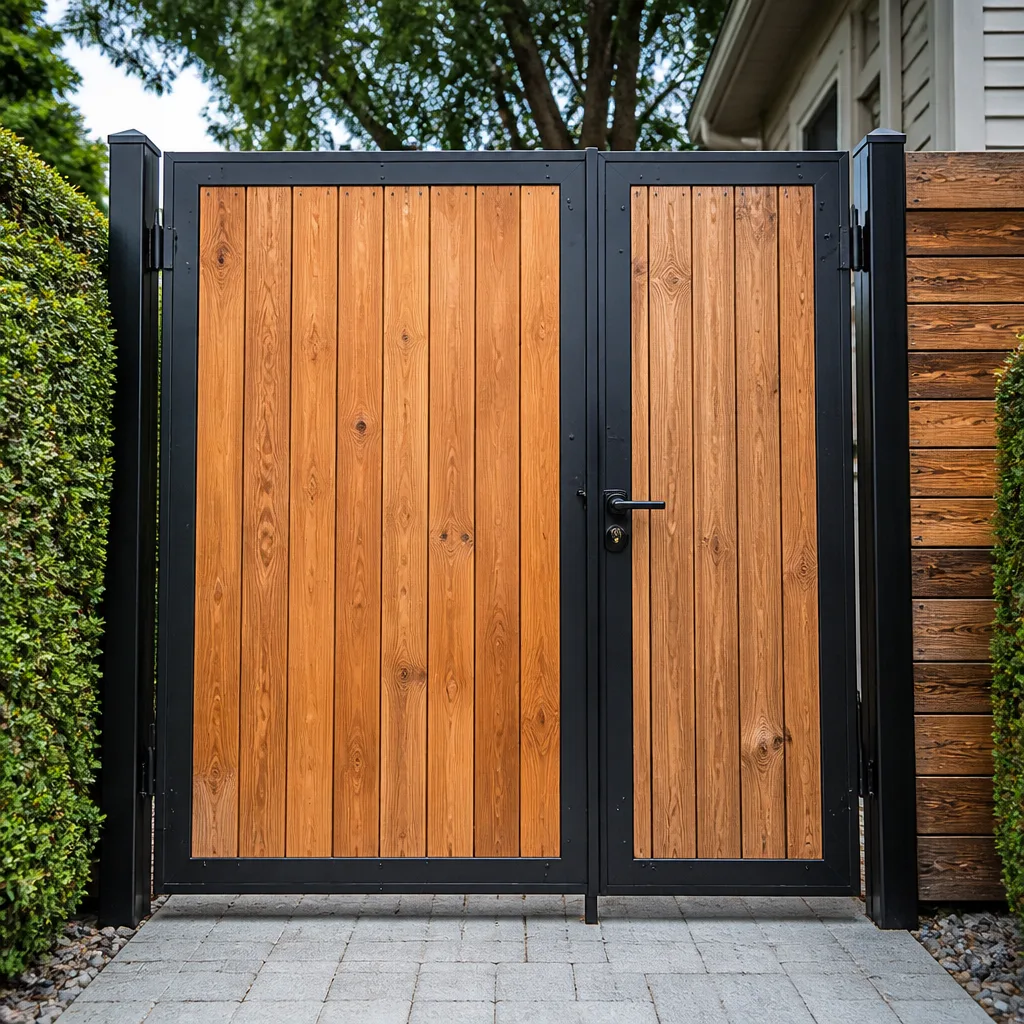 Wood & steel frame
 Farm & ranch
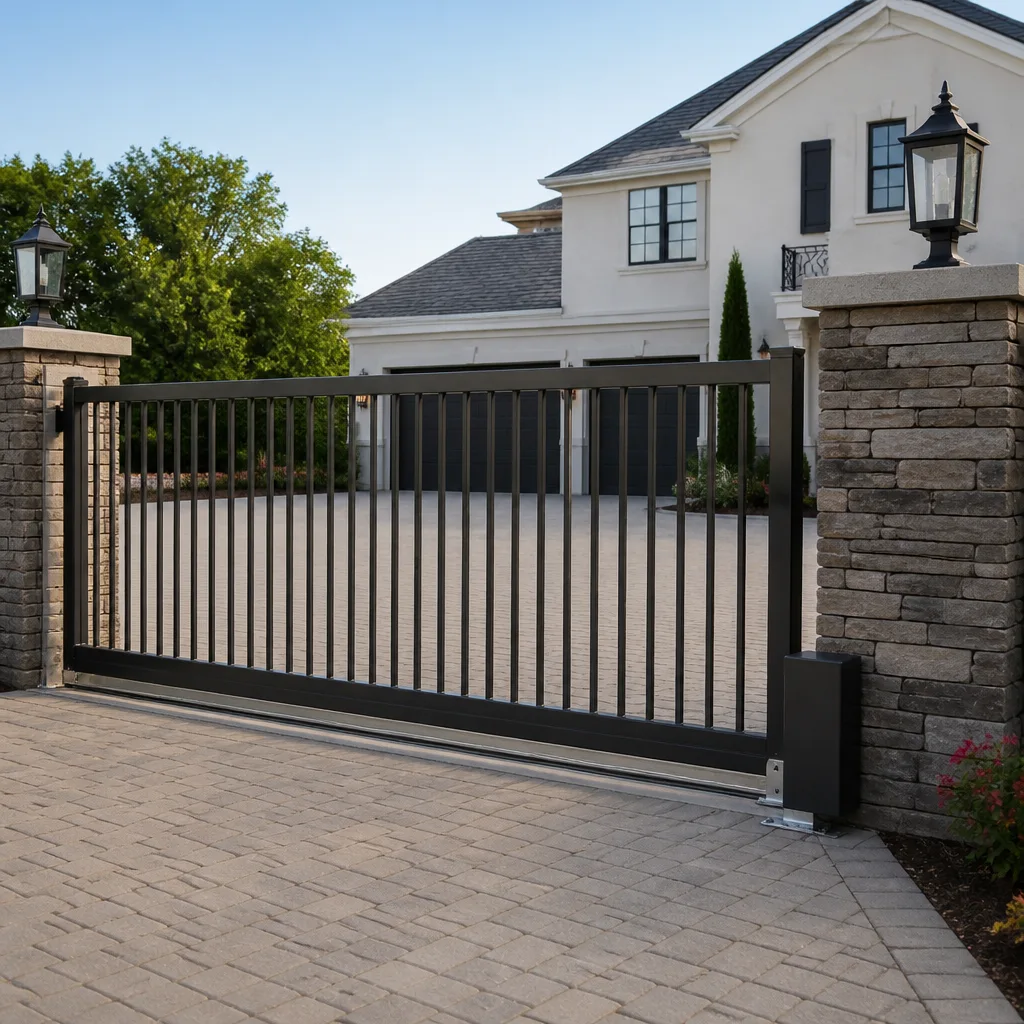 Sliding driveway gates
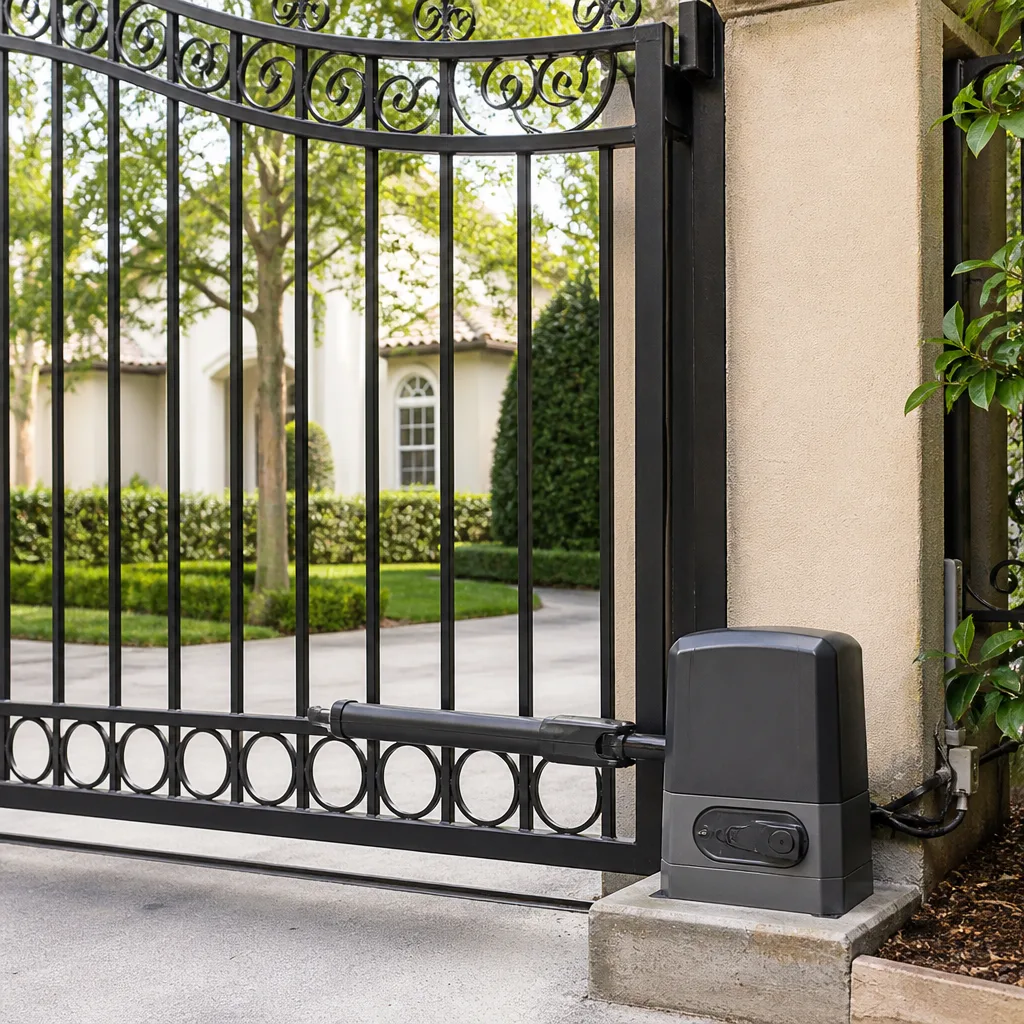 LiftMaster operators
Free on-site gate assessment - hinges, posts, and your LiftMaster or Nice gate operator checked before anything is quoted
The assessment is free and the quote is the invoice.
Get your free estimateGate Repair Permits, Codes & Inspections in Miramar, FL: What You Need to Know
Most homeowners think of a permit as paperwork that belongs to the installer, not to them. The surprise comes later: a new gate operator, wired in without the City of Miramar’s sign-off, doesn’t just fail an inspection. It can put your homeowner’s insurance coverage in question if the gate injures someone, and it can surface as a problem during a home sale or a claim – the two moments when you can least afford a surprise. This guide explains which gate work in Miramar needs a permit, which is routine repair, how Florida’s entrapment protection rules apply to a gate you already own, and how to prepare for an inspection. It’s written from the gate trade, for Miramar property owners and managers.
Quick Answer
In Miramar, replacing a gate operator, changing a gate’s structure, or adding electric power to a gate typically requires a permit from the City of Miramar, while ordinary repair of existing components (a broken arm, a worn hinge, a non-working sensor) usually does not. Most automated gates must also meet Florida Building Code entrapment protection requirements under UL 325, and if your community has an HOA, you generally need HOA approval before you apply for the city permit. Always confirm the current requirements with the City of Miramar’s building department before work starts, because permit thresholds and inspection steps belong to the city, not to us.
Styles & brands we work with
- Wrought iron
- Wood & steel frame
- Farm & ranch
- Sliding driveway gates
- LiftMaster operators
Table of Contents
- Which Gate Work Needs a City of Miramar Permit?
- Florida Entrapment Protection and UL 325 on Existing Gates
- HOA Approval vs. City Permit: Which Comes First?
- What Happens During a Gate Inspection and How to Prepare
- Unpermitted Gate Work and Property Disclosure in Broward County
- Repair, Replace, or Re-Permit? A Decision Guide
- How to Choose a Gate Specialist for Permit-Sensitive Work
- Common Mistakes to Avoid
Which Gate Work Needs a City of Miramar Permit?
The cleanest way to think about it: repairs keep the gate you have working, while replacements and structural changes create something new that the city wants a record of. In Miramar, that distinction usually decides whether you’re filing for a permit or simply booking a repair visit. Here’s how the split tends to fall.
- Usually a permit: installing a new gate or automated operator, replacing an operator with a different unit, running new electrical power to a gate, changing the gate’s structure (new posts, new panels, changing the gate’s width or swing), and adding a new access-control setup wired into the gate.
- Usually routine repair, no permit: replacing a worn hinge or roller, fixing a broken arm on an existing operator, replacing a sensor or safety edge, swapping a keypad or remote receiver, and adjusting a gate that has drifted out of alignment.
- Grey area, confirm with the city: replacing an operator with a like-for-like unit of the same model, and repairing electrical components on an existing gate circuit. Whether these need a permit depends on the city’s current rules, so ask before you book the work.
The reason this catches people out is that the physical work looks similar. A gate that has lost its operator feels like a “repair” to a homeowner, but if the operator is being swapped for a new one, Miramar’s building department generally treats it as a replacement that should be permitted and inspected. The same is true when the electrician needs to run a new line to the gate.
Our advice is simple: if the work changes what the gate is – new operator, new power, new structure – assume a permit is needed and confirm. If it changes how the gate works without swapping major components, assume a repair and confirm. Either way, one phone call to the City of Miramar settles it, and it’s cheaper than discovering the truth later. Gate work in Miramar runs the gamut from a manual gate on a hinge to a full automated system on a commercial property, so the right answer depends on what’s actually being done.
Florida Entrapment Protection and UL 325 on Existing Gates
Florida Building Code entrapment protection requirements, tied to UL 325 safety standards, are the reason a modern automatic gate has sensing edges and photo eyes. The standard is about preventing a moving gate from trapping or injuring a person, animal or vehicle, and it applies to how operators are built and installed. When a Miramar operator is replaced or a gate is automated for the first time, the new installation needs to meet the entrapment protections in force at the time – not the protections that were common when the old unit was put in.
That’s why a gate from years ago can fail a new inspection without anything being “broken”. The old operator may have had one safety feature; the standard now expects entrapment protection that matches the operator and the gate’s travel. Key things a specialist checks when a gate is inspected or when we plan a replacement:
- Type of entrapment protection present. Photo eyes (non-contact) and sensing edges (contact) are the two common families, and the operator’s instructions specify which it expects, and where.
- Placement relative to the gate’s travel. Sensors have to actually cover the gate’s path – not sit where they’ll miss a child or a pet.
- Operator type and force limits. Different operators have different force and control requirements, so the entrapment setup follows the operator, not the other way round.
- Fail-safe behavior. A sensor that has failed should cause the gate to behave safely, not to ignore it.
The safety part is worth saying plainly: gate operators are powered machinery with pinch points, crushing hazards and electrical connections. A missing or misaligned safety sensor is not a nuisance – it’s the difference between a gate that stops and one that doesn’t. If a sensor has been bypassed or wired around, don’t operate the gate until it’s fixed. This is electrical and mechanical work where a trained professional matters; we don’t recommend adjusting operator internals or safety circuits yourself.
Because we work alongside the safety codes on gates from brands we know well, we can tell you when your existing setup already satisfies current requirements and when it doesn’t. A LiftMaster operator and a FAAC operator on two Miramar properties can both be compliant, but they get there through different sensor setups and different control logic. That’s part of why entrapment review is a gate-specialist job, not a generalist one. For a repair that touches safety sensors, our electric gate repair team handles the diagnosing and the replacement in the same visit where possible.
HOA Approval vs. City Permit: Which Comes First?
Get HOA approval first, then the city permit. That order matters in Miramar because an HOA can require design changes – a different gate style, a changed height, a different color or material – and those changes alter what you’re permitted to build. Applying to the city before your HOA has signed off can leave you with a permit for a gate the HOA won’t allow, which means redoing the application.
In practice, the sequence for a permitted gate replacement in a Miramar community looks like this:
- Check your HOA’s architectural rules. Ask for the current architectural review application and any design standards that affect the gate, operator and access controls.
- Submit the HOA request with the spec. Include the proposed gate, operator and safety features so the HOA can review it once rather than in pieces.
- Get written HOA approval. Keep it – you’ll want it for the city file and for any future sale.
- Apply for the City of Miramar permit. Include the approved spec and any drawings or details the city asks for.
- Schedule the work around the permit. Once approved, the installation and any inspections happen in the order the city specifies.
Not every Miramar property sits under an HOA, and not every HOA is equally strict. Some have detailed design standards; others only want notice. Either way, ask before your contractor orders anything. A gate that clashes with community rules is a costly redo, and HOA approvals often take longer than the permit itself, so starting them first keeps the two processes moving in parallel rather than in sequence. For commercial properties with access-control systems, the same logic applies, just with a property manager in the HOA review role.
One more practical point: HOA approval is not a permit, and a city permit does not satisfy your HOA. They’re different processes run by different entities, and skipping one does not cancel out the other. Homeowners we’ve helped sometimes believe the city’s approval covers their community rules. It doesn’t.
What Happens During a Gate Inspection and How to Prepare
An inspection is a check against the permitted scope and the safety requirements in force, not a general assessment of whether your gate is old. In Miramar, the inspector will look at the gate, operator and safety devices involved in the permitted work and confirm they’re installed as specified. Most failed inspections come down to small, fixable details rather than the gate itself being wrong.
Here’s how a typical inspection-prokect goes and how to prepare:
- Confirm the scope in the permit. Know exactly what was permitted: the gate, the operator, the power run and the safety devices described in the application.
- Make sure the gate is operational on the day. The gate and operator need to be ready to run through their normal cycle, including opening and closing and reversing on a sensor.
- Check the entrapment protection is live. Photo eyes and sensing edges should be fitted, aligned and working, not disabled for the inspection.
- Make sure the access is available. The inspector needs to see the gate, the operator and the power connections without furniture, landscaping or vehicles in the way.
- Have your paperwork ready. The approved documents, HOA approval where relevant, and any spec details the city requested.
- Expect small corrections. If something needs adjusting, the fix is usually quick and a re-inspection can follow. Ask the inspector to clarify exactly what they noted so the fix is right.
Our role on inspection-sensitive work is to install to the permitted spec the first time, so the inspection is a confirmation rather than a negotiation. That means the safety setup is right before the date is booked – a sensor that’s been repositioned or a control that isn’t behaving correctly gets fixed before the city sees it. It also means we don’t disable a safety device to get a gate running “for now”; that’s exactly how inspections fail, and worse, how injuries happen. A gate operator is a machine with real crushing force, and the safety devices are what keep the machine from hurting someone. There’s no shortcut worth it.
A related point on which brands survive inspection dates: the operator matters because the entrapment setup follows the operator’s specification. A Mighty Mule residential operator and a commercial-grade DoorKing system don’t share the same sensor requirements, so the inspection targets a matching setup. Knowing how each brand behaves is part of what makes a smaller, expert-led install easier to get right the first time.
Unpermitted Gate Work and Property Disclosure in Broward County
Unpermitted gate work often goes unnoticed until a buyer’s inspector, insurer or lender raises it – and by then the seller is under time pressure and no longer controls the outcome. In Broward County, property disclosure obligations mean a seller generally should disclose unpermitted work they know about, and unpermitted structures or systems can affect financing and insurance. The gate itself tends to matter less than what it represents: a system the local building department has no record of.
What can happen if a gate replacement or operator install was done without a permit:
- A buyer’s inspection flags it. A gate with an automated operator but no permit record can raise a question the seller has to answer quickly, often during a contract timeline.
- Insurance coverage can be affected. A powered gate is a liability exposure, and an insurer may ask about permits or installed safety features. An unpermitted gate with questionable safety devices is a hard question to answer after an injury.
- Financing can be delayed. Lenders rely on permit records and inspection history, and a missing or mismatched record can hold up closing.
- Remediating later costs more. Fixing a lack of permit typically means applying for the permit after the fact, possibly opening walls or the electrical, and being inspected after the fact – with no leverage over the original installer.
If you’re selling a Miramar property with an automated gate, check now rather than during a contract. Ask whether the operator replacement or original install was permitted, and if you can’t find the record, ask the City of Miramar how to establish one. The same applies on the buying side: a gate installed by the previous owner without a permit becomes your problem once the deed transfers. A gate that works today may still be a paperwork problem tomorrow – the paperwork is what survives.
For property managers, the exposure is similar but scaled up. A commercial or multifamily gate serving many residents, installed without the required permit and inspection, is a liability carried by the property. Bringing the gate system into good standing is often a repair and documentation exercise, not a full rebuild, and it’s far easier to do before a claim or a sale forces the issue.
Repair, Replace, or Re-Permit? A Decision Guide
Most permit confusion comes from a single decision: is this gate work a repair or a replacement? Here’s how we read it on a typical Miramar gate call.
- Broken arm, hinge, roller or track: repair. No permit, unless the repair changes the structure.
- Operator not working but repairable: repair. Swap the failed part, not the whole operator.
- Operator at the end of its life: replacement, so plan for a permit and inspection. The new operator should meet current entrapment requirements, which may mean adding safety devices the old unit never had.
- Gate structure (posts, panels, swing or slide): structural change, so a permit is likely. Confirm with the city.
- New power to the gate: electrical, and generally permitted alongside the gate work. Use a qualified electrician and have the gate work planned to match.
- Gate upgraded from manual to automatic: effectively a new automated system, and the entrapment requirements apply as for a new install.
A simple test: if the gate that exists after the work is materially different from the gate that exists before it, treat it as permit work until the City of Miramar says otherwise. If the gate is the same gate, just working again, you’re almost always in repair territory. The cost and timeline difference is real – a repair can be scheduled like any other job, while a replacement needs a permit and a coordinated inspection.
If you’re unsure where your gate falls, our gate repair team can look at it and tell you plainly whether it’s repair work or a replacement requiring a permit, with a written estimate before anything starts. Our technicians have up to 12 years of experience diagnosing exactly this kind of question – including cases where a previous contractor replaced an operator without a permit and left the safety setup incomplete.
How to Choose a Gate Specialist for Permit-Sensitive Work
When a gate needs a permit, you want the person doing the work to understand the code and the inspection, not just the mechanism. A general handyman may be able to fit a gate, but may not know what the City of Miramar and Florida Building Code entrapment rules require on an automated install, and that gap tends to surface at inspection time. Three things separate a gate specialist from a general installer:
- Single-trade focus. Gates only. Every tool and every stocked part is purpose-built for gate work, not a dozen other home services.
- Brand knowledge where it matters. An operator is not generic. We work across the nine major brands – LiftMaster, FAAC, BFT, Linear, Viking, Ghost Controls, DoorKing, Elite, and Mighty Mule – so the safety setup matches the operator and the inspection matches the spec.
- A point of contact for the whole system. The gate, the operator, the power and the controls are one system. One specialist means one answer for repair, replacement and permit-sensitive install.
Ask any contractor you’re considering a few direct questions: which part of the work they expect to be permitted, what entrapment protection they’ll fit, and whether they can provide the details your permit application needs. A specialist answers without hesitation. A generalist often has to go find out, and that’s the sign the job may be beyond what they usually do.
If your gate needs repair, our Miramar page explains how we handle gate work in the local communities – from a manual gate fix to a full electric setup – and you can see the full picture on the Gate Repair Miramar home page. We don’t do fencing, garage doors or general handyman work; gates are what we do, and that’s deliberate.
Common Mistakes to Avoid
- Assuming a “repair” never needs a permit. Swapping a whole operator for a new unit is a replacement in the city’s eyes, even if it feels like a repair to the homeowner. Ask the City of Miramar before assuming.
- Applying for the permit before HOA approval. A design change demanded by your HOA after permit approval can force a redo. Get HOA sign-off first, then permit.
- Disabling a safety sensor to “get the gate moving”. A bypassed safety edge or photo eye fails inspection and, far more importantly, creates a real injury risk. Fix it properly.
- Reusing old safety devices on a new operator. A new operator with old sensors may not meet current entrapment requirements. The safety setup should match what’s installed.
- Forgetting you’ll be asked about permits at sale. A Miramar home with an automated gate and no permit record can complicate a Broward County closing. Keep the records with the property.
- Hiring a generalist for permit-sensitive work. The work may look similar, but the inspection and code knowledge are not. Use a gate specialist.
- Waiting until a gate fails completely. Repairing a worn part before it breaks keeps you in the no-permit repair lane instead of forcing an unplanned replacement.
See the difference
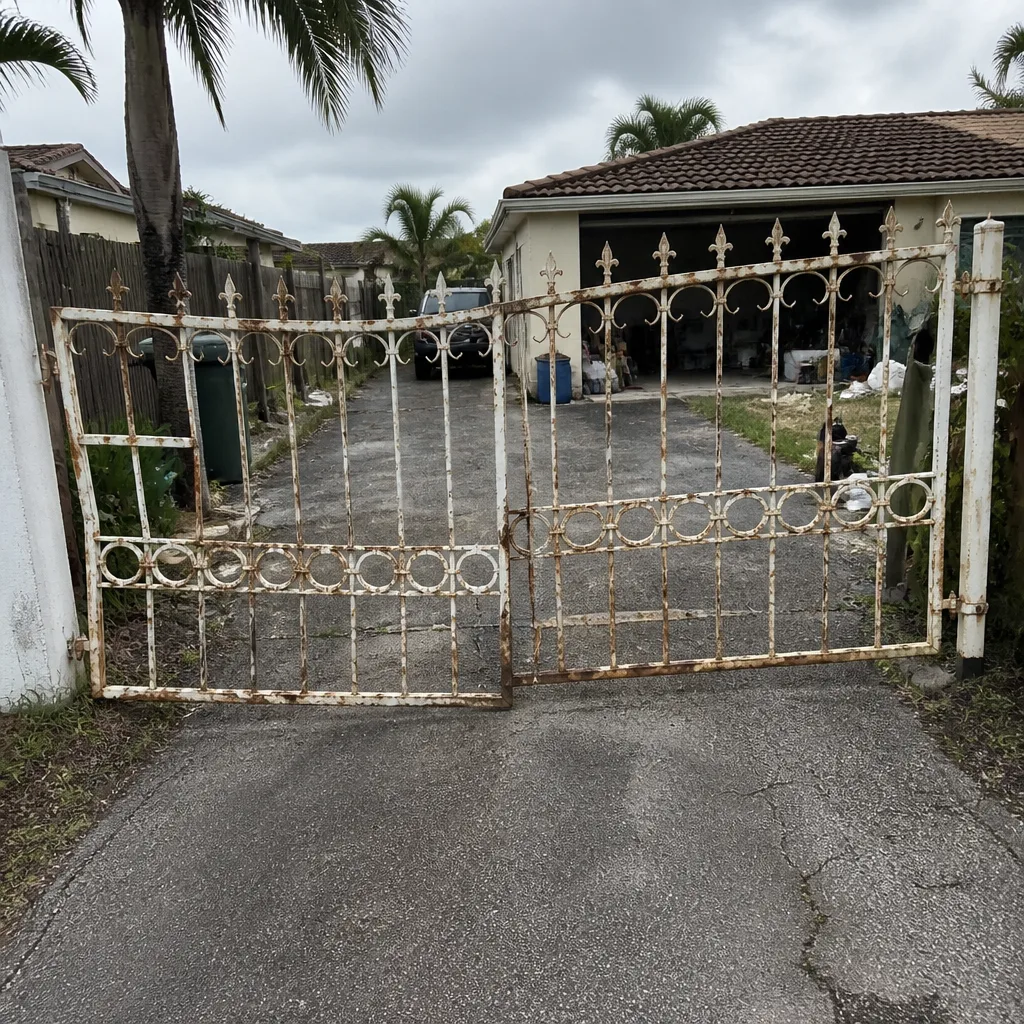 Before
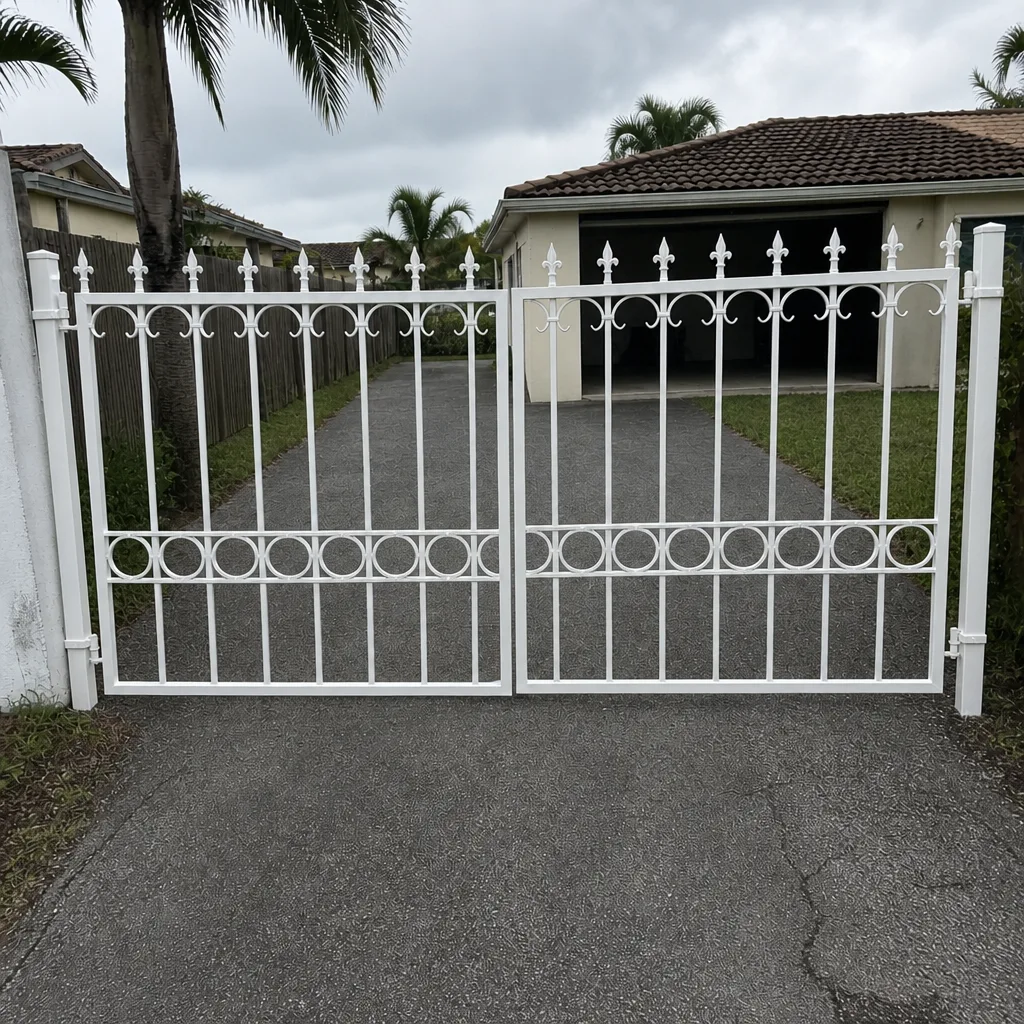 After
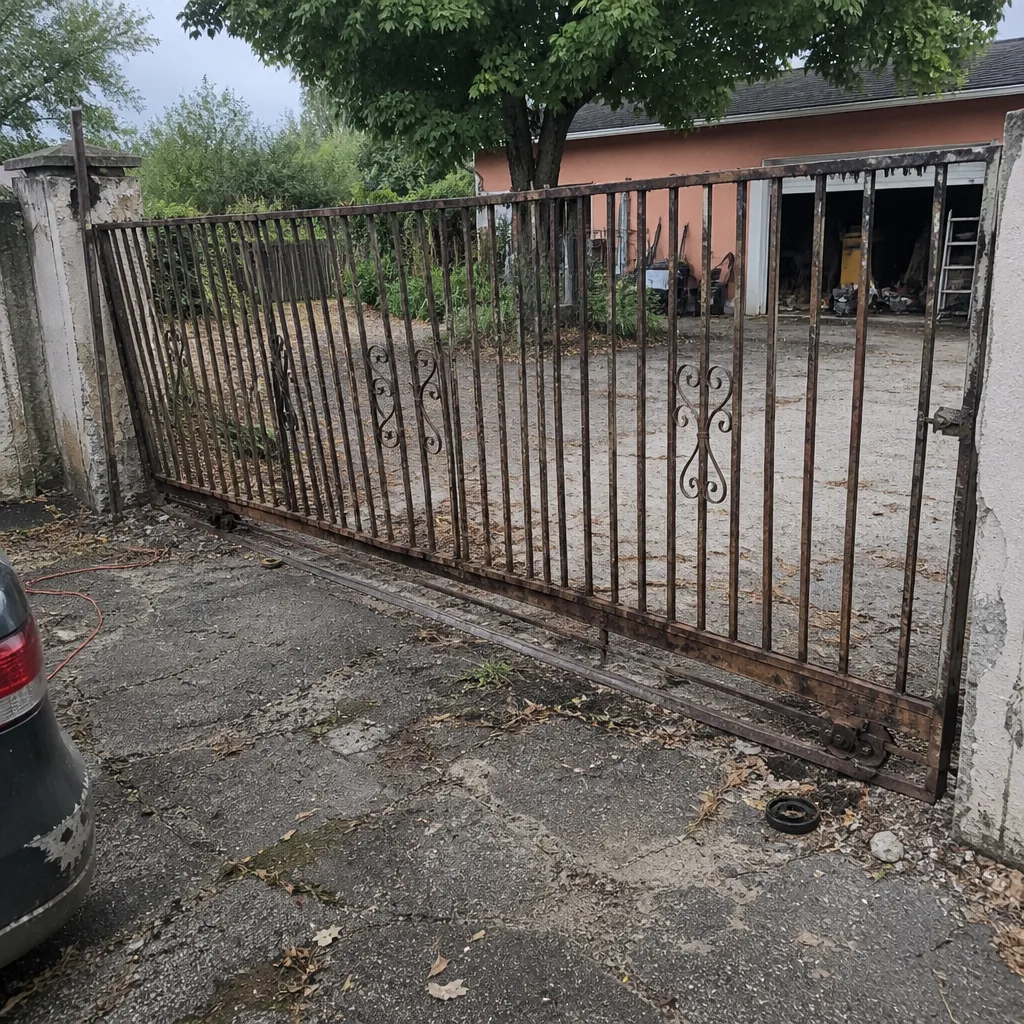 Before
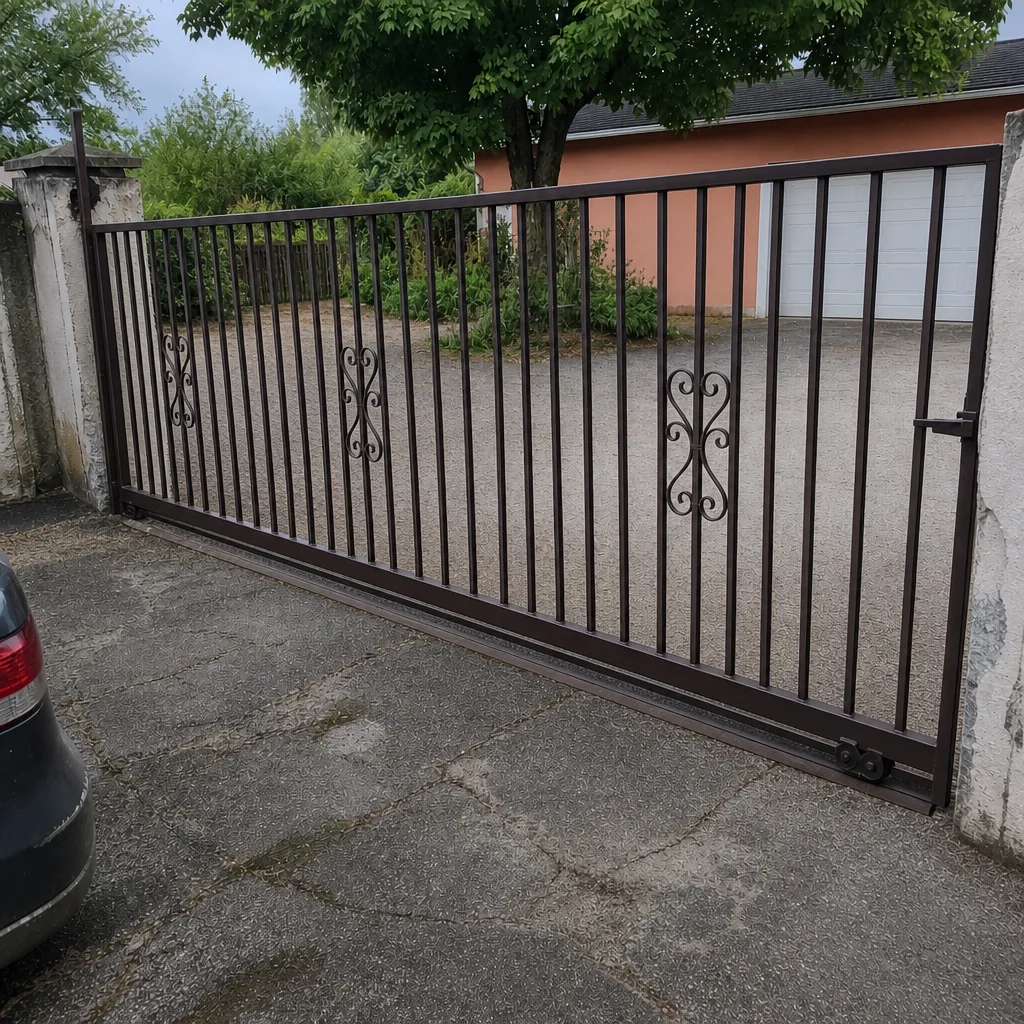 After
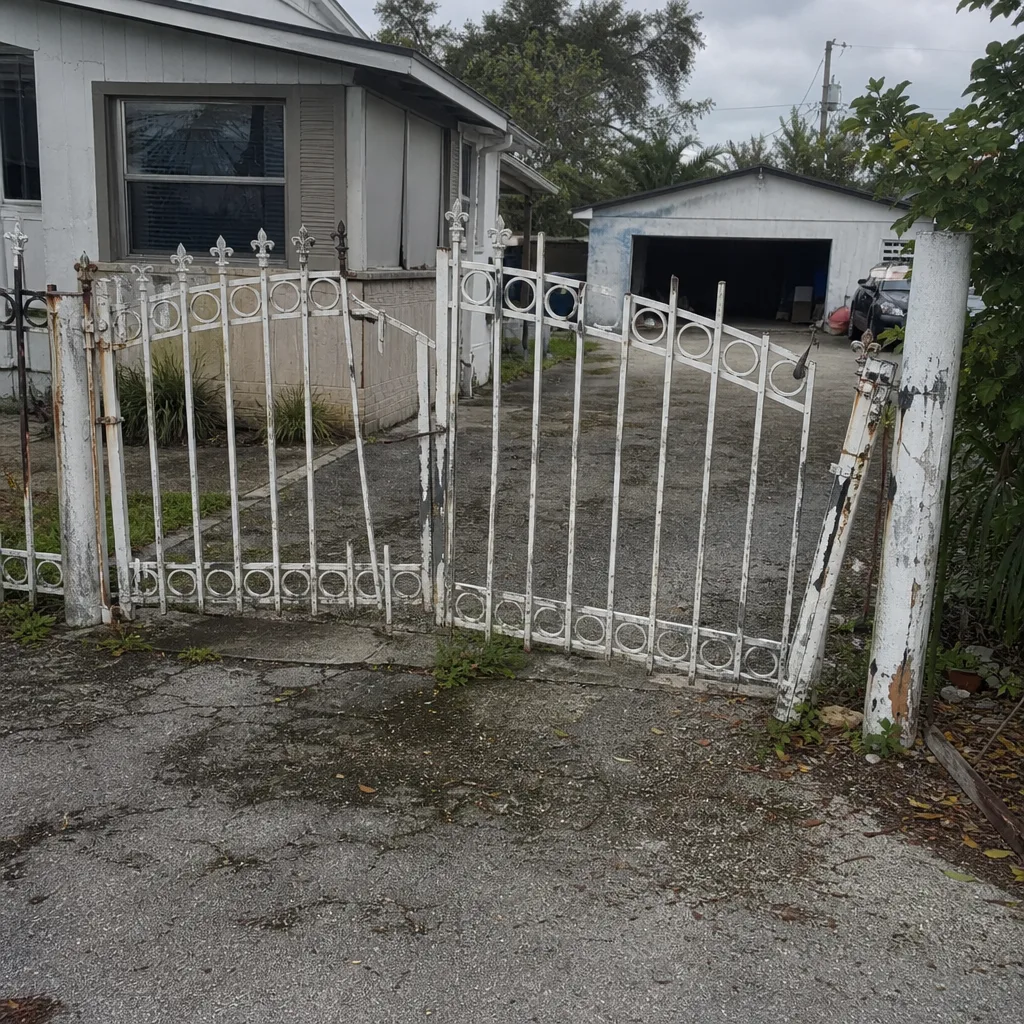 Before
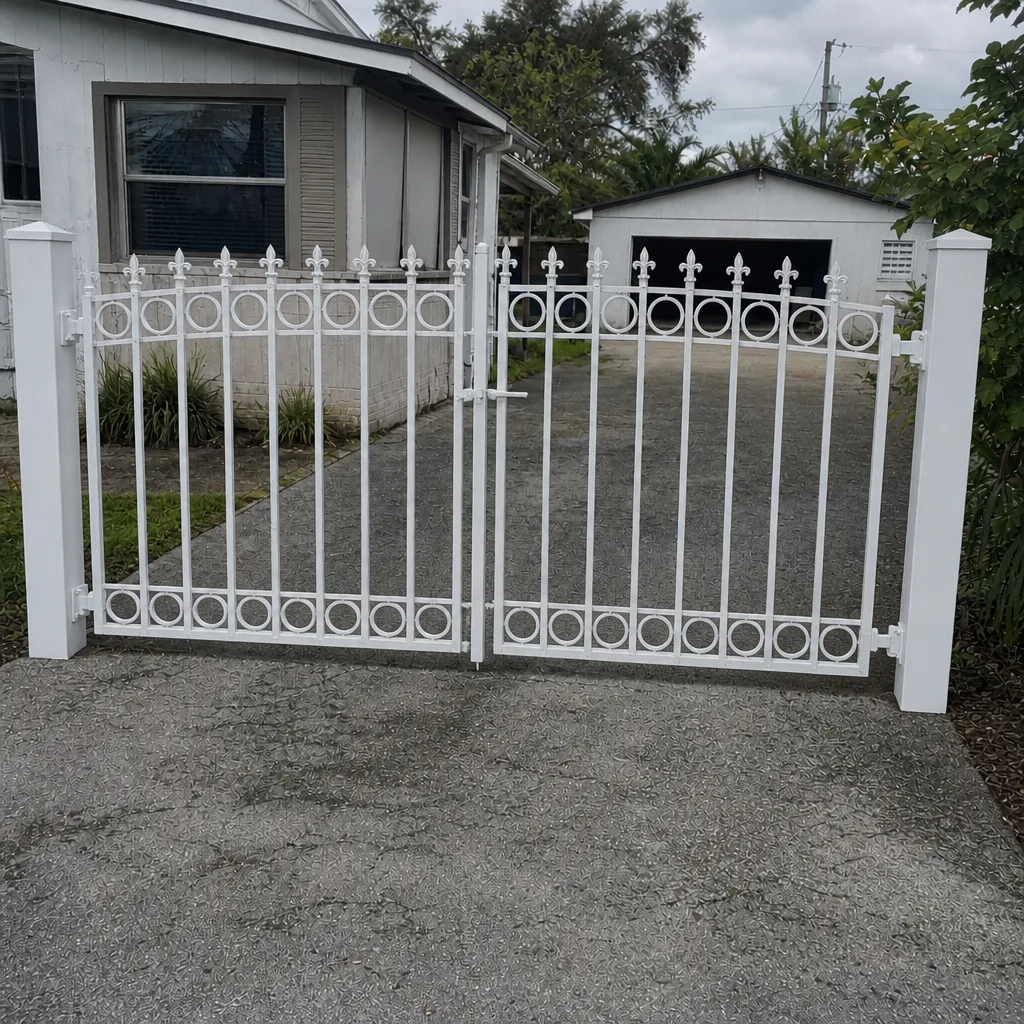 After
When to Call a Professional
Call a professional for anything involving the operator’s internals, its safety circuits, or the electrical feed to the gate. Those are the parts where a well-meant adjustment can leave a gate unsafe or an inspection failed. Call us if a safety sensor is damaged, bypassed or repeatedly triggering; if the operator is struggling, reversing randomly or has stopped working entirely; if you’re planning a replacement or a manual-to-automatic upgrade, so we can plan the permit and inspection with you; or if you’re buying or selling a Miramar property and need the gate’s records understood. For a gate that’s working but needs adjustment, it’s still cheaper to fix early than to replace after a failure. Gate Repair Miramar offers free estimates in Miramar – call (855) 644-1097. We answer 24/7, with fast dispatch from 7am to 7pm, Sunday through Friday.
Frequently Asked Questions
In most cases yes – replacing a gate operator is generally treated as a replacement that needs a City of Miramar permit and inspection, while repairing the existing operator usually does not. Thresholds and procedures belong to the city, so confirm the current requirement before work starts. Call (855) 644-1097 for an exact quote on the work, and we’ll tell you what we believe the permit position is.
Yes – they’re separate processes and one does not replace the other. Get HOA approval first, then apply for the city permit, so any design changes the HOA requires are reflected in your application. Call (855) 644-1097 for a free estimate on the gate work itself.
Entrapment protection means the safety devices – photo eyes and sensing edges – that stop a moving gate from trapping or injuring someone, as required by Florida Building Code in line with UL 325. When an operator is replaced or a gate is automated now, the new installation needs to meet the entrapment protection in force at the time, which can mean adding devices an older setup never had. A specialist can tell you where your setup stands; call (855) 644-1097 for a free estimate.
Make sure the gate runs its full cycle on the day, the safety sensors and edges are fitted and working, the gate and operator are accessible to the inspector, and your approved documents are on hand. Small corrections are common and fixable. Call (855) 644-1097 if you’d like the system checked before the inspection date.
It can. A buyer’s inspector may flag a gate with no permit record, insurers may ask about permits and safety devices, and lenders rely on permit and inspection history. Sellers generally should disclose unpermitted work they know about. If you’re unsure about your gate’s records, call (855) 644-1097 for a free estimate on bringing it into good standing.
Usually no – replacing worn hinges, rollers, sensors or a broken arm is routine repair and generally doesn’t require a permit, provided the work doesn’t change the gate’s structure. Anything involving new structure, new power or a new operator should be confirmed with the City of Miramar first. Call (855) 644-1097 for a free estimate on the repair.
The Bottom Line
Gate permits in Miramar come down to a simple distinction: repairs keep your gate working, while replacements and structural changes create something the City of Miramar wants a record of. Replacement operators, new power and new gate structures generally need a permit and an inspection; routine repairs usually don’t. Automated gates also need to meet Florida Building Code entrapment protection in line with UL 325, and if you have an HOA, get its approval before applying to the city. The cost of skipping a permit rarely appears at installation – it appears at inspection, at an insurance claim, or at sale. When in doubt, confirm with the city, and use a gate specialist who knows the code and the inspection, not a generalist. Call (855) 644-1097 for a free estimate in Miramar. We answer 24/7. Fast dispatch from 7am to 7pm, Sunday through Friday.
Written by the team at Gate Repair Miramar.