
Last updated November 15, 2026
 Wrought iron
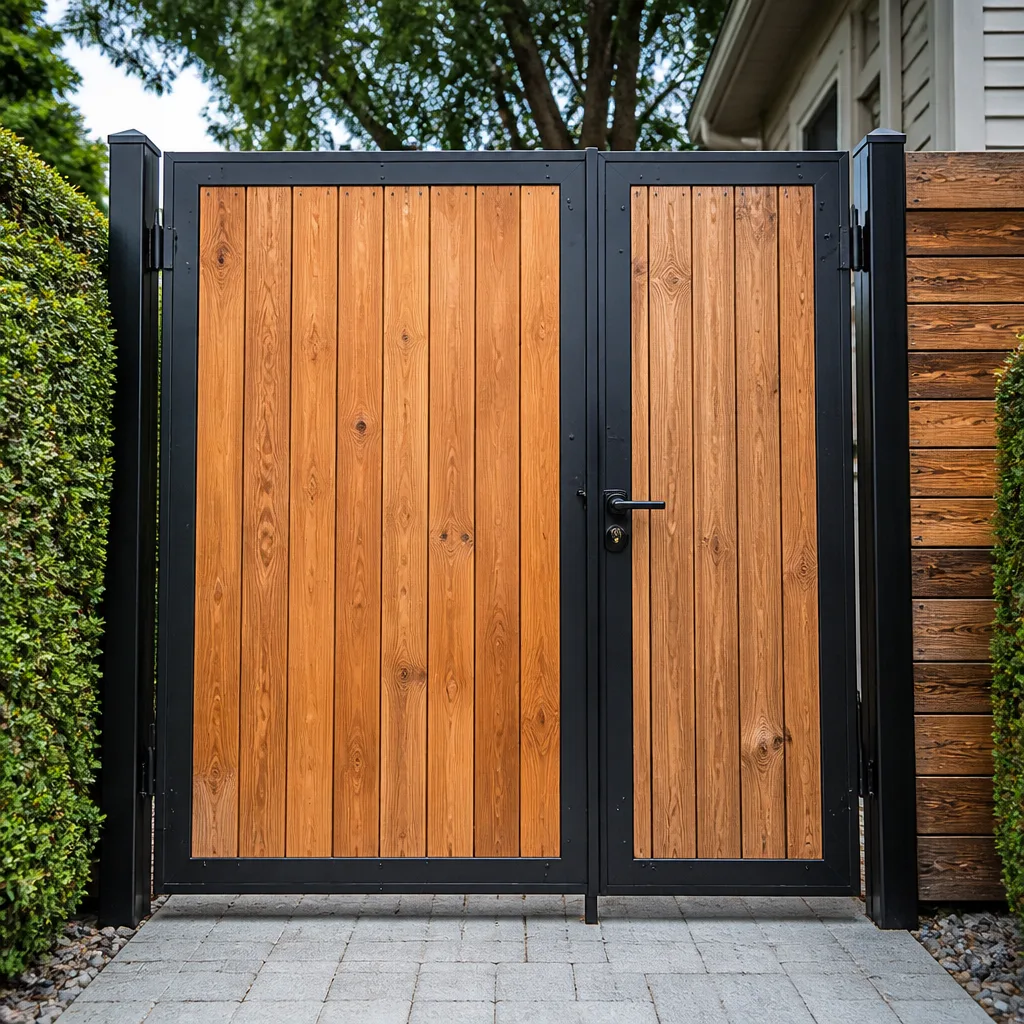 Wood & steel frame
 Farm & ranch
 Sliding driveway gates
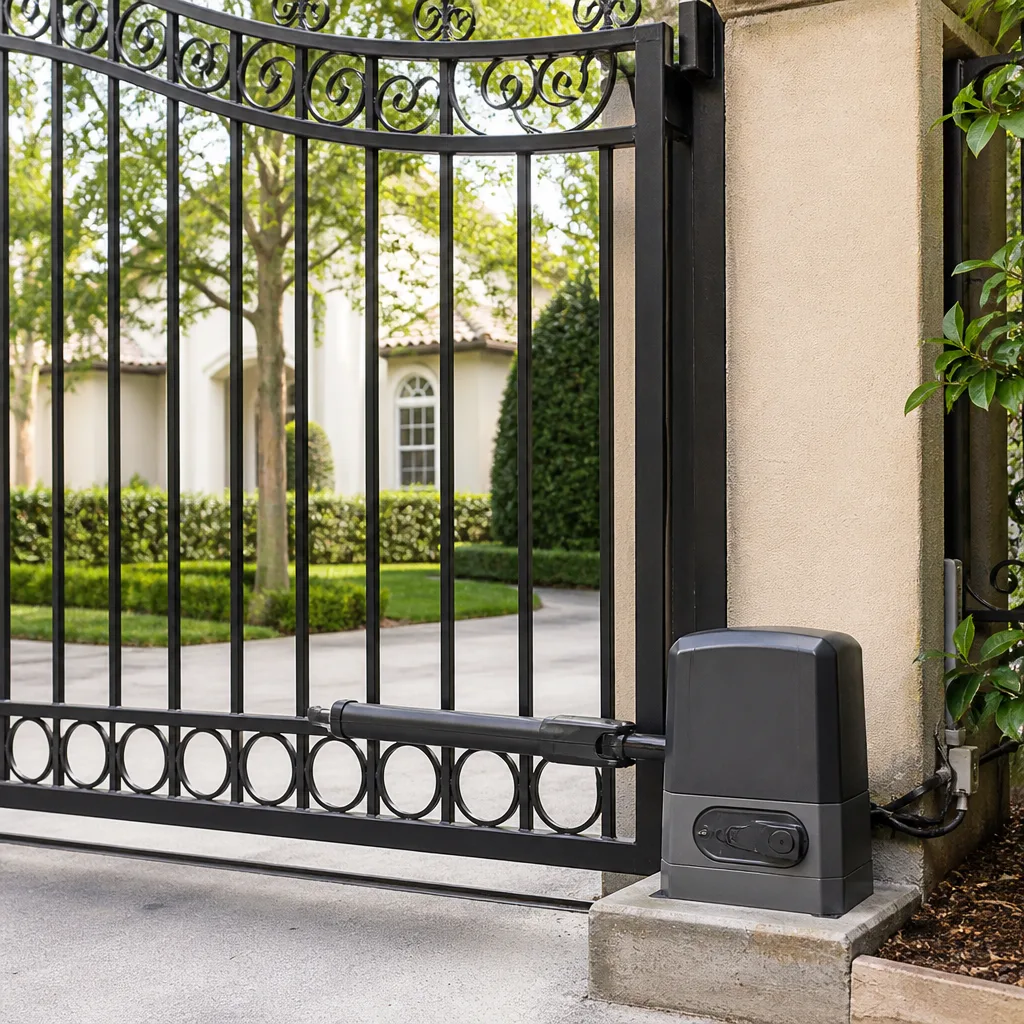 LiftMaster operators
Free on-site gate assessment - hinges, posts, and your LiftMaster or Nice gate operator checked before anything is quoted
The assessment is free and the quote is the invoice.
Get your free estimateGate Repair Warning Signs: A Miramar Homeowner’s Reference Guide
Your gate is telling you something long before it stops working. That hesitation before it moves, the new grind at the end of the cycle, a slight sag you’ve stopped noticing – these aren’t quirks. They’re load, wear, and misalignment announcing themselves in order. Most gate failures aren’t sudden; they’re a sequence of small symptoms that went unread until a small repair turned into a major one. This guide walks you through every warning sign a Miramar homeowner is most likely to see: what each sound means, what the hinges and tracks are telling you, and when a symptom points to a control board rather than a mechanical part.
Quick Answer
The most common gate repair warning signs are a half-second hesitation before movement, grinding or clicking sounds at specific points in the cycle, visible sagging at the hinge side or rollers wearing through the track, and blinking control-board codes or delayed response to remotes and keypads. Catching these early usually means an adjustment, lubrication, or a minor part swap. Ignoring them lets a struggling operator burn itself out, which is when a small repair turns into a much larger one.
Styles & brands we work with
- Wrought iron
- Wood & steel frame
- Farm & ranch
- Sliding driveway gates
- LiftMaster operators
Table of Contents
- What Your Gate’s Sounds Are Telling You
- Visual Warning Signs on Hinges, Rollers, and Tracks
- Control Board and Sensor Warning Patterns
- How to Spot Misalignment Before It Becomes Structural
- Slide Gate vs. Swing Gate: Different Failures, Different Signs
- When the Operator Is the Problem
- A Simple Monthly Check You Can Do Yourself
- Common Mistakes to Avoid
What Your Gate’s Sounds Are Telling You
Sound is the first and most reliable diagnostic tool a gate gives you. A healthy automated gate has a smooth, predictable hum during its cycle – the motor’s tone stays steady from open to close. When that tone changes, something in the system is working harder than it should.
Here’s how to read the three main sounds, and what each usually points to:
- Grinding: Metal-on-metal contact. On a swing gate, this often means worn hinge pins or bushings that have lost their grease and started riding on bare steel. On a slide gate, it’s typically rollers that have flattened, seized, or dropped off the track. Grinding doesn’t fix itself. Left alone, it wears the pivot points faster and can crack the gate frame where the hinge attaches.
- Clicking: A rhythmic click is usually a relay or contactor inside the control box doing its job, but a click that happens without the gate moving, or that repeats rapidly, points to a failing relay or a control board that’s losing its signal. A single hard click followed by silence often means the operator’s capacitor is on its way out. On LiftMaster and Linear residential operators, this is a common early sign.
- Humming without movement: The motor is receiving power but the gate isn’t moving. On a swing gate this can mean the operator arm is binding or the gate is physically blocked. On a slide gate it often points to a slipping clutch, a seized roller, or a drive gear that’s stripped. Humming that lasts more than a second or two should be a stop signal – cut the power at the breaker and have a technician look at it.
What separates these from normal startup noise is repetition and location. A sound that happens at the same point in every cycle is mechanical – something in the travel path is binding. A sound that’s random suggests an electrical or control issue. If you’re not sure which category yours falls into, that’s when a specialist diagnostic pays for itself.
Visual Warning Signs on Hinges, Rollers, and Tracks
Mechanical wear is visible long before it’s catastrophic. The trick is knowing where to look, and what “healthy” looks like so you can spot the change. In our experience, the components below show warning signs 30 to 90 days before a failure – plenty of time to get ahead of it.
- Check the hinge gap. Stand at the hinge side of a swing gate and look straight down the gap between the gate and the post. The gap should be even from top to bottom. A top that’s tightening or a bottom that’s widening means the hinge has worn or the gate has sagged – and a sagging gate puts uneven load on the operator every time it opens.
- Look at the hinge pins and bushings. Shiny, scored metal where there should be grease is a warning. So is rust dust accumulating under a hinge – that’s metal wearing away.
- Inspect slide gate rollers. Rollers should be round and spin freely. A flat spot, a groove worn into the face, or a roller that wobbles on its axle is a failure waiting to happen. Rollers that are cracked or missing chunks should be replaced before the gate drops.
- Examine the track. A slide gate track should be clear, straight, and continuous. Look for dents, debris packed into the channel, or a track that’s lifting at the ends. A gate that jumps the track once will usually do it again.
- Check the frame for cracks. Look at the weld points where hinges and roller brackets attach. Hairline cracks spread under vibration. A cracked weld at a hinge is a structural sign, not a cosmetic one.
- Watch for paint flaking at joints. Flaking at a weld or bracket often means the joint is flexing. Flex means movement where there shouldn’t be any.
In Miramar’s heat and humidity, metal components move more than in cooler climates. Thermal expansion in the summer months loosens fasteners and works grease out of bushings faster than a homeowner might expect. It’s worth checking these points once a month from June through September, when gates here do the most work and the weather does the most to undo it.
Control Board and Sensor Warning Patterns
Modern operators – whether it’s a FAAC, BFT, or a residential LiftMaster – are built to communicate. The control board flashes, beeps, and refuses to move for a reason. The problem is that most homeowners read a blinking light as “the gate is broken” instead of “the board is telling me exactly what’s wrong.”
Here’s how to decode the most common control patterns by symptom:
- Rapid or repeating blinking on the operator’s diagnostic LED: This is almost always a fault code. The number of blinks, or the pattern of them, maps to a specific issue – obstruction, limit switch, photo-eye alignment, or a motor fault. Your operator’s manual has the code table. If you don’t have the manual, note the blink pattern and a technician can decode it.
- Delayed response to the remote: A gate that opens a full second after you press the remote, when it used to respond immediately, is usually not a remote problem. It’s a sign the control board is taking longer to process the command – often a failing capacitor, a weak power supply, or a board that’s starting to fail. Check the battery in the remote first; if that’s fresh, the board is the next suspect.
- The gate reverses in the middle of travel: This is the safety photo-eye or edge sensor doing its job. If it happens with nothing in the way, the sensor is misaligned, dirty, or has a failing receiver. On commercial DoorKing systems this often shows up as the gate stopping and reversing at the same point every cycle.
- The gate opens but won’t close (or vice versa): A one-direction-only fault is usually a limit switch that’s out of position or a control board that’s lost track of travel. On slide gates this is often the close-side limit switch getting bumped.
- No response at all, but the board has power: Check the fuse on the control board first. A blown low-voltage fuse is a common, inexpensive fix. If the fuse is good and the board shows power, the issue is usually deeper – a failing board, a bad motor connection, or a power supply problem.
One warning: control board work involves live low-voltage wiring and, on some systems, line voltage. That’s not a DIY job, and it’s not a generalist’s job either. A gate specialist who works across multiple brands sees the same fault patterns on LiftMaster, FAAC, BFT, and Linear systems and can read the board before guessing at parts.
How to Spot Misalignment Before It Becomes Structural
Alignment problems are sneaky. A gate that’s out of alignment doesn’t fail suddenly – it fails slowly, usually by wearing out the operator first, then the hinges or rollers, then the frame. Here’s how to catch it early.
- Watch the gate from the side, not the front. As the gate opens and closes, watch it from a position where you can see it in profile. A gate that rises or changes angle as it travels is out of alignment.
- Look at the gap between the gate and the post at both the open and closed positions. The gap should stay roughly even. If it’s wider at the bottom when closed and wider at the top when open, the gate is drifting – usually a hinge or post-settling issue.
- Check that the gate isn’t scraping the ground or the track at either end of travel. Scraping at one end and clearance at the other means the gate is tilted. On a slide gate, look for the rollers riding on only part of the track.
- Test the gate by hand (with the operator disengaged or powered off, only if your operator has a manual release). A properly aligned gate moves smoothly through its full travel with light hand pressure. If it binds, drags, or wants to fall open or closed, it’s misaligned.
- Check the anchor points. In Miramar, a gate post that’s been in place for years can settle after heavy rain. Look for cracks at the post base or a post that’s leaning slightly. A leaning post misaligns everything attached to it.
Misalignment that goes unaddressed for months is what turns a hinge adjustment into a structural repair. It’s also the most common cause of operator failure we see on Miramar gates – the motor is working against a gate that’s fighting it, and eventually the motor loses.
Slide Gate vs. Swing Gate: Different Failures, Different Signs
Homeowners often assume gate problems work the same way, whether the gate slides or swings. They don’t. The failure modes are different, the wear points are different, and the warning signs are different – and misreading one for the other leads to the wrong fix.
Slide gate warning signs:
- Rollers wearing flat on one side, which makes the gate hop or bump as it moves
- The gate drifting off its track line, usually at one end of travel
- A drive gear or rack that’s stripped, which shows as the operator running without moving the gate
- The gate getting harder to push by hand, which points to a roller or track problem, not a motor problem
- The gate stopping short at one end of travel, usually a limit switch issue
Swing gate warning signs:
- Hinge sag, which shows as the gate dropping at the free end or scraping the ground
- The operator arm binding, which makes the motor strain or hum before the gate moves
- Uneven speed through the swing, which points to a hinge or alignment issue instead of a motor problem
- The gate not latching properly, which is a hinge, alignment, or post-settling issue
- A gate that wants to swing open or closed on its own when the operator releases, which is a hinge binding or a gravity problem
One warning applies to both types: heavy gate panels and slide gates that come off the track are genuinely dangerous. A gate that’s fallen off its track, that sags badly, or that moves in a way you don’t expect should not be operated by anyone in the household until a technician has looked at it. The operator’s wiring and power are also not a DIY project. If you’re seeing signs that point to a control board, motor, or power issue, that’s a job for a trained gate specialist, not a general handyman and not a weekend project.
Miramar has its share of both gate styles, and the neighborhoods with higher winds – the western parts of town near the county line, and the open subdivisions along Miramar Parkway – tend to see more swing gate hinge wear and more slide gate alignment drift. When a homeowner calls us about a gate that “just started acting strange,” the first thing we ask is which type of gate it is, because the diagnostic path is different from there. That single-trade focus is why we specialize exclusively in gates – your system gets a technician who does this every day.
When the Operator Is the Problem
Not every gate problem is mechanical. Sometimes the gate is fine and the operator – the motor and control system – is the failing part. Knowing how to tell the difference saves you money and time.
The clearest sign the operator is at fault: the gate moves smoothly by hand, but the operator won’t move it, moves it in the wrong direction, or moves it inconsistently. If the gate itself is free, and the operator is misbehaving, the problem is in the operator, the control board, or the wiring.
Specific operator warning signs:
- Motor runs but gate doesn’t move: On a slide gate, usually a stripped drive gear, a slipping clutch, or a broken chain. On a swing gate, usually a binding arm or a stripped gear inside the unit.
- Motor strains during a cycle: On a residential Ghost Controls or Mighty Mule operator, a straining motor is usually fighting a misaligned gate or a hinge that needs attention. It’s the operator telling you the gate needs a service before the motor does.
- Operator overheats or shuts down: Many operators have a thermal cutoff that kicks in when the motor works too hard. Frequent shutoffs mean the operator is compensating for mechanical load, which is a warning sign, not the problem itself.
- Operator works intermittently: A gate that works sometimes and not others is the hardest to diagnose. It’s often a loose wire, a failing limit switch, or a control board issue – which is why a professional diagnostic is worth doing rather than guessing at parts.
- Loud clunking at the start or end of travel: On a swing gate, a clunk at the start or end of travel is usually a limit switch that’s out of adjustment. Left alone, it wears out the operator’s gearbox.
We work across the full range of operators – residential systems from Ghost Controls and Mighty Mule, commercial-grade systems from FAAC, BFT, and DoorKing, and everything in between from LiftMaster and Linear. That range matters because operator diagnosis is where generalists get into trouble. A technician who only knows one brand’s systems will tend to see every problem through that brand’s lens. A brand-agnostic approach means we diagnose the actual fault instead of defaulting to a familiar fix.
A Simple Monthly Check You Can Do Yourself
You don’t need tools or training to catch most gate problems early. This monthly walkthrough takes about five minutes and gives you a clear read on the health of your gate. Do it on a day when you can watch the gate through a full cycle without interruption.
- Listen to the full cycle. Open and close the gate once slowly, paying attention to the sound. Does it sound the same as last month? Any new grind, click, or hum?
- Watch for hesitation. Does the gate start the moment you press the remote, or is there a pause? A new pause is worth noting.
- Walk the track or hinges with your eyes. On a slide gate, look at the track and rollers for debris, flat spots, or displacement. On a swing gate, look at the hinges for rust dust, grease loss, or a widening gap.
- Look for sag. Stand at the free end of a swing gate and look at the gap between the gate and the ground. Is it the same as last month? Standing on a slide gate track in the middle, does the gate stay level?
- Check the safety sensors. With the gate open, wave a hand in front of the photo-eye sensor. The gate should refuse to close. If it closes anyway, the safety system needs attention immediately.
- Look at the control box. Any new blinking LEDs? Any new beeps? Write down what you see and note it in a phone.
Write down anything new in a note on your phone – the date, the sound, what you were doing. That record is worth its weight in gold when you call a technician, because it tells them exactly when the symptom started and what changed. Miramar homeowners who keep a simple gate log get faster diagnostics and fewer unnecessary parts.
Common Mistakes to Avoid
- Treating a hesitation as normal. A half-second pause before the gate moves means the motor is compensating for load. It will compensate until it can’t. Get it looked at before the pause becomes a stall.
- Lubricating the track instead of the hinges. Grease on a slide gate track attracts grit and makes the problem worse. Hinges and bushings are what need the grease; tracks need to be clean and dry.
- Forcing a stuck gate by hand. Pushing a gate that won’t move its full travel by hand can bend the operator arm, crack a hinge weld, or strip a drive gear. If it’s stuck, stop and call.
- Ignoring a single blink or beep on the control box. A single new blink is a message. It’s usually the earliest warning you’ll get. Many homeowners miss it until the gate stops entirely.
- Assuming a sagging gate needs a new operator. In most cases the operator is fine – the gate’s hinge or alignment is the problem, and replacing the operator only masks it for a while.
- Calling a general handyman for a control board issue. A control problem in a LiftMaster, FAAC, or Linear operator needs someone who works on gates every day. A generalist is likely to replace parts until something works.
- Putting off a small misalignment until the rainy season. Miramar’s summer rains expose alignment problems fast. A gate that’s slightly off now will drift more once the ground gets wet. Fix it before the weather does it for you.
See the difference
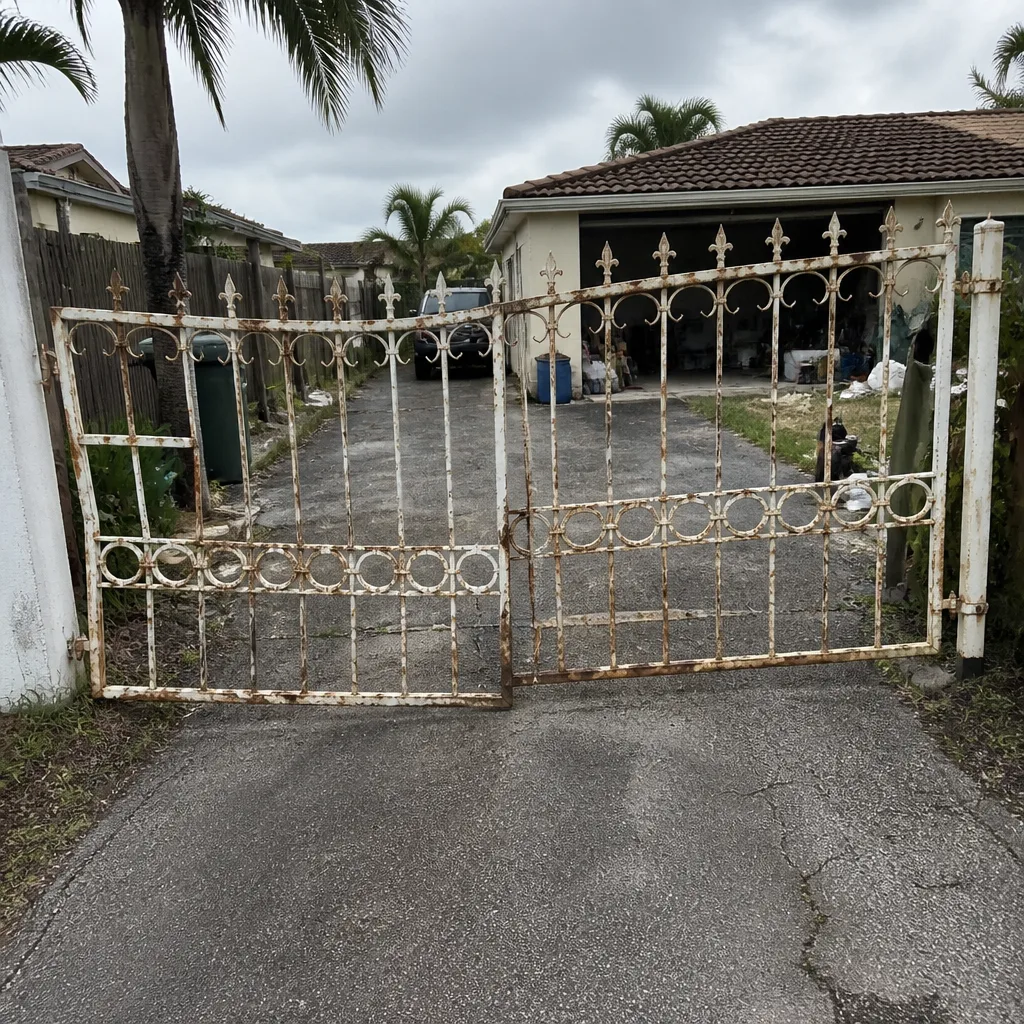 Before
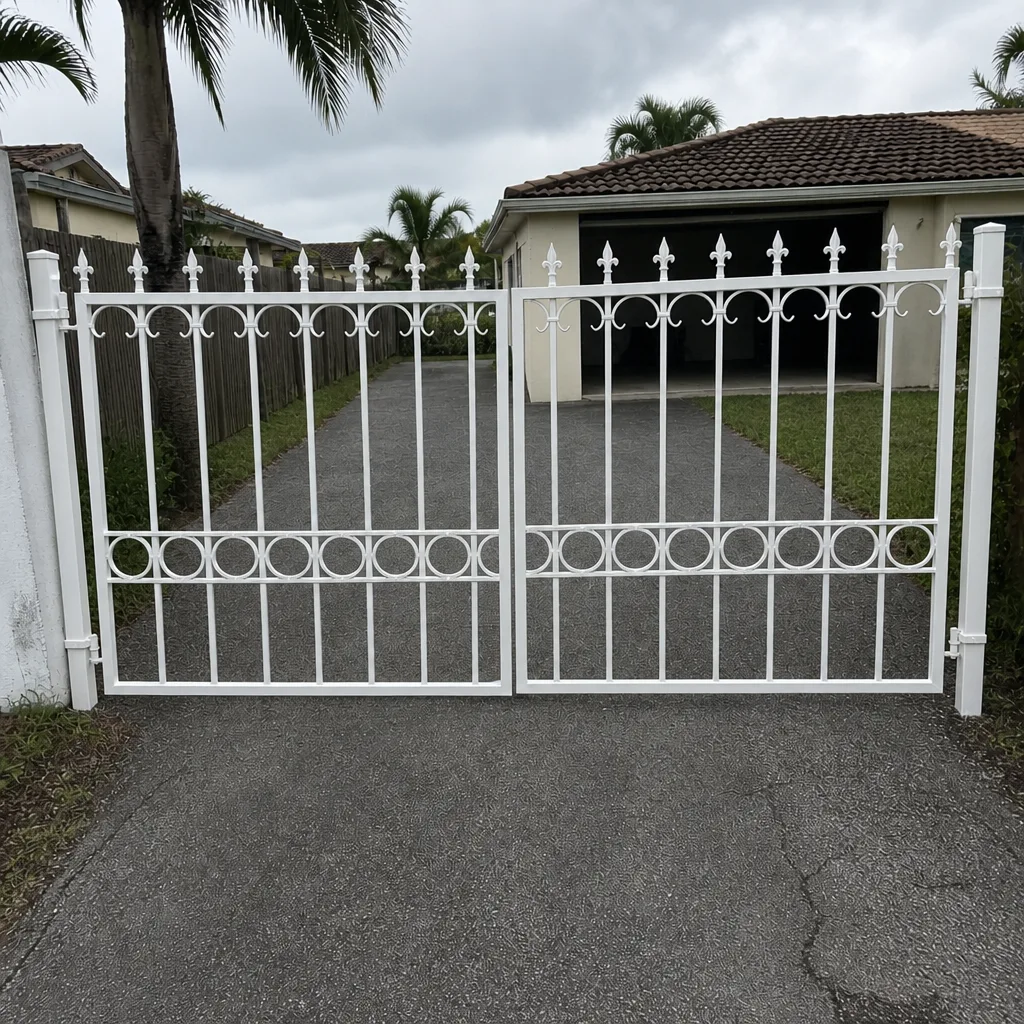 After
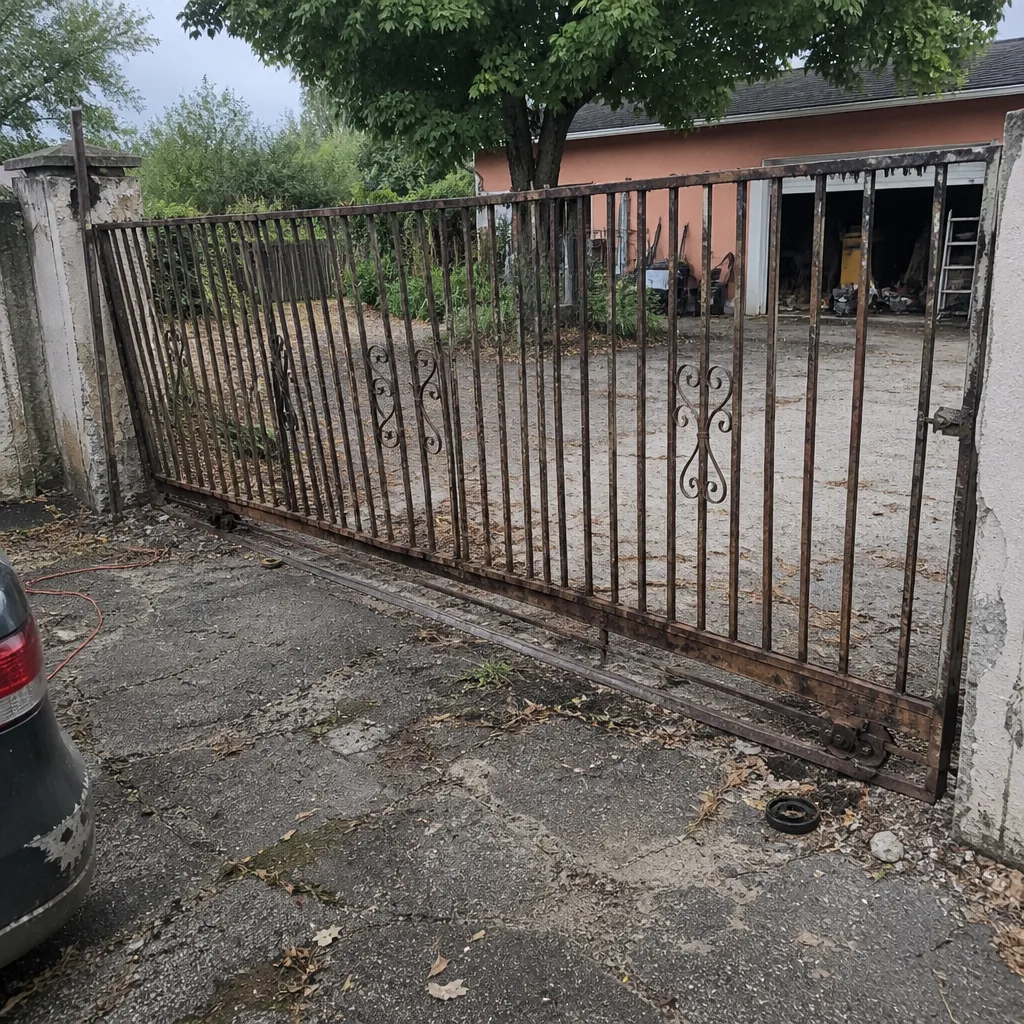 Before
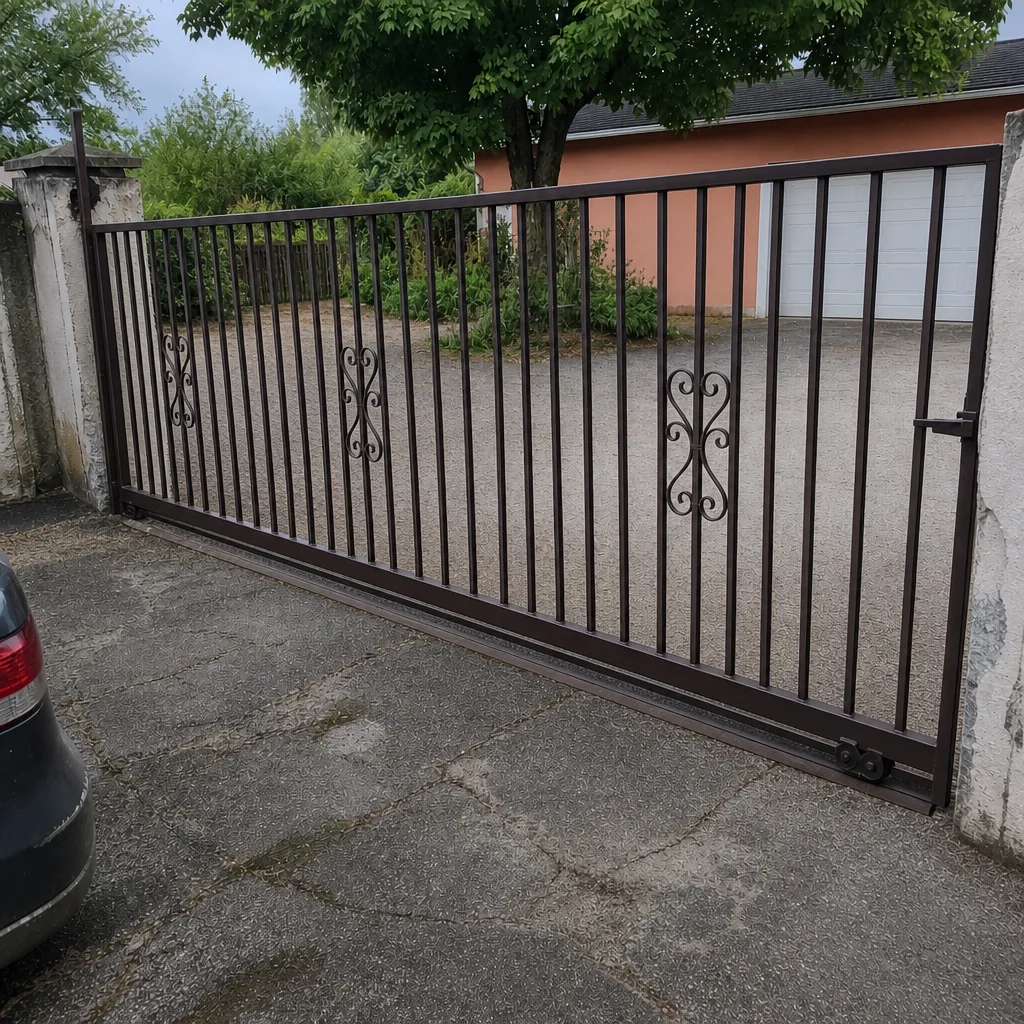 After
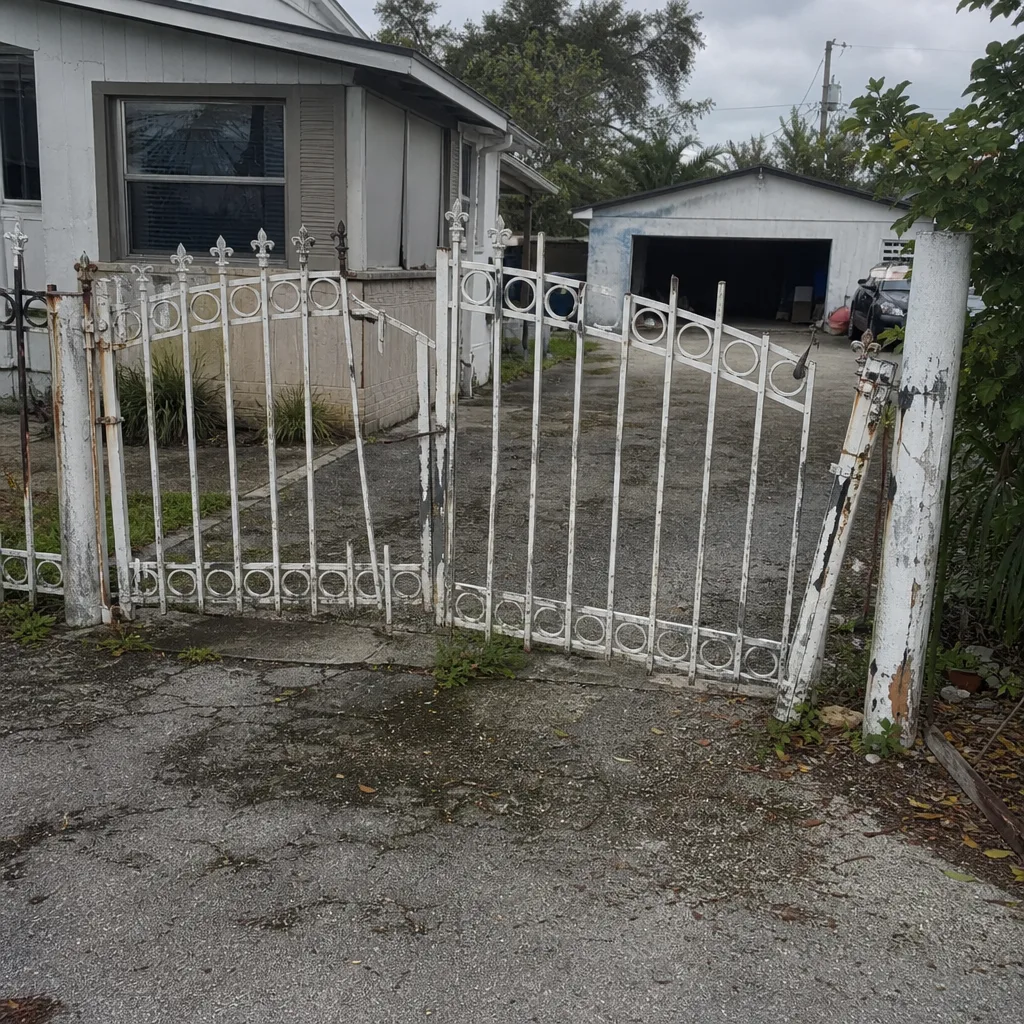 Before
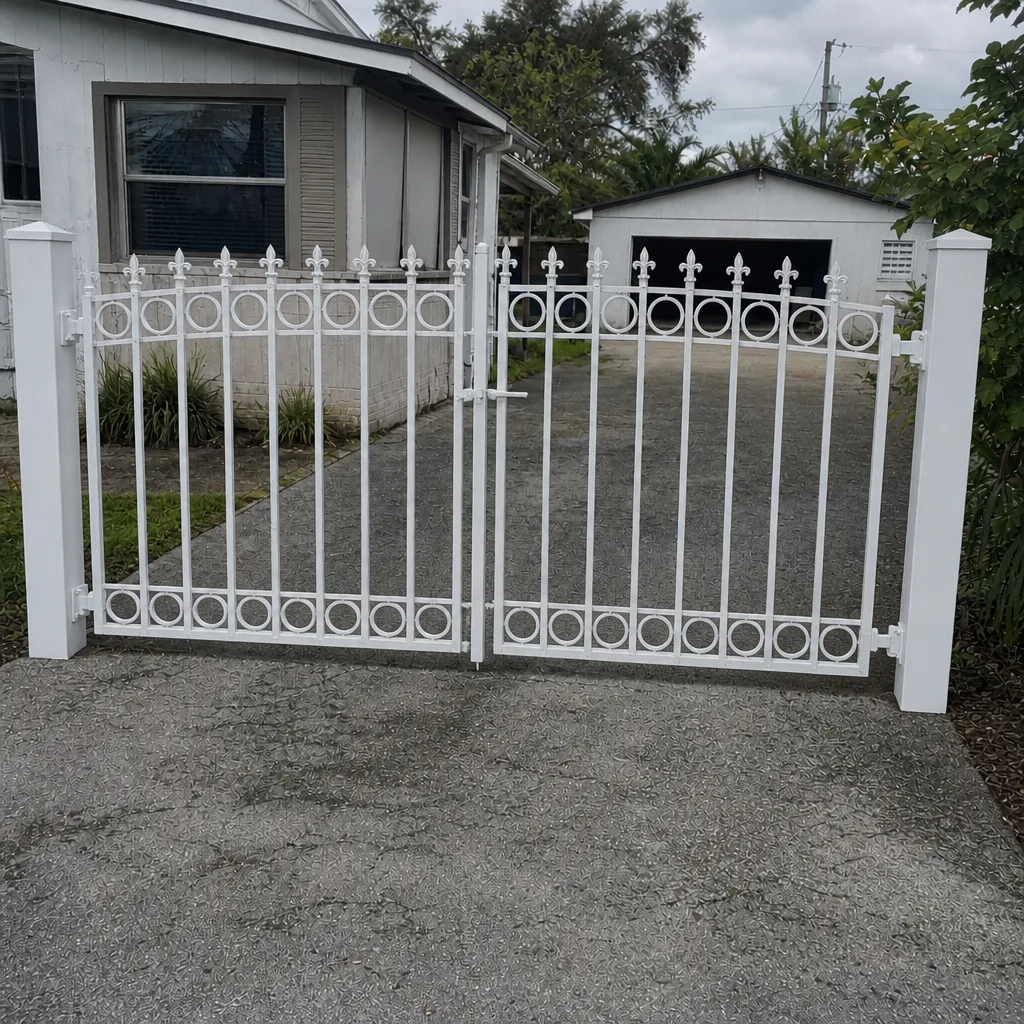 After
When to Call a Professional
Most gate issues are safe to observe and easy to describe on the phone – but a few situations need a professional immediately. Call a gate technician the same day if: the gate has fallen off its track, a hinge or post shows a crack, the gate moves in a direction you don’t expect, a safety sensor has stopped working, or the operator emits a burning smell or a hum without movement. These are all signs that something is either structurally compromised or electrically unsafe. For everything else – a new grind, a hesitation, a blink code, a sag – a scheduled diagnostic is the right call, and in most cases it’s the cheapest way to keep a small problem from becoming a large one.
If you’re in Miramar and want a straight answer on what your gate is telling you, Gate Repair Miramar offers free estimates. Call (855) 644-1097. We answer 24/7. Fast dispatch from 7am to 7pm, Sunday through Friday.
Frequently Asked Questions
The earliest signs are usually a new sound (a grind, click, or hum) and a hesitation before the gate moves. The sound is the mechanical wear starting to show; the hesitation is the operator compensating for it. If you catch either, it’s an inexpensive diagnostic. If you catch both, the gate is telling you to schedule a service soon.
It can, but it’s almost always more expensive. A gate that stops working has usually been failing for weeks or months. What would have been a hinge adjustment, a roller replacement, or a control board diagnostic turns into an operator replacement or a structural repair once the failing part has taken other components with it. Waiting on a gate almost always costs more than acting on the first warning sign.
In most cases, a gate needs a repair – the failure is a specific part (hinge, roller, control board, limit switch, motor). Replacement is usually only the right call when the gate frame itself is structurally compromised or the operator is at the end of its service life and parts are no longer available. A free estimate will tell you which one you’re looking at. It’s almost always cheaper to repair than replace.
A hesitation means the motor is working against a load – usually a binding hinge, a misaligned track, or a drag somewhere in the travel path. The operator compensates by pausing, then starting with more force. It will compensate until the extra force burns out the motor or the control board, which is why a hesitation is one of the warning signs worth acting on quickly.
Yes – a blinking light is the control board’s diagnostic message. Depending on the operator brand, the number or pattern of blinks maps to a specific fault: obstruction, limit switch, photo-eye misalignment, motor fault, or power issue. Write down the pattern and call a technician who works with your brand. A technician familiar with LiftMaster, FAAC, BFT, Linear, or DoorKing can decode the pattern from the operator’s own manual.
Slide gate problems are usually about rollers, the track, the drive gear, or the limit switches – the gate moves along a path and the wear points are along that path. Swing gate problems are usually about hinges, the operator arm, alignment, or post settling – the gate pivots and the wear points are at the pivot. A slide gate that hops or drifts off its track needs a roller or track diagnosis. A swing gate that sags or drags needs a hinge or alignment diagnosis. They’re different jobs, and misreading one for the other is what leads to unnecessary parts.
If you’re in Miramar and not sure which category your gate falls into, gate repair diagnostics from a gate-only technician will tell you exactly what’s wrong. Call (855) 644-1097. We answer 24/7. Fast dispatch from 7am to 7pm, Sunday through Friday.
The Bottom Line
Gate failure is a sequence, not an event. The hesitation, the grind, the blinking light, the sag – each one is a message, and each one gives you a chance to fix a small problem before it becomes a large one. In our experience, the homeowners who catch gate problems early are the ones who save money, avoid unnecessary replacements, and keep their gates working for years longer than the ones who wait. Learn the warning signs, do the monthly walkthrough, and call a gate specialist when something changes. Whether your operator is a LiftMaster or a Mighty Mule, we carry the knowledge and parts.
For electric gate repair or a new gate installation in Miramar, we handle the whole system – operator, structure, and controls – so you have a single point of contact from the first diagnostic to the last adjustment. Our technicians have up to 12 years of experience across nine major gate brands. If your gate is showing any of the warning signs in this guide, call (855) 644-1097 for a free estimate. We answer 24/7. Fast dispatch from 7am to 7pm, Sunday through Friday.
Written by the team at Gate Repair Miramar.