
Last updated November 15, 2026
 Wrought iron
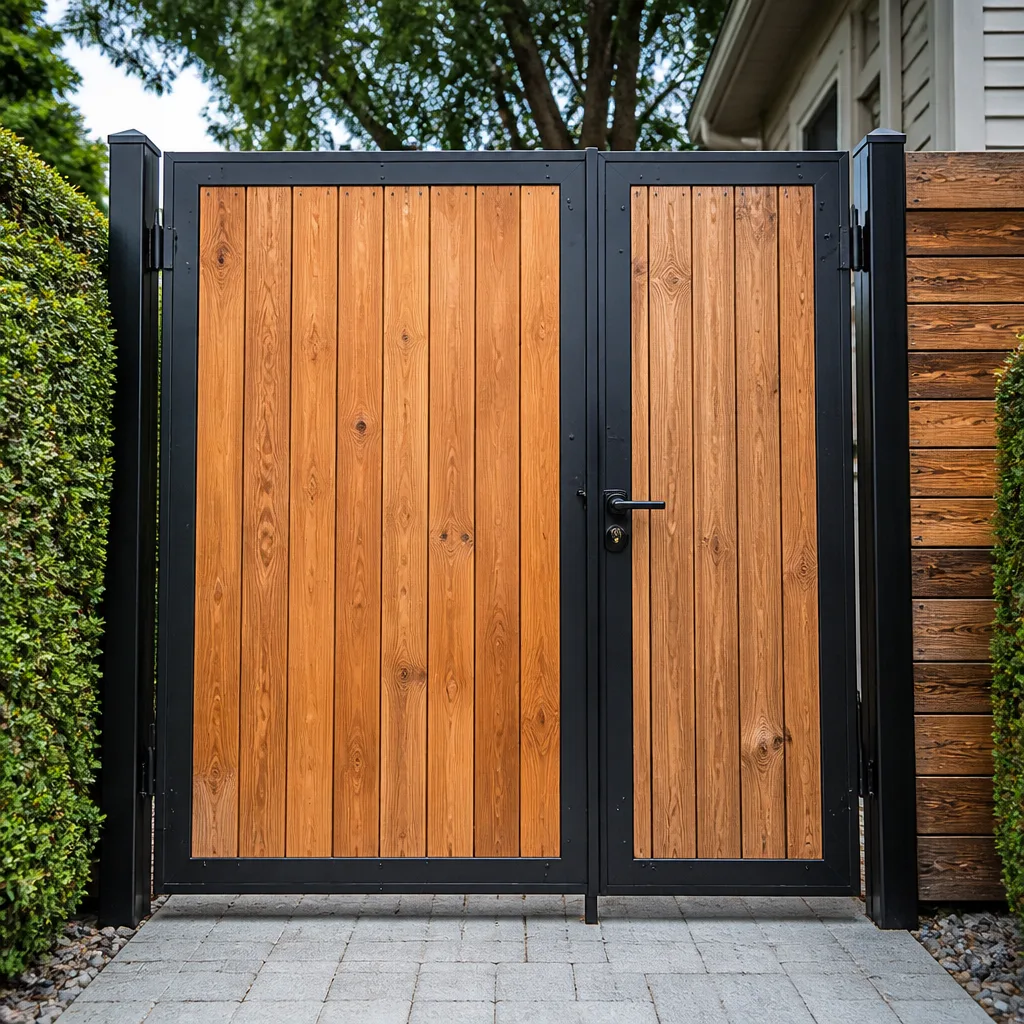 Wood & steel frame
 Farm & ranch
 Sliding driveway gates
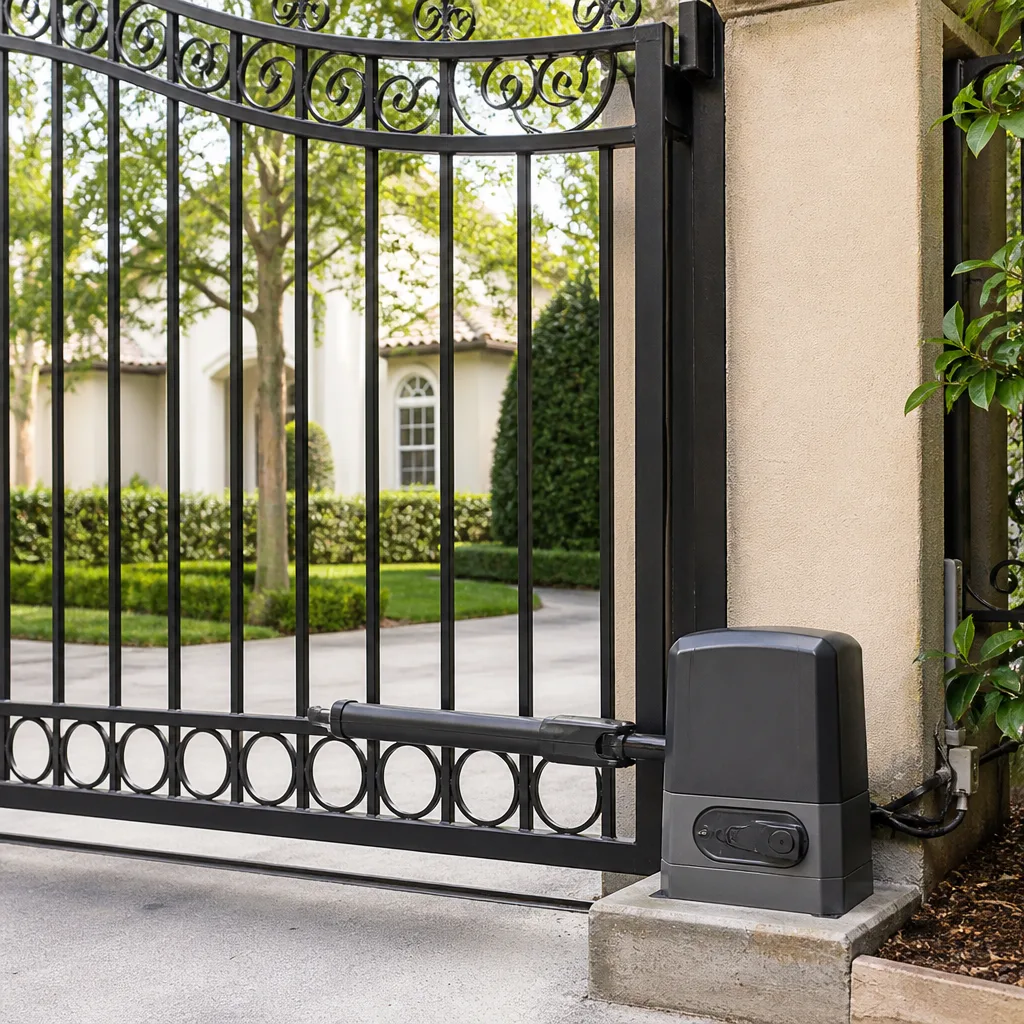 LiftMaster operators
Free on-site gate assessment - hinges, posts, and your LiftMaster or Nice gate operator checked before anything is quoted
The assessment is free and the quote is the invoice.
Get your free estimateSeasonal Gate Repair Care for Miramar: Year-Round Homeowner’s Guide
Most gate care advice you’ll find online was written for a place with four clean seasons. Miramar doesn’t have those. We have a rainy stretch that loads every moving part on your gate with water and grit, followed by a dry window when the ground firms up and repairs actually hold. The gate that fails in July usually started failing in March, and the homeowner never saw it coming. October is the month you can finally see what summer did. This guide walks you through both halves of the Miramar year: what to tighten, test and treat before the rain, how to read the warning signs while storms roll through, what to audit once the wet season loosens its grip, and why January through March is the smartest time to schedule anything serious. It’s built for homeowners and property managers in Miramar who want their gate working next year, not just next week.
Quick Answer
Seasonal gate care in Miramar works on two cycles, not four. Your wet-season window (roughly June through November) is about prevention and monitoring: hardware checks, drainage, operator testing, and watching for the sluggishness and misalignment that storm stress causes. Your dry-season window (January through March) is when major repairs, hardware replacement, and full installations actually get done, because the ground is stable and the work holds. Split your gate care across those two phases and most common failures never get a chance to start.
Styles & brands we work with
- Wrought iron
- Wood & steel frame
- Farm & ranch
- Sliding driveway gates
- LiftMaster operators
Table of Contents
- Why Miramar’s Seasons Work Differently for Your Gate
- Pre-Wet-Season Prep: What to Tighten, Treat, and Test Before June
- In-Season Monitoring: Reading the Signs of Storm Stress
- The Post-Hurricane-Season Audit: Components That Absorb Hidden Damage
- The Dry-Season Window: Why January-March Is the Time for Major Work
- How Miramar’s Brief Cool Spells Affect Motor Performance and Limit Switches
- Your Miramar Gate Care Calendar, Month by Month
- When to Call a Professional
Why Miramar’s Seasons Work Differently for Your Gate
A gate is a mechanical system that spends its whole life outside. In a cold climate, the enemy is expansion, contraction and the freeze. In Miramar, the enemy is water intrusion followed by heat, then a dry spell that lets everything settle. That’s not four seasons. It’s two phases of stress, and your gate responds to each one differently.
The wet season is the stress phase. Rain and blowing water get into hinges, rollers, operator enclosures, underground conduit runs and control boxes. Metal rusts from the inside. Concrete footings soften at the edges. Grease washes out of the pivot points that need it most. A sliding gate that tracked true in May can start dragging in August because a track filled with grit and organic debris. A swing gate operator, sealed and buttoned up in spring, can start tripping a breaker because moisture found its way into the control board housing.
The dry season is the recovery phase. The ground dries and firms up, which matters a great deal for anything mounted in it: gate posts, hinges to concrete, operator anchors, safety loop sensors under the driveway. Repairs done now tend to still be right in six months. Repairs done mid-storm often need to be redone.
This is why we tell Miramar homeowners to stop thinking in seasons and start thinking in cycles. The gate doesn’t care that the calendar says spring. It cares that water got in during storm season and that you didn’t deal with it until the ground dried. Structure your attention around that fact and you’ll catch 70% of failures before they become bills.
If you’ve never mapped this out for your own gate, the second you start looking at it that way, the maintenance picture snaps into focus. It’s the same principle we work from on every gate repair job: find out what the weather just did to the system before anyone touches a wrench.
Pre-Wet-Season Prep: What to Tighten, Treat, and Test Before June
The best time to prepare a Miramar gate for storm season is before the first serious rain band rolls through, ideally May ahead of June. You’re not trying to fix anything yet. You’re trying to make sure the gate is in a state where storm stress can’t easily start a problem.
Here’s the sequence we recommend. Walk it in this order.
- Walk the full travel path with the gate moving. Watch for hesitation, chatter, or anything that drags near the end of travel. Any hitch now gets worse in wet weather.
- Check and clear drainage under and around the gate. If water pools at the foot of a post or in the track channel, that’s the first thing to fix. A gate sitting in standing water for weeks will rust and settle.
- Lubricate what the manufacturer says to lubricate, and nothing else. Hinge pivots, roller paths, and any manufacturer-specified grease points. Never grease a nylon roller or anything the manual says to keep dry.
- Tighten hardware you can safely reach. Hinge bolts, bracket bolts, roller bracket bolts, control box mounting screws. If tightening a bolt would require loosening anything load-bearing, leave it to a technician. Heavy gate panels can crush if a fitting gives way while you’re working near it.
- Test the operator system end to end. Run the gate both directions with the safety edges active. Trip the edge on purpose and confirm the gate reverses. Test the manual release in the position you’d actually need it, and check the battery backup if there is one.
- Inspect the control box enclosure for gaps. Look at the door seal, any conduit entry points, and cable glands. A small gap in May is a soaked control board in September.
- Look at the mounting posts and footings. Any obvious lean or new crack in the concrete around a post is worth a professional look before storm season loads it further.
None of this is exotic. We’ve seen Miramar property managers who do this every May tell us their gates simply don’t break, and the ones who skip it end up calling us mid-July for something that was visible in May.
Operators matter here too. If you have a LiftMaster swing or slide operator, the control board and battery backup are the two components that most often fail in the wet season. If you run a Mighty Mule system, the exposed terminal block in the control box is a common water entry point. These are not manufacturer flaws; they’re simply outdoor equipment, and outdoor equipment needs pre-season attention.
In-Season Monitoring: Reading the Signs of Storm Stress
Once the wet season is underway, your job changes from prep to watching. You are not trying to do repairs in the middle of it. You are watching for the specific signals that tell you the gate is absorbing storm stress faster than it can shrug it off.
What you’re looking for, in order of urgency:
- Slower travel. A gate that used to fully open in 12 seconds and now takes 16 is telling you something. Could be friction, could be a motor losing torque, could be the control board compensating for a current draw. Don’t ignore it.
- Stalling or reversing on its own. A gate that closes halfway and reverses without any obstruction in the way is usually seeing a false safety signal, often a wet loop sensor or a moisture-fouled safety edge. This is a safety issue, not just an annoyance.
- Grinding, pop, or squeal from any hinge or roller. These are dry or contaminated pivots. They don’t fix themselves and they wear the hardware faster.
- Visible rust bloom or paint lifting on post bases. The bottom 6 inches of a gate post is where water sits longest.
- Breaker trips or fuse blows on the operator circuit. This can indicate moisture in the control housing, a failing motor, or a short in the low-voltage safety circuit. An electrical fault in an automated gate is worth a technician’s attention right away. Do not open a control box yourself.
- Pooling water next to a footing. Persistent standing water around a post base softens the ground, and softened ground lets posts move.
Here’s the useful rule for the wet season: anything that looks like it might be a safety issue gets a call now, not a note in your phone for later. Anything that’s cosmetic or minor can probably wait for the dry window. When in doubt, describe it over the phone and let the technician decide. We answer 24/7. Fast dispatch from 7am to 7pm, Sunday through Friday, if a call turns into a visit.
The other thing to do during the wet season is keep a simple log. Note the date and what you saw. When storm season ends, that log is the best tool for the post-season audit below, because it tells you what changed and when. A gate that started grinding two days after a named storm is a different story from a gate that’s been grinding quietly since spring.
The Post-Hurricane-Season Audit: Components That Absorb Hidden Damage
When the last serious weather system has moved on, typically by late November, you have a window to look for hidden damage. This is the most important inspection of the year for a Miramar gate. Not because things break in October; because October is when you can see what the summer already did.
Some components absorb storm damage quietly. They don’t fail during the storm. They fail two or six months later, and by then everyone has forgotten the storm. Those components are:
- Underground safety loop sensors and their wiring. Water enters splices, and the loop itself can shift if the driveway pavement around it has settled. The gate seems fine until one day it starts reversing for no reason.
- Conduit runs feeding the operator. Even a small crack in a conduit body lets water travel inside it. The result is often a corroded wire that works fine until it doesn’t.
- The operator control board and battery. Even a properly sealed enclosure has been through months of humidity. Batteries that are near end of life often quietly die in the months after storm season.
- Gate post footings. A footing that took on water and then dried can shrink slightly. Posts that were plumb in June can show a lean in December. This matters most on swing gates, where a lean throws the whole geometry off.
- Hinges, pivot points and roller brackets. Micro-rust in pivot assemblies accelerates wear silently. By the time you hear it, the wear is real.
- Safety edges and photoelectric sensors. Both are designed to tolerate weather, but both can fail subtly. A safety edge that no longer trips reliably is a serious hazard, especially since the gate may continue to close on an obstruction.
The audit itself takes maybe 20 minutes on a residential gate and longer on a commercial one. Do these in order:
- Walk the gate slowly and look at every post base for movement, cracks, or rust bloom.
- Test both safety edges and any photoelectric sensor, deliberately, with an object (never your hand or body).
- Open and close the gate several times and time it. Compare against the number you noted in May.
- Check the operator enclosure seal, then look at the battery if it’s accessible without opening a live electrical panel.
- Look at the driveway surface around any underground sensor to see if it has changed.
- Listen – really listen – for any change in sound at full travel.
If any of those steps turns up something that involves opening an electrical enclosure, testing loop wiring, or adjusting a footing, that’s a call to a technician. We’ve handled enough of these across Miramar to know which issues resolve with adjustment and which need parts. Our technicians have up to 12 years of experience, and the most valuable thing that experience buys is knowing when to leave something alone.
The Dry-Season Window: Why January-March Is the Time for Major Work
If you’re planning a major repair, a hardware replacement, or a full gate installation in Miramar, aim for January through March. This isn’t arbitrary. It’s the window when the ground is driest and most stable, which is exactly what you want for anything anchored in it.
Why the ground matters so much:
- New posts set better. A footing poured and set in dry, firm soil cures without water pushing against it. A footing set during the wet season is fighting moisture the whole time it cures.
- Operator anchors hold. Anchored operators depend on the concrete staying exactly where it was drilled. Wet-season soil movement between anchoring and full cure is a common source of premature failure.
- Underground loop sensors install cleanly. Cutting and sealing a driveway for a loop sensor, then letting the seal cure in dry weather, gives you a much better result than the same work interrupted by rain.
- Paint and rust treatment actually cure. Exterior coatings applied to gate steel or aluminum need dry conditions to cure properly. In the wet season the window closes fast.
This is also why the dry window is the right time for a new gate. A gate installation is a measured, ordered, scheduled job, not a same-day service. Ordering hardware in January means you’re not competing for availability in the middle of storm season when everyone else is calling about repairs. And the install itself happens in conditions where the concrete, the anchoring, and the operator alignment all go in clean.
We work across the full range of gate systems, from residential operators like Mighty Mule and Ghost Controls to commercial-grade systems from FAAC, BFT, and DoorKing. That matters most when you’re planning work in advance, because the parts and the lead time on each system are different. A LiftMaster residential operator and a FAAC commercial system have very different supply chains, and a planned dry-season install is where you can actually plan around that.
One more reason to take the dry window seriously: putting off repairs until “after the holidays” is exactly how Miramar homeowners find themselves calling in June with a gate that can’t be fixed until the weather breaks. If you’re reading this in January and you know your gate has an issue, deal with it now, while the work will hold. If you have questions about what a dry-season repair looks like for your gate, our electric gate repair page covers the specific systems and how we approach them. To see the full range of what we handle across Miramar, our main page is the place to start.
How Miramar’s Brief Cool Spells Affect Motor Performance and Limit Switches
Miramar doesn’t have a real winter, but it does have cool spells. And a cool spell is enough to reveal an operator that was already marginal in warm weather. That isn’t about damage. It’s about physics.
Gate operator motors are designed around a specific operating temperature range. In heat, motor windings and control boards run at the top of their range. In cooler temperatures, the motor runs more efficiently, but the mechanical load on the gate can change. Metal contracts slightly. Grease thickens. A roller path with any stiffness at all will feel it. The two things you might notice:
- The gate moves slower on a cool morning than on a warm afternoon. If the change is subtle, it’s normal. If it’s dramatic, or if the operator is straining or stalling, that’s worth a technician’s time.
- The gate stops slightly short of full open or full close. This is almost always limit switch calibration. Limit switches tell the operator where the gate’s travel ends. They’re temperature sensitive and they drift. An operator that was perfectly calibrated in August can hit a limit switch slightly early in January.
If your operator has user-accessible limit adjustments – and most residential systems do – you can often reset them by following the manufacturer’s manual. Do that with the gate in manual mode and with the power properly isolated. If you don’t have the manual or you’ve never adjusted limit switches, call a technician. An incorrectly calibrated limit switch is a real collision risk at the end of travel. The panel and the operator motor are not worth experimenting with.
This is exactly what we mean when we say most gate problems are brand-specific. A LiftMaster residential operator’s limit switches adjust differently than a Linear unit, and a commercial FAAC system is a different procedure again. That’s why we work with the nine major brands: LiftMaster, FAAC, BFT, Linear, Viking, Ghost Controls, DoorKing, Elite, and Mighty Mule. The diagnostics may look similar; the adjustments and parts are not.
Your Miramar Gate Care Calendar, Month by Month
Here’s the year mapped out. Use it as a checklist, not a strict schedule, since a gate doesn’t fail on a calendar.
January-March: Dry-season window.
- Schedule any major repair, hardware replacement, or full installation now.
- Get quotes for new gates or operators, since this is when lead times are manageable.
- Address any issues discovered in the post-season audit (below).
- Repaint or treat any rusty sections.
- Have post footings and underground loop sensors looked at if there’s any question about them.
April-May: Pre-wet-season prep.
- Full hardware tightening walk-through.
- Lubricate specified grease points only.
- Clear drainage around the gate and in the track.
- Test all safety edges and the manual release.
- Run a full open/close cycle and time it. Note the time.
- Inspect the control enclosure for gaps.
June-November: In-season monitoring.
- Watch for slow travel, stalling, grinding, or self-reversing.
- Call immediately for any safety-related issue.
- Keep a simple log of what you observe and when.
- Do not open electrical enclosures yourself.
- After any named storm, do a quick visual pass and note anything that changed.
October-November: Post-season audit.
- Formal inspection of hinges, footings, control box, safety edges, and underground wiring.
- Compare current cycle time to the number you noted in May.
- Battery test for any operator with a battery backup.
- Book any repairs for the January-March window.
That’s the full year. Once you’ve been through it once, it takes very little of your time and does a lot of quiet protective work.
See the difference
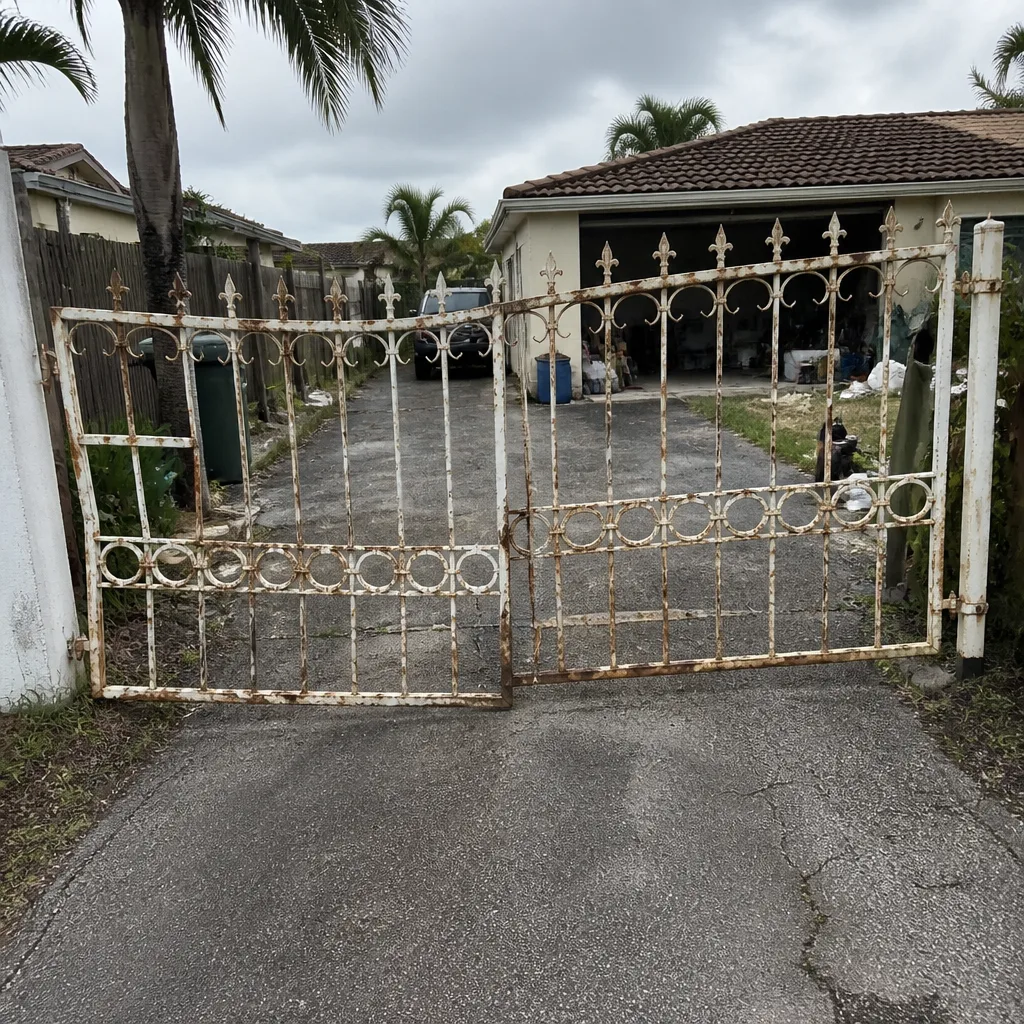 Before
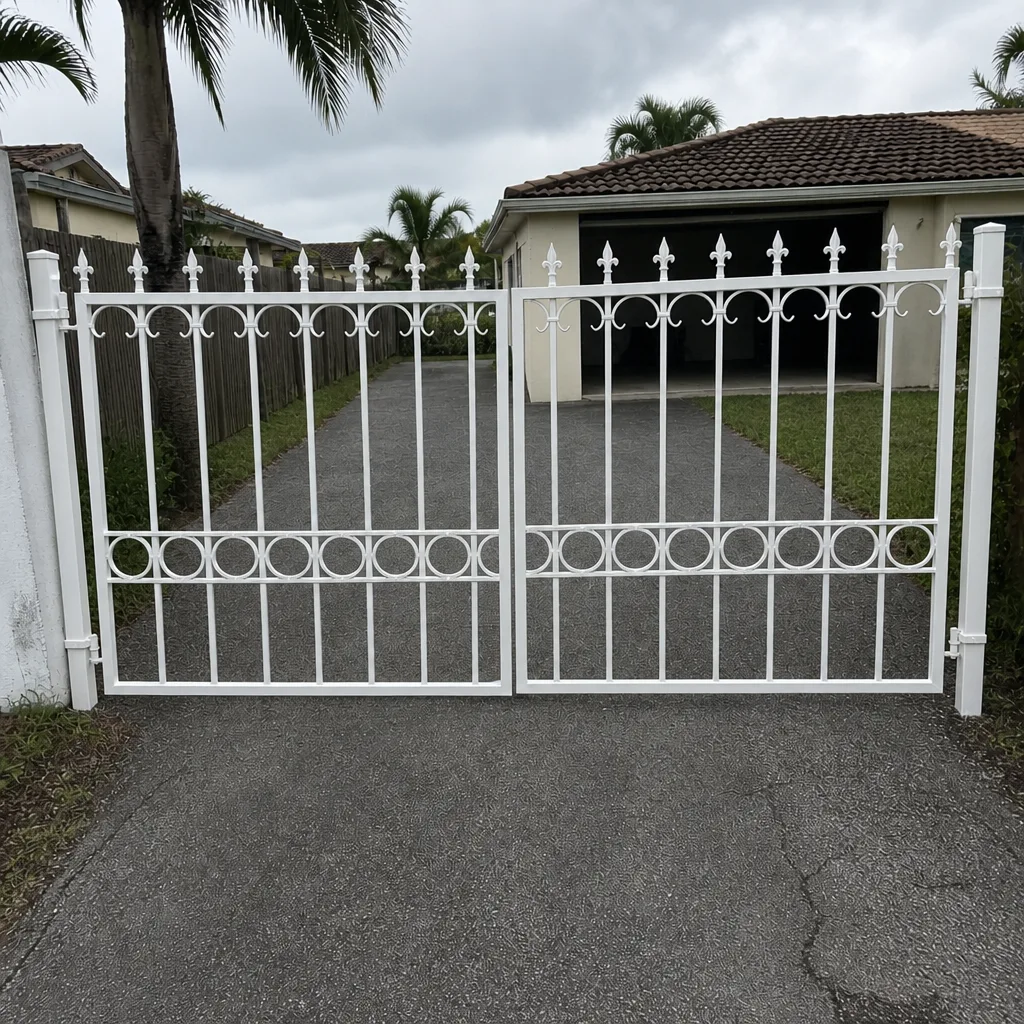 After
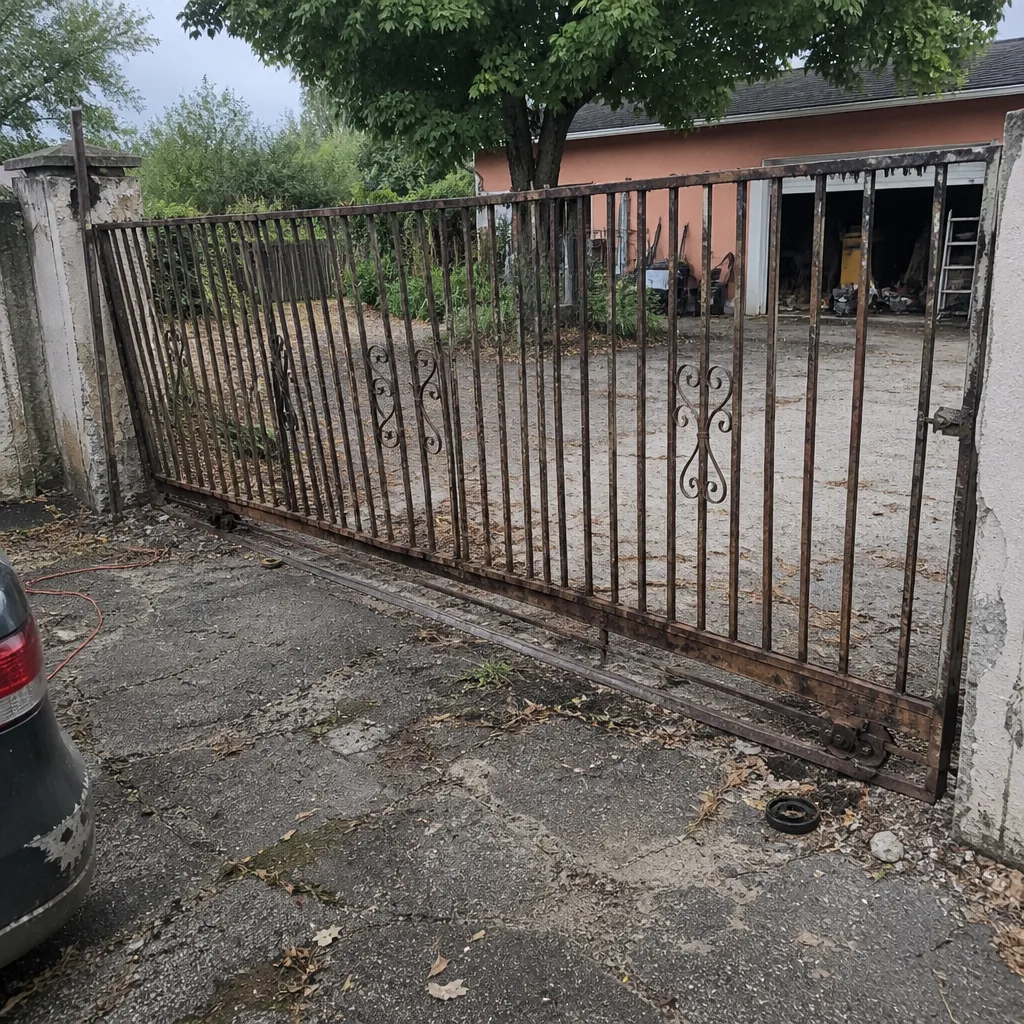 Before
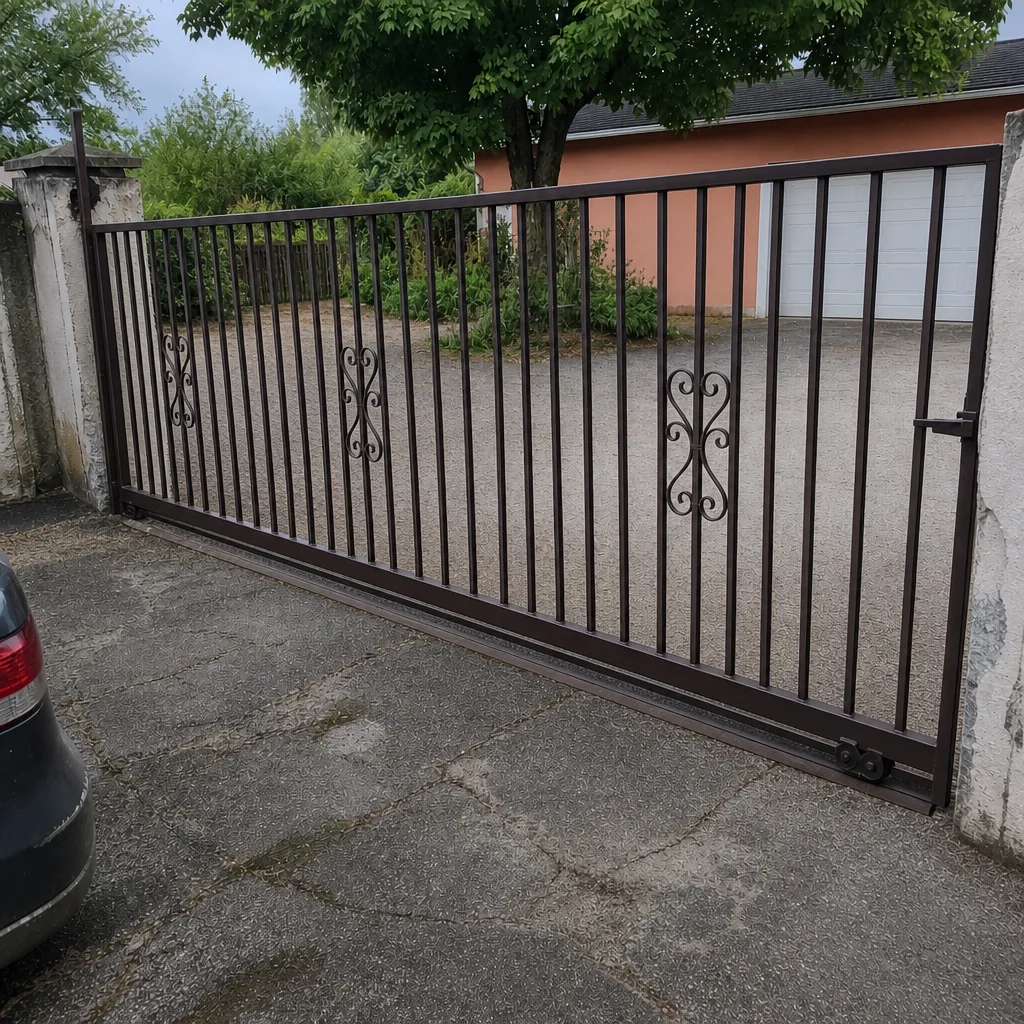 After
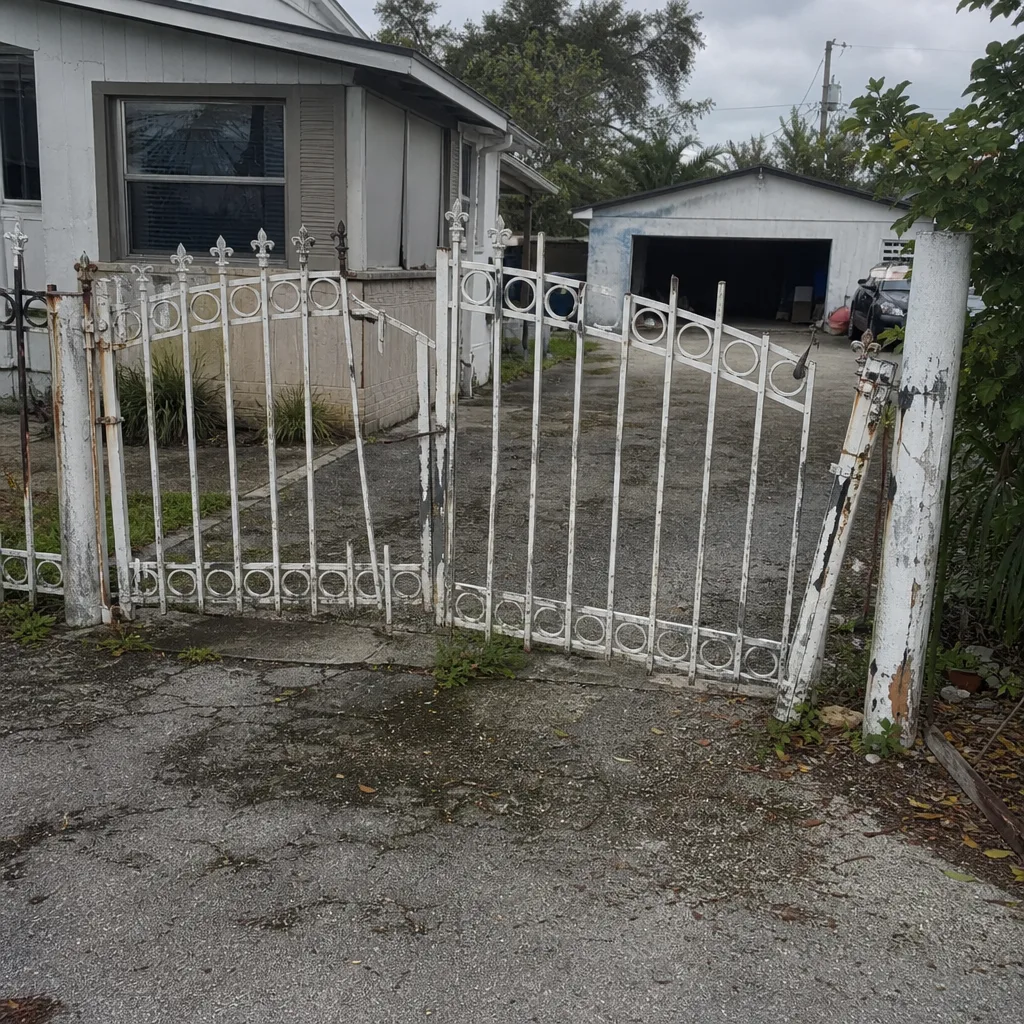 Before
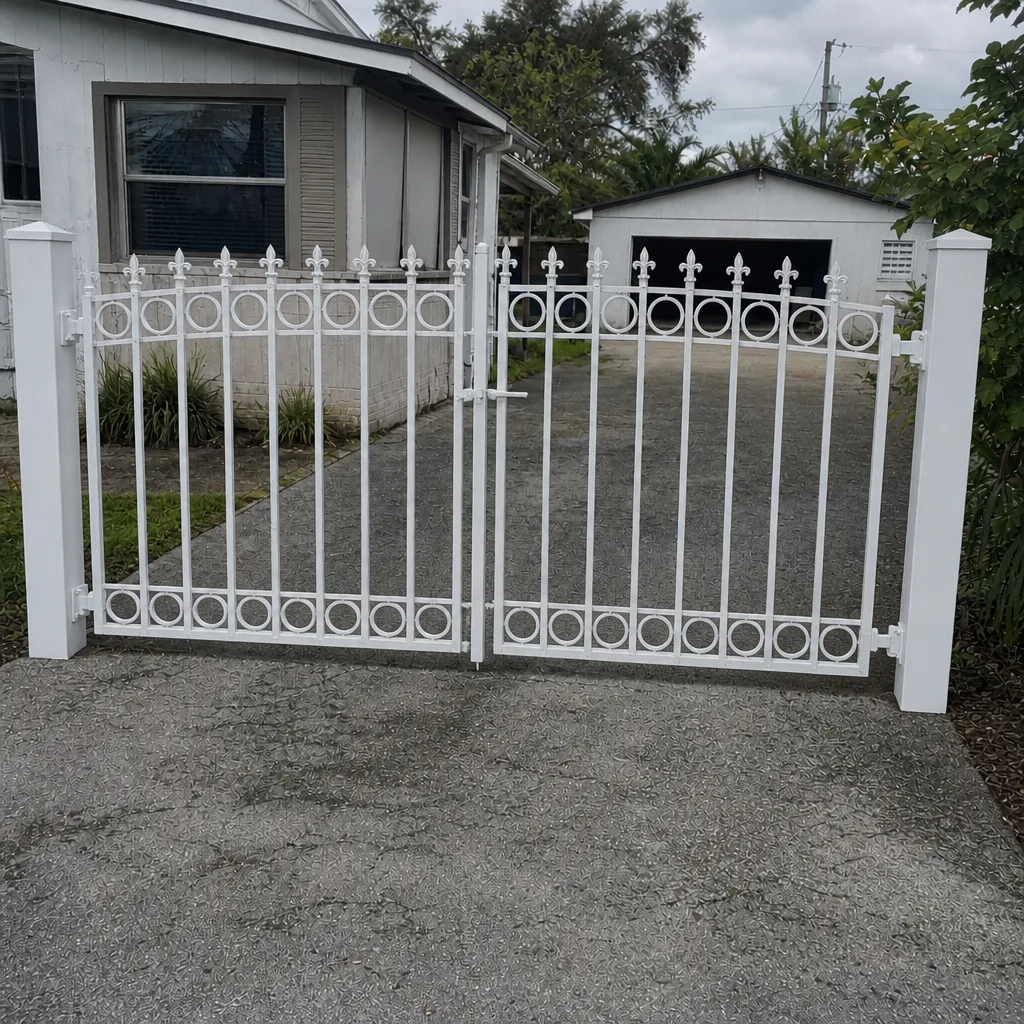 After
Common Mistakes to Avoid
- Treating the dry-season window as “no urgency.” It’s the opposite. Dry weather is when a repair actually holds. Deferring a fix in January means it gets done in storm season, and it may need redoing.
- Greasing everything “because grease is good.” Lubricating nylon rollers, certain safety mechanisms, or anything the manual specifies as dry can cause real problems. Match what you apply to what the manufacturer specifies, and nothing else.
- Ignoring a self-reversing gate. A gate that closes and then opens for no reason is usually flagging a wet loop sensor, a fouled safety edge, or a wiring fault. Treat it as a safety issue the first time, not the fifth.
- Doing your own electrical work on an automated gate. The operator’s power supply, control board, and safety wiring are not DIY territory. This is genuinely dangerous and can leave the gate in a state where the safety devices don’t work.
- Scheduling a full installation in the middle of storm season. It can be done, but not well. Custom gate hardware is measured and ordered, and the concrete work wants dry, stable ground. Plan major work for January through March.
- Skipping the October audit because the gate “looks fine.” The damage you can’t see is exactly the damage the October audit is designed to catch: loop sensors, footing movement, and micro-rust in pivots.
- Calling a generalist for a brand-specific problem. Miramar has plenty of handyman services. A gate problem is a gate problem, and a generalist guessing at the issue on a FAAC system or a Mighty Mule operator wastes time. Find someone who works on gates, every day.
When to Call a Professional
Some gate issues you can address yourself with the manufacturer’s manual. Many you can’t, and the ones you can’t are usually the ones that matter most. Call a professional when:
- The gate reverses or stops for no visible reason – this is almost always a safety device issue.
- You suspect water intrusion in the control box or you see moisture inside an enclosure.
- The gate has visibly shifted, leaning posts are present, or an underground sensor seems to have moved.
- The operator has lost power or a breaker keeps tripping on the gate circuit.
- The gate is making a sound it didn’t make before.
- You’re planning a new gate, a new operator, or a hardware replacement and want a proper measure and written quote.
Gate Repair Miramar offers free estimates in Miramar. We work on everything from residential Mighty Mule and LiftMaster operators to commercial FAAC, BFT, DoorKing, Linear, Viking, Ghost Controls, and Elite systems, and we handle repair, electric gate repair, and installation start to finish. Call (855) 644-1097. We answer 24/7. Fast dispatch from 7am to 7pm, Sunday through Friday.
Frequently Asked Questions
October is the highest-value month. Not because gates fail in October, but because that’s when you can finally see what the wet season did. A thorough October audit of hinges, footings, safety devices, and the operator catches the hidden damage before it turns into a February breakdown. October is also when you should schedule any needed repair for the January-March window.
Aim for the dry window, January through March. New gate installation is a measured, ordered, scheduled job, not a same-day service, and the concrete work, anchoring, and loop sensor installation all do better in stable, dry ground. Ordering in January also means you’re not competing for availability during storm season when everyone else is calling with repairs. Call (855) 644-1097 for a free measure and a written quote.
Yes, treat it as a safety issue. A gate that reverses without an obstruction is usually seeing a false signal from a wet safety loop, a moisture-fouled safety edge, or a wiring fault in the low-voltage circuit. Do not ignore it. Call (855) 644-1097 and we’ll get a technician out to diagnose it.
Most likely it’s the cold. Metal contracts, grease thickens, and a marginal operator that runs fine in summer heat struggles in cooler temperatures. Limit switches can also drift slightly with temperature, which is why your gate may stop a few inches short of full travel. If the change is dramatic or the gate stalls, call us for a look – an incorrectly calibrated limit switch is a collision risk.
We work across the nine major gate brands: LiftMaster, FAAC, BFT, Linear, Viking, Ghost Controls, DoorKing, Elite, and Mighty Mule. That covers the most common residential and commercial operators in Miramar and the wider area. If you’re not sure what you have, describe it over the phone or send a photo, and we’ll confirm before we come out.
You can do a visual walk-through, note anything that’s changed, keep a log, and clear debris and drainage around the gate. What you should not do is open electrical enclosures, test loop wiring, work near anything load-bearing without training, or adjust the operator’s control board. Heavy gate panels can crush, and the operator’s power supply is a shock hazard. Call us for anything that involves opening a panel or adjusting a safety device. Estimates are free.
The Bottom Line
Miramar doesn’t have four seasons for your gate. It has a stress phase and a recovery phase, and everything about good gate care flows from recognizing that. Prepare in April and May. Monitor through the wet season, taking any safety signal seriously. Audit in October when you can actually see the damage. And do the big work in January through March when the ground is dry and repairs hold. That structure alone prevents most of the failures we get called about. It’s also the fastest way to spot the problems that need a real technician rather than a guess. If you’re ready to build that routine, or you’ve spotted something worth fixing, call (855) 644-1097. We answer 24/7, we offer free estimates, and fast dispatch runs from 7am to 7pm, Sunday through Friday. The price is quoted and agreed before any work starts, so you know what you’re getting before we do anything. For the full picture of what we handle, start at Gate Repair Miramar.
Written by the team at Gate Repair Miramar.