
Last updated November 15, 2026
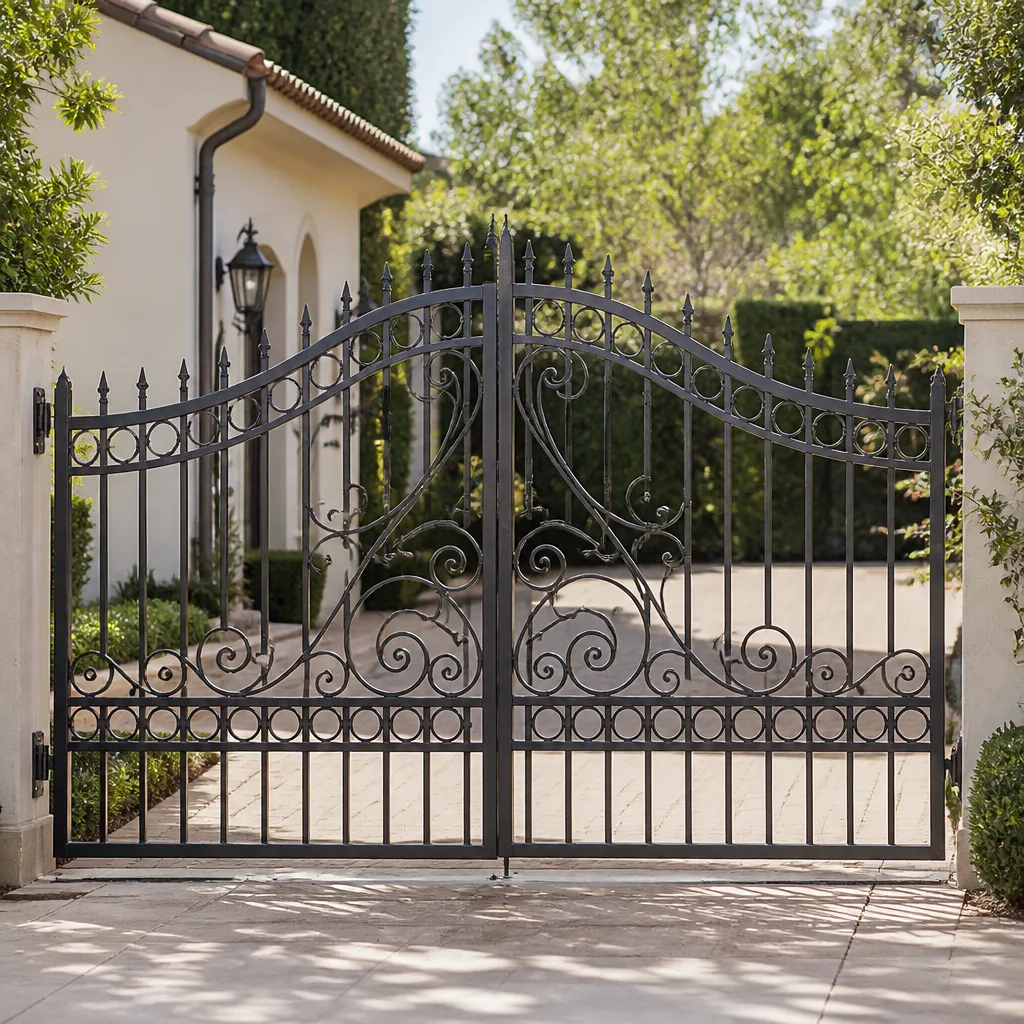 Wrought iron
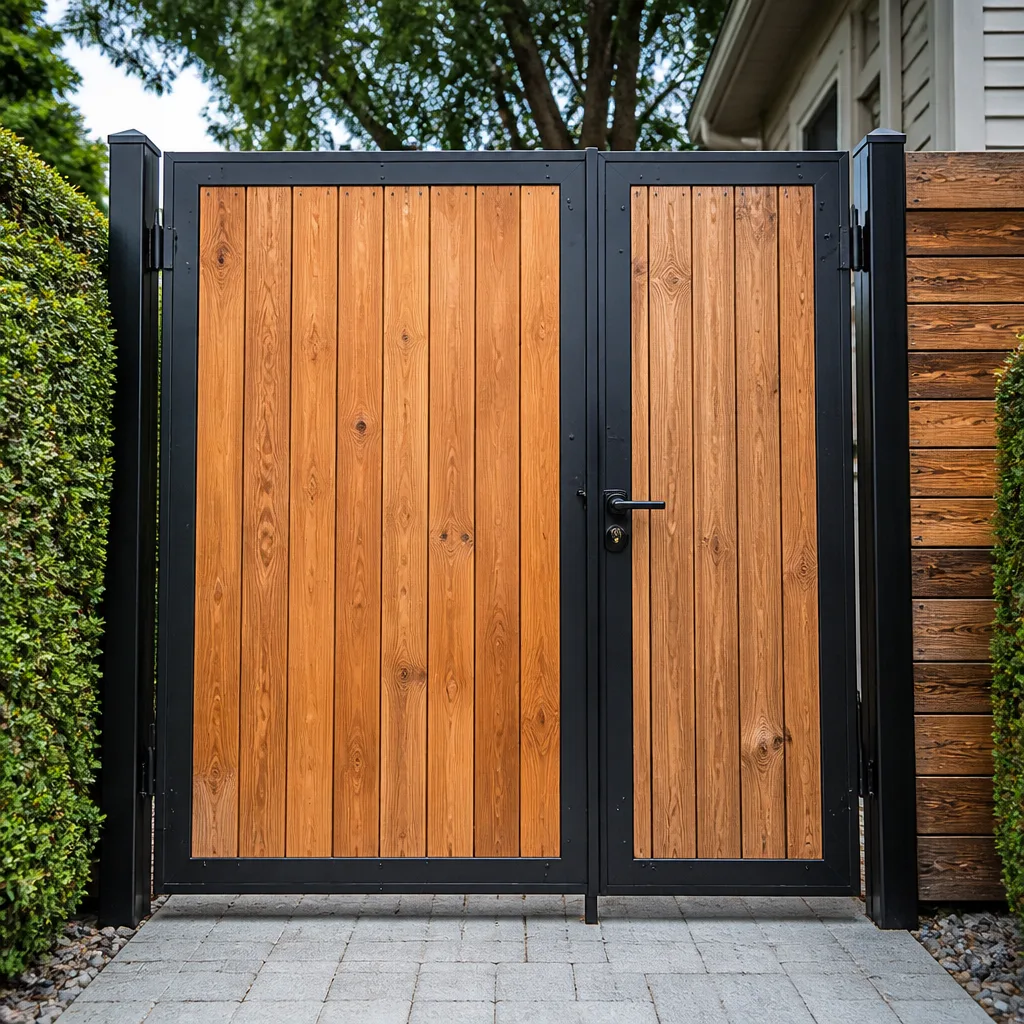 Wood & steel frame
 Farm & ranch
 Sliding driveway gates
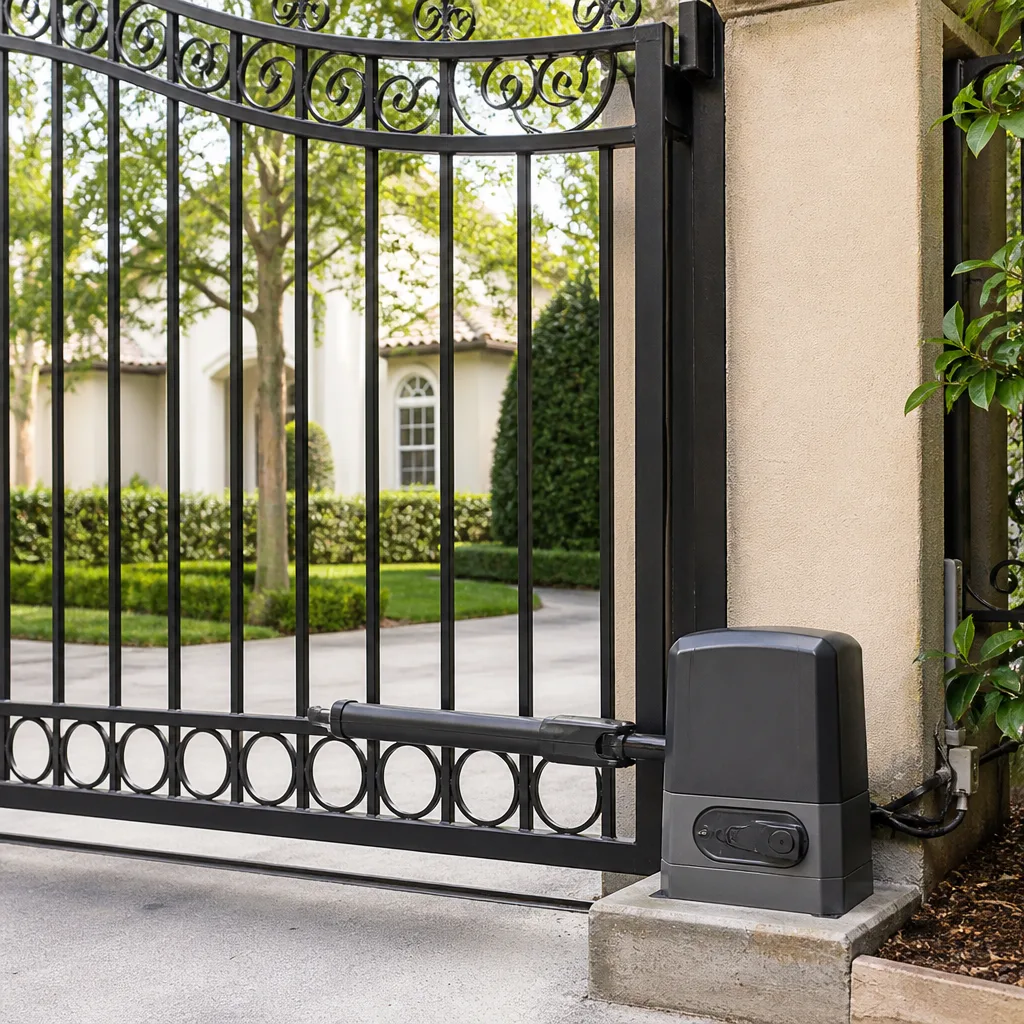 LiftMaster operators
Free on-site gate assessment - hinges, posts, and your LiftMaster or Nice gate operator checked before anything is quoted
The assessment is free and the quote is the invoice.
Get your free estimateGate Repair Troubleshooting in Miramar: Common Problems and How to Fix Them
A gate that reverses before it closes isn’t broken. It’s communicating. An obstruction sensor, a limit switch, and a failing logic board can each produce a symptom that looks nearly identical from the driveway, yet each one requires a completely different fix. Misreading the category is where homeowners lose the most time and money, because the wrong part gets replaced and the gate still stops halfway. In this guide, we’ll walk you through a diagnostic framework we use on gate work across Miramar: how to read what your gate is telling you, which checks you can safely make yourself, which ones need a technician, and how to give us the right information before anyone arrives. Every symptom falls into one of five categories, and once you know which one you’re in, the rest gets a lot simpler.
Quick Answer
Most gate problems in Miramar trace back to one of five root causes: an obstruction sensor or photo-eye fault, a limit switch that has drifted or corroded, a logic board or operator fault, a mechanical issue like a worn arm or a slide gate off its track, or a power and wiring problem. Reversing gates usually point to sensors, partial openings to limit switches, complete silence to power or board faults, and grinding noises to mechanical wear. Identifying the right category first is what lets you fix the gate faster or hand a technician the information that shortens the visit.
Styles & brands we work with
- Wrought iron
- Wood & steel frame
- Farm & ranch
- Sliding driveway gates
- LiftMaster operators
Table of Contents
- The Symptom-to-Category Map: What Your Gate Is Telling You
- Why South Florida Humidity Changes How Gates Fail in Miramar
- DIY-Safe Checks vs. Technician-Only Diagnostics
- Reading Operator Error Codes on Miramar Gate Brands
- When a “Working” Gate Is Actually a Liability
- Slide Gates vs. Swing Gates: Different Problems, Different Checks
- How to Brief a Technician Before They Arrive
- Common Mistakes to Avoid
The Symptom-to-Category Map: What Your Gate Is Telling You
A gate is a system, not a slab of metal. The operator (motor and controls), the structure (panels, hinges, rollers, tracks), the safety devices (photo-eyes, loop detectors, reverse sensors), and the power supply all interact. When one of them drifts out of spec, the symptom you see on the driveway is just the last link in the chain. Mapping the symptom to the category before you touch anything is the single most useful troubleshooting step. Here’s how we map the five most common fails in Miramar.
- Gate reverses before closing, or reverses on contact. This is almost always an obstruction sensor fault. Photo-eyes that are misaligned, fogged, dirt-blinded, or knocked out of true will trigger a reverse because the operator believes something is there.
- Gate won’t open at all. No movement and no hum usually means a power, fuse, or logic board issue. A hum but no motion usually means the motor or a capacitor has failed, or the operator is locked out by a fault.
- Gate opens partially, then stops in the same place every time. This points to a limit switch or travel setting that has drifted. The operator thinks it has reached the end of its travel.
- Gate ignores the remote or keypad entirely. A control-side problem: receiver, radio interference, keypad wiring, or a board that has stopped processing commands.
- Gate opens and closes but sounds like it’s grinding. Mechanical wear: worn hinge pins, worn rollers, a sliding gate dragging on its track, or a worn actuator arm.
Miramar homes and commercial properties use a wide mix of systems, and the diagnostic path differs depending on the operator. Residential systems from Ghost Controls and Mighty Mule tend to throw software lockouts when they detect an obstruction event. Commercial operators like FAAC, BFT, and DoorKing will often log the event in the controller and display it as a fault code. Same symptom on the driveway, different route to the fix. If you want a deeper overview of the repair process, our gate repair page covers the service side in more detail.
Why South Florida Humidity Changes How Gates Fail in Miramar
Dry-climate troubleshooting guides miss a big fact about gate work in Miramar: the humidity does the damage slowly, in places you can’t see. Limit switches and control boards live inside enclosures that are never fully sealed. Over a season or two, moisture finds its way onto contact points, connector pins, and the small switch leaves that tell the operator where the gate is. The result is an intermittent fault that looks electrical one week and mechanical the next. In dry climates, limit switches rarely drift. In Miramar, they drift all the time, because oxidation builds on the contacts and the operator loses track of open and closed.
Control boards are the other weak point. Board faults are the most misdiagnosed category of gate failure in South Florida, because a board that has begun to corrode can pass basic voltage checks and still misread sensors, drop radio signals, or refuse to accept travel limits. We see this pattern with FAAC and BFT controllers as well as LiftMaster residential boards. The symptoms mimic other faults, so a technician who isn’t reading the board’s own fault codes will change sensors that were never the problem.
The climate also affects the structure. Wood gate panels swell and shift slightly through the wet months, metal hinges and rollers wear faster when moisture sits in them, and track rollers on sliding gates can pick up debris that sticks rather than drains. None of this shows up in a five-minute glance. Our advice for Miramar homeowners is simple: on a gate that has been installed more than a couple of seasons, treat any new intermittent behavior as a humidity-driven electrical fault until proven otherwise, and ask for the operator’s error log to be checked before any parts are replaced.
DIY-Safe Checks vs. Technician-Only Diagnostics
Some checks are completely safe and can save you a visit. Others should stay with a trained technician, because the part you’d touch sits next to mains voltage or holds moving weight. Knowing which is which matters. Here’s how we split it.
Safe for you to check
- Photo-eye alignment. Look at the two sensors across the gate opening. If the small indicator light on one is off or flickering while the gate should be clear, the beam is being broken or the lens is dirty. Clean both lenses and check that the sensor housings are pointed at each other. This solves a large share of reverse-on-close calls.
- Battery backup voltage. Many residential operators use a backup battery so the gate works during a power cut. If your gate ignores the remote but the operator hums, check whether the battery terminals are clean and tight. A weak battery can drag the whole operator down.
- Loop detector reset. An in-ground loop detector can sit on a false trigger after a storm. Cycling the power to the operator at the breaker is often all it takes to clear a stuck loop. Don’t open the controller housing itself.
- Obstruction test by hand. With the gate stopped, walk the panel through its arc slowly. If you feel a bind, a scrape, or a spot where the panel resists, that’s mechanical, and it’s worth mentioning when you call.
- Manual release. Follow the release instructions printed on your operator. If the gate moves freely by hand once released, the structure is fine and the fault is in the operator.
Leave to a technician
- Opening the control board enclosure or removing a wiring cover. The incoming power on most operators carries enough current to injure or kill. Do not reach into a controller to test voltage yourself.
- Motor torque testing, capacitor replacement, and limit switch calibration. These require the operator to run while the technician reads live values, and getting them wrong creates a genuine crush hazard.
- Any work on a sliding gate whose panel has come off the track. Those panels are heavy, they move with force, and they can drop without warning.
- Replacing a control board. Board faults are the most commonly misdiagnosed issue, and putting a new board into a system with a wiring fault damages the new board.
- Adjusting the force and reverse sensitivity settings. Turning them up to get a gate moving again is how gates end up closing on something they should have reversed for.
If the gate won’t respond after a safe check, or your checks don’t resolve the symptom, that’s the point to stop and call. Gate Repair Miramar handles the electrical side of these systems as a specialty, and our electric gate repair page covers what that service involves.
Reading Operator Error Codes on Miramar Gate Brands
Before you call anyone, the single most useful thing you can do is get the operator’s error code. Most modern operators store a diagnostic code for the last fault they experienced, and that code tells a technician which category to open. In Miramar, we service all nine major gate brands, so we can read the codes on LiftMaster, DoorKing, FAAC, BFT, Linear, Viking, Ghost Controls, Elite, and Mighty Mule operators. Where the code is displayed depends on the model: some show a blinking LED sequence, some show a two-digit display, and some only reveal the fault through the controller’s internal menu.
How to gather the code safely:
- Note the exact behavior: does the gate open, close, reverse, or do nothing at all?
- Note how many blink cycles the operator’s status LED runs before it pauses. Count the blinks, not the pauses.
- If your operator has a display, write down the code as it appears. Don’t guess at missing digits.
- Note the approximate time the fault happened. In Miramar, a fault that always occurs in the late afternoon during heavy summer humidity is a different diagnosis than a fault that happens randomly.
- Report the code, the behavior, and the time to the technician. That combination shortens the visit substantially.
A word of caution on codes: the same code number means different things on different brands. On one operator, the code points to an obstruction sensor block. On another, it points to a limit switch fault. Don’t try to diagnose the code without the correct manual for your exact model. What you can do is hand the code to a technician who knows the brand. Our team is factory-familiar with the major brands specifically so you don’t get a generalist guessing at a code he hasn’t seen before.
When a “Working” Gate Is Actually a Liability
The trickiest gate problems aren’t the ones you can see. They’re the ones that let the gate keep working while the safety systems have degraded. From the driveway, the gate looks fine. In our experience, this is the failure mode most likely to cause a real incident on a residential or commercial property in Miramar, and it’s the one most often missed in a quick visual check.
Signs your gate may be working but unsafe:
- The gate has slowed down. A gate that closes noticeably slower than it did a year ago is often fighting a mechanical bind. When it finally stalls near the end of travel, it may be past the point where the reverse setting can save it.
- Partial obstruction testing fails. With the gate stopped and the operator in manual mode, place a light object or a hand where the gate will pass, then let the gate run. A safe gate reverses immediately. A gate that keeps going or barely pauses needs attention before anyone stands near it.
- The photo-eyes are aimed at the ground instead of each other. This can happen after a storm, a car bump, or slow board drift. The gate closes fine because the beam never breaks, but the reverse function has stopped working.
- The gate ignores an obstruction on one side only. One functioning photo-eye on a pair is not enough. If the beam on the “away from the house” side triggers but the near-side one doesn’t, the safety function is compromised.
- The gate reverses on force, not on sensor. Modern operators reverse when the motor detects resistance. If yours has been tuned to push through resistance to close in a slight wind, that tuning is now a hazard.
- The manual release won’t work. If the release is stuck or the key is lost, the gate cannot be opened in an emergency. That’s a code issue and a safety issue at once.
If any of these signs are present, don’t wait for a breakdown. Call with the specifics and describe exactly what you tried and what the gate did. For property managers on larger sites in Miramar, our Miramar service page covers the property-level scope we handle.
Slide Gates vs. Swing Gates: Different Problems, Different Checks
The symptom map shifts depending on the gate design, and knowing which type you have clarifies which root cause is most likely. Here’s the comparison we walk through with callers.
Sliding gates
Sliding gates ride on a track or cantilever system, and their most common failure is mechanical: the gate catches on the track, jumps a roller, or comes off its guides entirely. Most Miramar sliding gates fail because the bottom track has filled with debris or the guide rollers have worn. When a sliding gate has come off its track, stop using it. A heavy panel leaning off a slider can crush a person or damage the operator. The exception is a cantilever gate, where the frame hangs free and no ground track exists; cantilever failures usually point to the operator or the gate’s own internal wheels.
Swing gates
Swing gates usually fail electrically before they fail mechanically. Photo-eye misalignment, limit switch drift, and controller faults are the top three. Swing gates also wear at the hinge pins, and a swing gate that appears to be calibrated wrong is often an operator compensating for a hinge that has begun to bind. On a dual-leaf swing gate, the two leaves must be synchronized, and a system where one leaf closes before the other has finished has a limit or synchronization fault, not a motor problem.
Both types share the same safety devices: the operator’s force-reverse setting, the photo-eye pair, and on commercial sites, loop detectors. Any gate, sliding or swing, that fails these three checks needs a technician regardless of how healthy the motor sounds. Vibrating, shaking, or dragging movement during any of these checks should also trigger a stop. The brand matters less than the category, though knowing the brand saves time: a Linear or Viking swing operator has been tuned differently from a DoorKing commercial slider, and a technician who knows both will read the fault correctly.
How to Brief a Technician Before They Arrive
The visit goes faster when the technician arrives with the right information. This is not about saving time for the technician. It’s about making sure the right part comes along and the diagnosis is right the first time. Here’s the briefing we ask for when you call Gate Repair Miramar.
- Operator brand and model. LiftMaster, FAAC, BFT, Linear, Viking, Ghost Controls, DoorKing, Elite, or Mighty Mule. The model number is usually on a sticker inside the housing cover, visible without opening anything.
- Gate type. Sliding, swing, single-leaf, dual-leaf, residential or commercial.
- The exact symptom. “Reverses before closing” is more useful than “not working.” “Opens about two-thirds of the way and stops in the same spot” is better still.
- The error code, if any. Blink count, two-digit display, or controller menu code as described above.
- When it happens. Always, intermittently, after rain, in the afternoon, after a power outage. This is where Miramar humidity shows up.
- What you’ve already tried. Photo-eye cleaning, breaker reset, manual release. If you’ve done a safe check, tell us so it doesn’t get repeated.
- Any visible damage. A gate that has been hit, fallen off a track, or lost a hinge needs to be described before arrival so the technician comes prepared for a structural repair, not just an electrical one.
We specialize exclusively in gates, so the person who answers the phone understands this list. We’ll ask for it directly, and we’ll tell you if the description sounds safe to keep using or not. Call (855) 644-1097. We answer 24/7. Fast dispatch from 7am to 7pm, Sunday through Friday. Estimates are free, and the price is quoted and agreed before any work starts.
Common Mistakes to Avoid
- Turning up the force setting to make a sticking gate move. This is the most dangerous mistake in this guide. It masks a mechanical bind and disables the reverse function that protects people and vehicles, so the gate closes hard on the next obstruction. Fix the bind instead.
- Replacing the photo-eyes when the board is at fault. In Miramar’s humidity, board corrosion often knocks out photo-eye circuits without the sensors themselves being bad. A technician who reads the error code and tests the board first avoids replacing good parts.
- Spraying lubricant into the operator housing. The housing is not meant to drain, and oil sitting inside it traps debris and accelerates corrosion on the board. Lubricate hinges and rollers as specified, never the operator’s internals.
- Ignoring intermittent faults in the wet season. A gate that acts up during afternoon storms and works fine the next morning is not “fine.” Intermittency in Miramar is the signature of an early-stage humidity fault, and it’s far cheaper to correct now than after the board or the motor fails.
- Assuming a general repair service covers gate work. Most generalists carry parts for the brands they’ve seen most and rely on a single diagnostic path. Gate work is brand-specific and this is where an unfamiliar operator costs you days in parts delays.
- Forcing a sliding gate that has come off its track. The panel is heavy and can drop. Stop the gate, engage the manual release if it works, and call for a technician.
- Treating a slow gate as normal wear. Slow operation is often the first sign of a bind, and a bind is a hazard. Have it checked before it turns into a stuck gate or a broken component.
See the difference
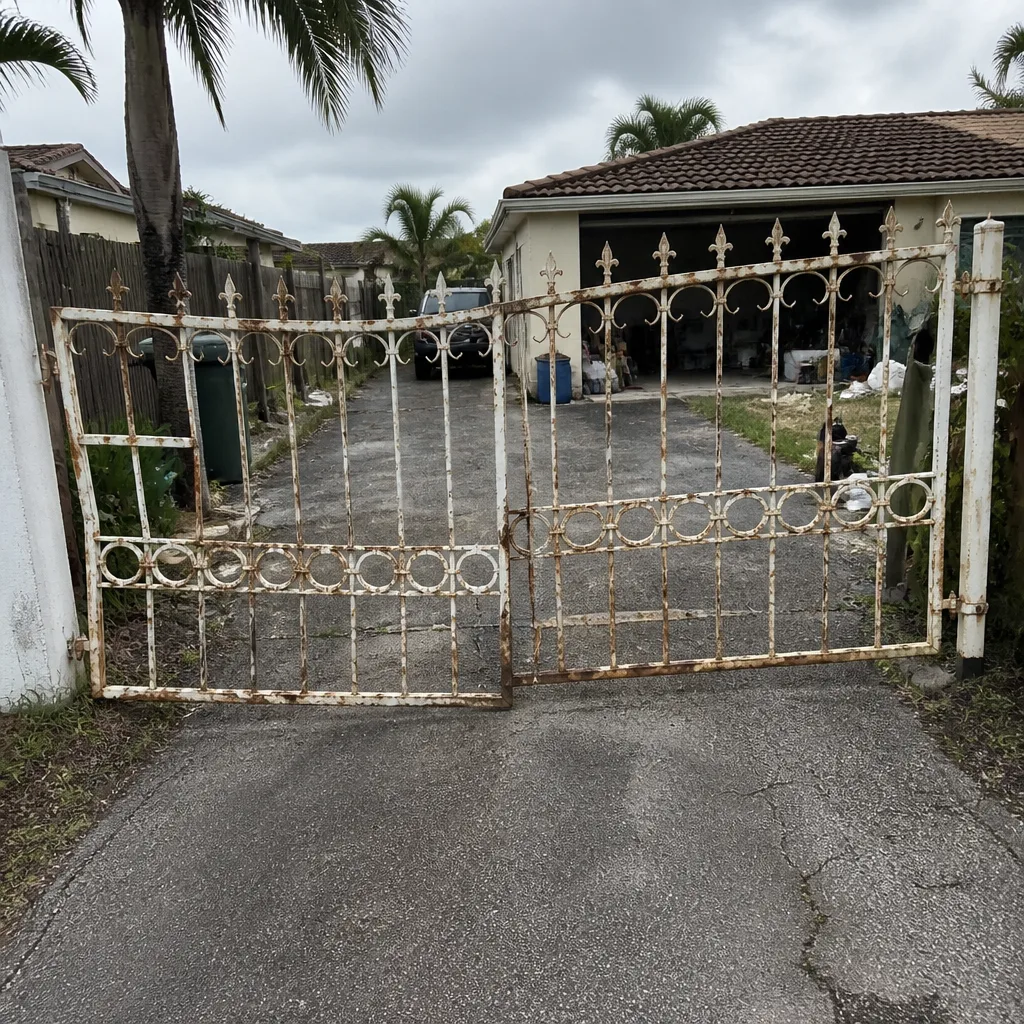 Before
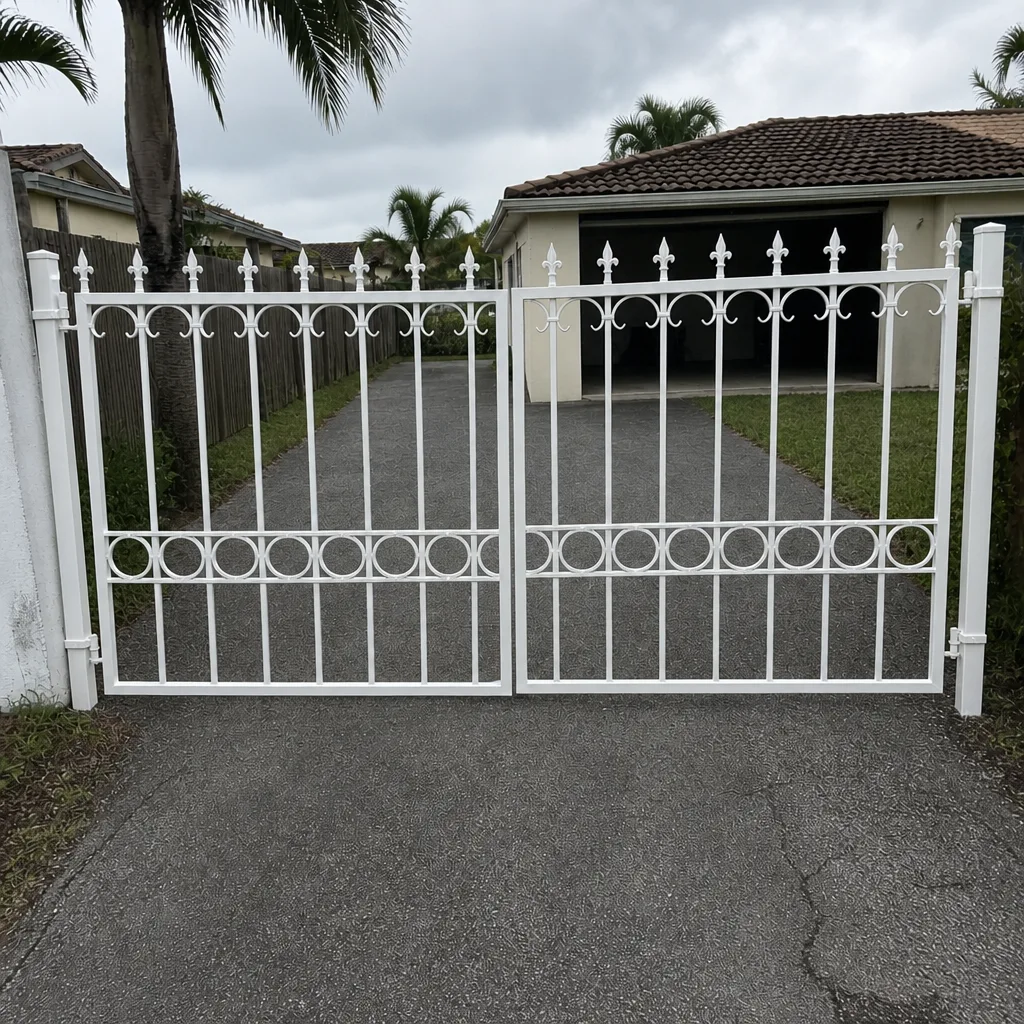 After
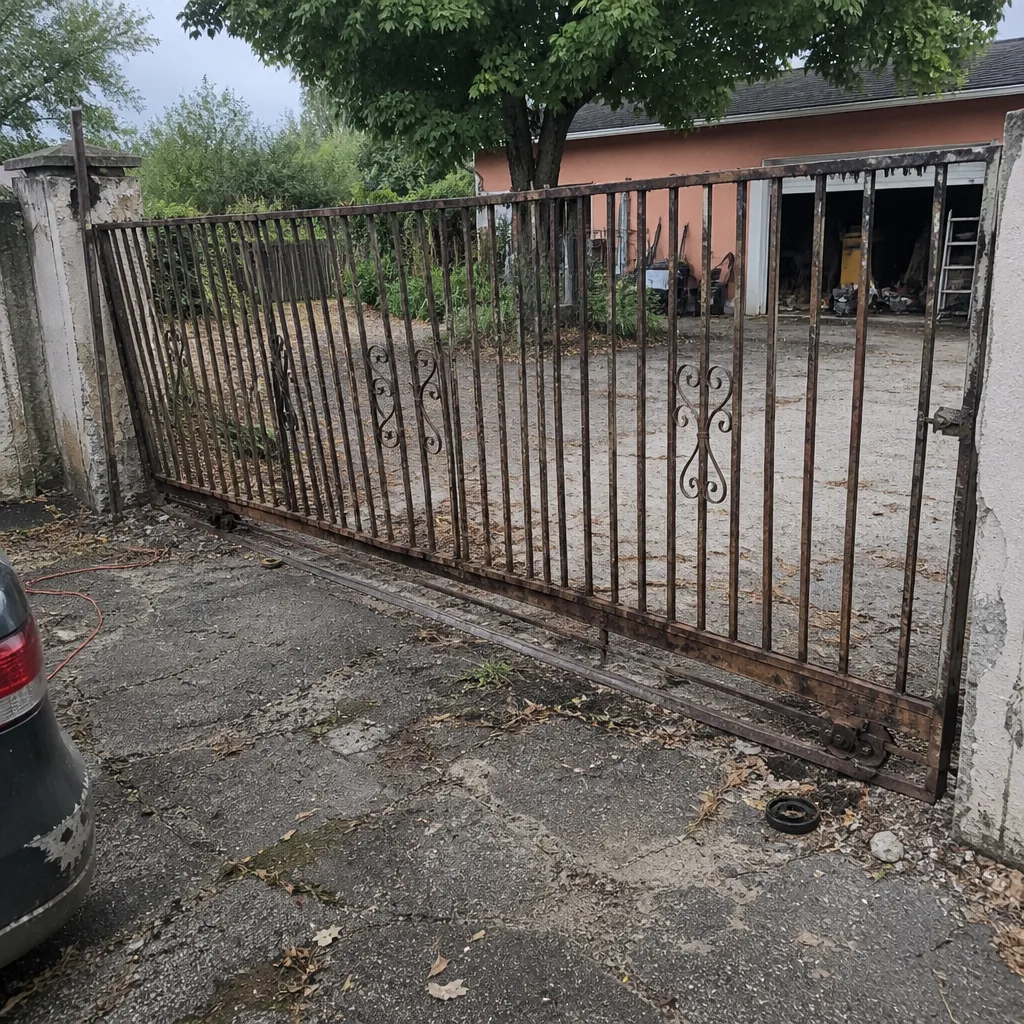 Before
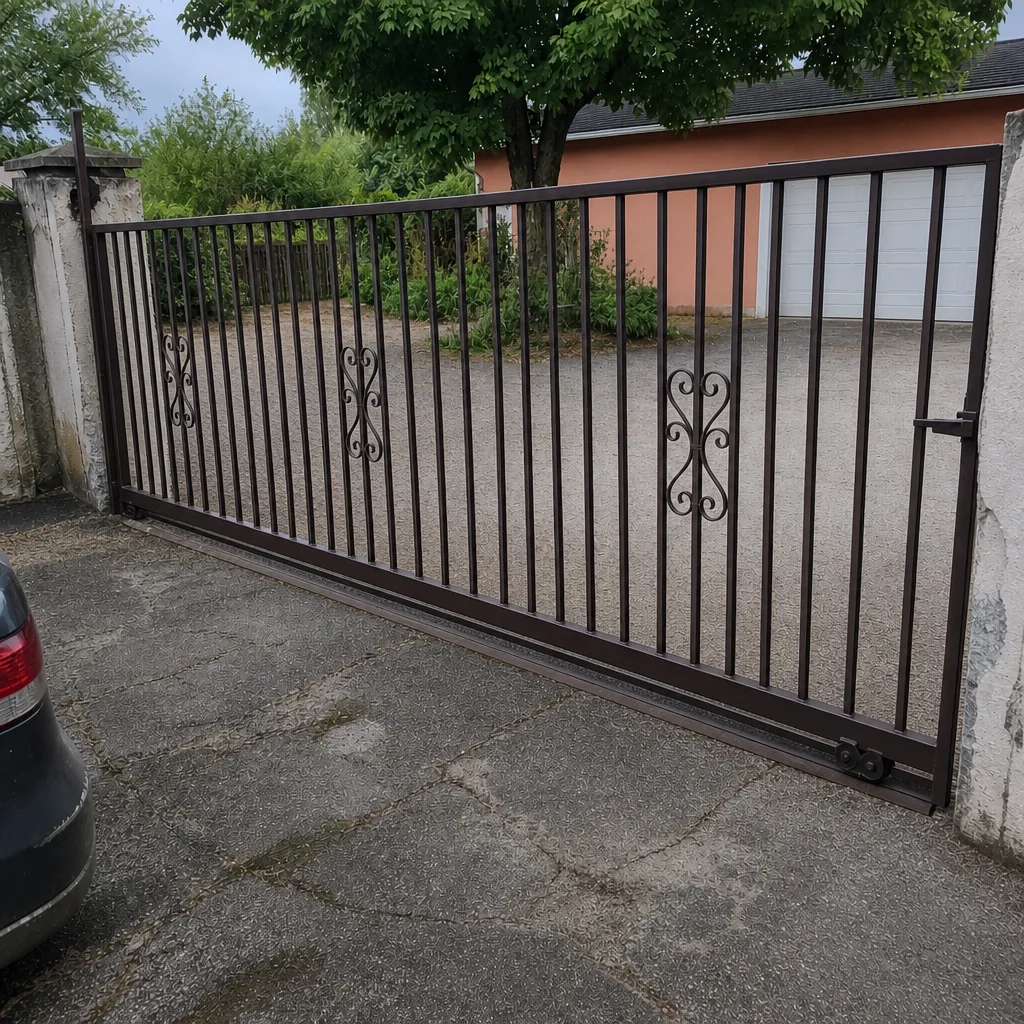 After
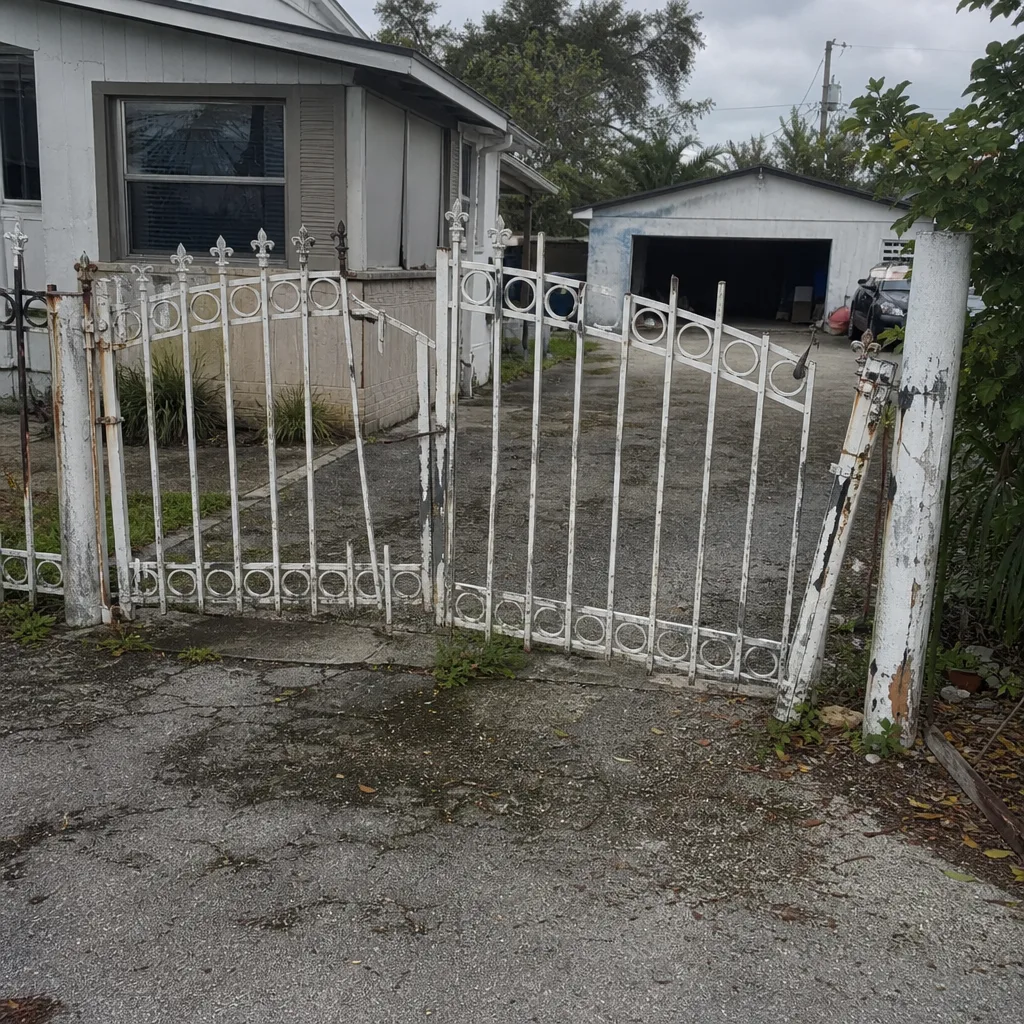 Before
 After
When to Call a Professional
Some gate failures are clearly for a technician, not a homeowner. Call us if the gate responds to nothing at all, if it has come off its track, if you can see or smell anything burning near the operator, if a hinge or panel is cracked, or if the error code is one you don’t recognize after reading the correct manual for your model. Call us also whenever the safety checks in this guide fail: the gate does not reverse on a test object, the photo-eyes don’t line up and stay aligned, or the manual release won’t free the gate. Any of these is a safety problem before it’s a repair problem. Gate Repair Miramar offers free estimates in Miramar. Call (855) 644-1097. We answer 24/7. Fast dispatch from 7am to 7pm, Sunday through Friday. Our technicians have up to 12 years of experience, and the price is quoted and agreed before any work starts.
Frequently Asked Questions
A gate that reverses before closing is reporting an obstruction to the closing direction only. That almost always means a photo-eye fault on the closing side: a dirty lens, a misaligned sensor, a sensor hit by a vehicle, or a broken wire to that sensor. On some operators, a limit switch drift on the closing side can produce the same symptom. Start by cleaning and aligning the photo-eyes. If the gate still reverses, get the operator’s error code and call for diagnosis. Call (855) 644-1097 for an exact quote. Estimates are free.
You can safely check two things: whether the circuit breaker feeding the operator has tripped, and whether the manual release frees the gate. If the gate moves freely by hand once released, the structure is fine and the operator is the fault, which needs a technician. Do not open the controller housing to test voltage or swap parts yourself. The incoming power carries enough current to seriously injure you. Call (855) 644-1097 for an exact quote. Estimates are free.
Moisture collects on limit switch contacts and control board pins, and it slowly changes their behavior. That’s why a gate that seems fine in a dry week starts throwing faults in the wet months. Miramar’s humidity accelerates this on any operator whose enclosure is not fully sealed, which is most of them. It’s an electrical fault that looks intermittent, and it’s much cheaper to correct early than after a board or motor fails. Call (855) 644-1097 for an exact quote. Estimates are free.
Most gate repairs are completed in a single visit, though the time depends on the category. A photo-eye alignment or limit switch adjustment is quick. A board replacement may require a return visit if your brand and model uses a specialized board. The technician will tell you before any work begins whether the repair fits in one visit, and the price is quoted and agreed before work starts. Call (855) 644-1097 for an exact quote. Estimates are free.
Yes. We service both commercial-grade operators like FAAC, BFT, and DoorKing and residential operators like Ghost Controls and Mighty Mule. That reaches across the systems most property managers in Miramar actually run, rather than one brand’s corner of the market. Brand-agnostic diagnosis means the technician finds the actual fault instead of defaulting to the answer that fits one brand. Call (855) 644-1097 for an exact quote. Estimates are free.
It’s not an emergency, but it is a fault. Slow, noisy operation usually means a mechanical bind: worn hinges, worn rollers, or a sliding gate dragging on its track. Left alone, the bind puts extra load on the operator and can lead to a motor or board failure. On a sliding gate, a bind can also cause the panel to come off the track. Have it checked before it becomes a bigger repair. Call (855) 644-1097 for an exact quote. Estimates are free.
The Bottom Line
Gate troubleshooting in Miramar starts with reading the symptom as a category, not as a mystery. Reversing means sensors, partial open means limit switches, silence means power or the board, noise means mechanical wear, and intermittent faults in the humidity usually point to electrical corrosion before anything else. Do the safe checks: align the photo-eyes, check the backup battery, verify the manual release. Leave the board, the motor, and any sliding gate that has come off its track to a technician. When you call, have the brand, the symptom, the error code, and the timing ready. That briefing is the difference between a one-visit repair and a series of guesses. Our team works on gates every day, we know the nine major brands by heart, and the price is quoted and agreed before any work starts.
If you’d rather skip the troubleshooting and get the gate working, call our Gate Repair Miramar team at (855) 644-1097. We answer 24/7. Fast dispatch from 7am to 7pm, Sunday through Friday. Free estimates, and the written estimate sets the final price.
Written by the team at Gate Repair Miramar.